
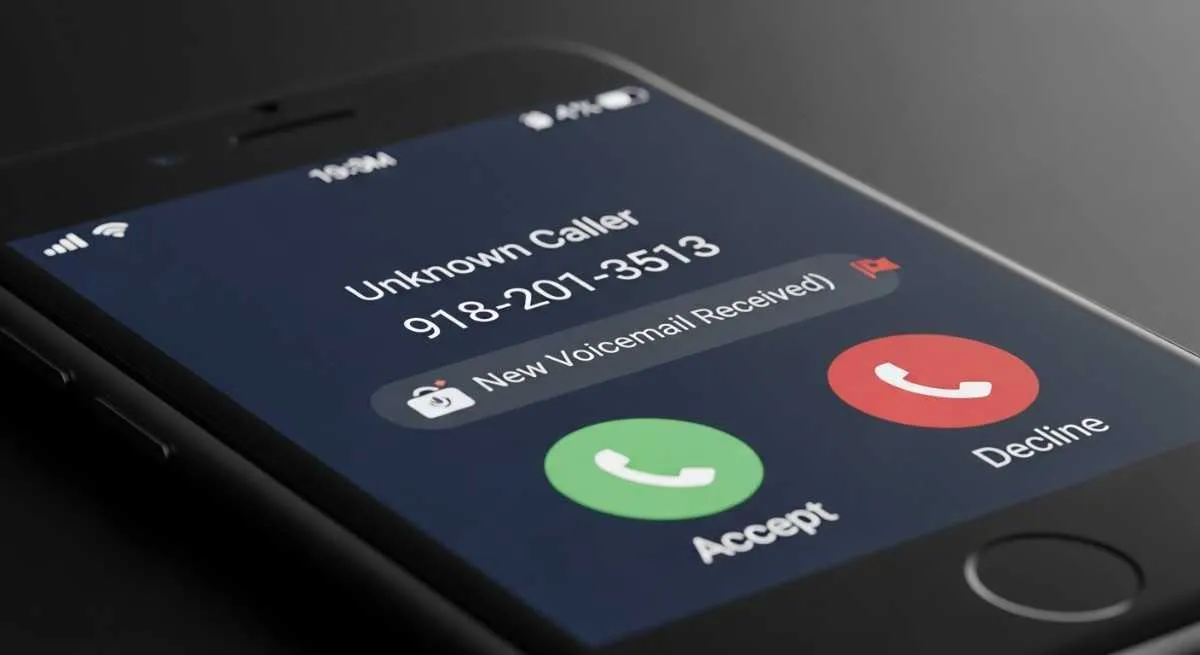
Is 918-201-3513 a Scam? What to Know About This Voicemail and Robocall Pattern
You check your phone and see a missed call from 918-201-3513. There’s a voicemail waiting. You press play and hear a prerecorded message asking about a family member or claiming someone urgently needs to reach you. Your first instinct is to call back—but should you?
If you’ve received a call or voicemail from 918-201-3513, you’re not alone. This number has been flagged by consumers across the country as part of a sophisticated automated voicemail scam that uses emotional manipulation and caller ID spoofing to trick people into responding. Understanding how this scam works can help you protect yourself and your loved ones from becoming victims of voice phishing and telefraud.
What Is the 918-201-3513 Voicemail Scam?
The 918-201-3513 scam follows a pattern reported by numerous victims online. Callers receive a prerecorded scam call that leaves a voicemail claiming to be from a private investigator, law office, or someone urgently trying to locate a relative or friend. The message typically sounds official and creates a sense of urgency or concern.
These prerecorded message scams are designed to bypass your skepticism by triggering emotional responses. When you hear that someone is looking for your family member or that there’s an urgent legal matter, your natural reaction is to find out more. That’s exactly what scammers count on.
The number itself may appear legitimate with a Tulsa, Oklahoma area code (918), making it seem like a local or regional call. However, this is often the result of caller ID spoofing, a technique where scammers disguise their real phone number to appear more trustworthy.
How the Automated Voicemail Scam Works
Understanding the mechanics behind these robocall warning messages helps you recognize them before you engage. Here’s how scammers operate this particular fraud.
The “Looking for Your Relative” Hook
The prerecorded voicemail typically begins with something like: “This message is for [your name or a generic greeting]. We’re trying to reach [family member’s name or ‘your relative’] regarding an urgent matter. Please call us back at this number as soon as possible.”
This emergency contact scam preys on your concern for loved ones. The message is intentionally vague—it doesn’t provide specific details about who’s calling, what the matter concerns, or why it’s urgent. Legitimate callers, especially legal professionals or investigators, would provide verifiable contact information and case references.
According to reports shared on consumer forums, many victims note that the voicemail mentions generic names or asks about relatives they don’t even have. This scattershot approach is typical of automated scam messages that dial thousands of numbers hoping a small percentage will respond.
Caller ID Spoofing and Neighbor Spoofing Tactics
Scammers use sophisticated technology to manipulate what appears on your caller ID. Through spoofed caller ID techniques, they can make it look like the call originates from a local number, a government agency, or even a familiar area code.
Neighbor spoofing is particularly effective—scammers display phone numbers that match your area code and the first three digits of your own number. Research shows that people are up to 30% more likely to answer calls that appear to be from their local area.
The Federal Communications Commission (FCC) has implemented STIR/SHAKEN caller authentication protocols to combat this problem, but scammers continue to find workarounds. Until these systems are fully deployed across all carriers, spoofed numbers remain a significant threat.
The Brian Baker Voicemail Scam Reports
One specific variant mentions someone named “Brian Baker” claiming to be a private investigator or legal representative. Multiple users on Reddit and other consumer protection forums have reported receiving identical voicemails referencing this name (note: Reddit scam discussions provide numerous examples, though the name is likely fictitious).
The use of a consistent fake identity helps scammers build a sense of legitimacy. When victims search online for “Brian Baker private investigator,” they may find nothing—or worse, fabricated websites designed to support the scam. Remember: legitimate investigators and attorneys will provide verifiable credentials, license numbers, and specific case information.
I Received a Prerecorded Voicemail Asking About a Relative — Is This a Scam?
Yes, in nearly all cases, these are scams. Authentic private investigators, law enforcement, and legal professionals rarely leave vague, prerecorded voicemails asking about relatives. They understand privacy laws and proper notification procedures.
Legitimate callers will:
- Identify themselves with full names and verifiable credentials
- Provide a callback number that matches their organization’s official contact information
- Leave specific details about why they’re calling
- Never pressure you to call back immediately without explanation
- Follow proper legal procedures for notification
If you receive such a voicemail, treat it as a fake legal/PI call scam until proven otherwise. The burden of proof should always be on the caller, not on you.
What to Do If You Get a Voicemail From a Private Investigator Asking for Someone
First, don’t panic or rush to respond. Scammers create artificial urgency to prevent you from thinking clearly. Take these steps instead:
Step 1: Do not call the number back directly. Returning the call confirms your number is active and may expose you to additional vishing attempts.
Step 2: Search the phone number online using quotation marks (e.g., “918-201-3513”). Check consumer complaint databases and see if others have reported it as suspicious.
Step 3: If the voicemail claims to be from a specific company or legal office, look up that organization’s official contact information independently. Call them directly using the verified number to ask if they attempted to reach you.
Step 4: Contact the family member mentioned in the voicemail (if they exist) to verify whether they have any legitimate legal matters pending.
Step 5: Report the suspicious voicemail to the appropriate authorities (detailed in the section below).
How to Tell If a Voicemail Is a Scam or From a Lawyer
Distinguishing between legitimate legal communications and phone number scam voicemails requires attention to specific details.
Red flags that indicate a scam:
- Generic greetings like “This is for the homeowner” or “We’re trying to reach a resident”
- Vague references to “urgent matters” or “time-sensitive issues” without specifics
- Pressure to call back immediately or threats of consequences
- Requests to press a number to speak with someone
- No mention of specific case numbers, client references, or legal citations
- Caller ID shows a generic mobile or VOIP number
- Background noise typical of call centers
Signs of legitimate legal communication:
- Caller identifies themselves with full name, firm name, and bar number
- Specific reference to a case, debt, or legal matter you’re aware of
- Official letterhead and written notice follows the voicemail
- Callback number matches the law firm’s published contact information
- Professional tone without high-pressure tactics
When in doubt, always verify independently.

Voicemail Says Someone Is Looking for Me — Should I Call Back?
The short answer: No, not directly. If the voicemail is legitimate, the caller will make additional attempts through proper channels or send written correspondence. Authentic matters of legal importance are never handled exclusively through vague voicemails.
Consider the source of information. Could this person legitimately have your phone number and need to reach you? If you’re not expecting any legal proceedings, job applications, or other formal communications, there’s virtually no reason for a genuine private investigator or attorney to leave such a message.
Voice phishing tactics have become increasingly sophisticated. By calling back, you may be connected to a scammer who will attempt to extract personal information, confirm your identity, or trick you into making payments.
Why Am I Getting Robocalls Asking for Family Members?
There are several reasons scammers use the “looking for your relative” approach in their telefraud voicemail campaigns:
Data breaches expose relationships: Your name, phone number, and family connections may have been compromised in data breaches. Scammers purchase this information on the dark web and use it to craft more convincing scenarios.
Social media provides ammunition: Information you’ve shared publicly on Facebook, LinkedIn, or other platforms can help scammers identify your relatives and create personalized scam attempts.
Skip tracing tactics: Some robocall schemes mimic legitimate skip tracing (the process debt collectors use to locate people), hoping you’ll provide updated contact information for family members who may owe money—real or fabricated.
Testing active numbers: Even if you don’t have the relative mentioned, your callback confirms your number is active, making it valuable for future scam attempts or resale to other fraudsters.
The Federal Trade Commission (FTC) reports that Americans received over 50 billion robocalls in recent years, with emergency contact scams and fake legal notifications ranking among the most common tactics. You can learn more about these trends on the <a href=”https://consumer.ftc.gov/articles/how-recognize-and-report-spam-text-messages” rel=”dofollow”>FTC’s consumer protection page</a>.
Understanding Vishing (Voice Phishing) and Emergency Contact Scams
Vishing, or voice phishing, is the practice of using phone calls to trick victims into revealing sensitive information or making payments. Unlike email phishing, vishing exploits the immediacy and personal nature of voice communication.
Emergency contact scams are a subset of vishing that creates panic about loved ones. Variations include:
- “Your grandson was arrested and needs bail money”
- “Your daughter was in an accident and needs immediate funds”
- “We’re trying to reach your relative about an urgent legal matter”
These scams work because they hijack your emotional response system. When you believe a family member is in trouble, critical thinking often takes a backseat to protective instincts.
Experts recommend establishing a family code word that only close relatives know. If someone calls claiming your family member needs help, you can ask for the code word. Legitimate family members will know it; scammers won’t.
How Caller ID Spoofing Works and How to Stop It
Caller ID spoofing uses Voice over Internet Protocol (VOIP) technology to falsify the phone number that appears on your caller ID display. Scammers can make it appear as though they’re calling from a local number, government agency, or even your own phone number.
The technology is surprisingly accessible and inexpensive. Many VOIP services allow users to set custom caller ID information, and while legitimate businesses use this for valid reasons, scammers exploit these same tools.
How to protect yourself:
- Enable call screening: Both iPhone and Android devices offer features that screen unknown callers and send them directly to voicemail.
- Use third-party call-blocking apps: Applications like RoboKiller, Nomorobo, and Truecaller maintain databases of known scam numbers and can automatically block them.
- Register with the National Do Not Call Registry: While not foolproof against scammers (who ignore these lists), registration at donotcall.gov can reduce legitimate telemarketing calls.
- Enable STIR/SHAKEN verification: Contact your carrier to ensure your phone service includes call authentication features. Major carriers like Verizon, AT&T, and T-Mobile have implemented these protocols.
- Never answer calls from unknown numbers: Let calls go to voicemail, then assess whether they’re legitimate before responding.
The FCC provides detailed guidance on technological solutions and regulatory protections against robocalls and spoofed numbers.
What to Do If You Receive a Suspicious Voicemail
When you get a questionable voicemail like those associated with 918-201-3513, follow this systematic approach:
Immediate actions:
- Save the voicemail as evidence (most smartphones allow you to export or share voicemails)
- Screenshot the caller ID information showing the number and time
- Do not return the call using the number provided in the voicemail
Investigation steps:
- Search the phone number in consumer complaint databases like 800notes.com or WhoCallsMe
- Check if the number is listed on the FTC complaint database
- Verify any claims made in the voicemail through independent research
- Alert family members mentioned in the scam attempt
Protection measures:
- Block the number on your device
- Add it to your spam filter if your carrier provides one
- Report the number to relevant authorities (detailed below)
- Consider changing your voicemail greeting to not include your name or personal details
Remember: legitimate callers will find alternative ways to reach you if the matter is truly important. Your safety and privacy should always take priority over responding to unverified voicemail requests.
How to Report a Scam Voicemail to the FTC
Reporting suspicious calls helps authorities track scam patterns and take enforcement action. Every report contributes to a larger database that can identify widespread fraud operations.
Step-by-step reporting process:
1. Visit the FTC Complaint Assistant
Go to reportfraud.ftc.gov and select “Phone or Text Message Scam” as your complaint category.
2. Provide detailed information
Include:
- The phone number that called you (918-201-3513 in this case)
- Date and time of the call
- Content of the voicemail (transcribe or summarize the message)
- Any callback numbers mentioned
- Names or companies referenced in the message
- Whether you lost money or provided personal information
3. Submit supporting evidence
If possible, attach screenshots of your call log and upload the voicemail recording if the system allows.
4. Report to additional agencies
Also file reports with:
- The FCC at consumercomplaints.fcc.gov
- Your state attorney general’s consumer protection office
- Your phone carrier’s spam reporting service (text “SPAM” to 7726 for most carriers)
5. Document everything
Keep copies of your complaint reference numbers and any correspondence from authorities.
The information you provide helps law enforcement agencies identify patterns, track down scam operations, and prosecute fraudsters. Your report matters, even if you didn’t fall victim to the scam.
How to Block Repeated Robocall Voicemails
If you’re receiving multiple automated scam messages from 918-201-3513 or similar numbers, implement these blocking strategies:
On iPhone:
- Open the Phone app and go to Recents
- Tap the “i” icon next to 918-201-3513
- Scroll down and select “Block this Caller”
- Enable “Silence Unknown Callers” in Settings > Phone to block all numbers not in your contacts
On Android:
- Open the Phone app and tap Recents
- Long-press the number 918-201-3513
- Select “Block/report spam”
- Enable “Filter spam calls” in Phone settings
Using carrier services:
- Verizon: Sign up for Call Filter (basic version free)
- AT&T: Use AT&T ActiveArmor (free tier available)
- T-Mobile: Enable Scam Shield protection
- Other carriers: Check with your provider for spam-blocking features
Third-party solutions: Popular call-blocking apps with high effectiveness ratings include:
- RoboKiller (subscription-based, uses AI to answer and waste scammers’ time)
- Nomorobo (free for landlines, low-cost for mobile)
- Truecaller (free with ads, paid premium version)
- Hiya (free caller ID and spam blocking)
These apps maintain constantly updated databases of known scam numbers and use community reporting to identify new threats quickly.
Frequently Asked Questions
Is a prerecorded voicemail asking for a family member a scam?
Yes, in the vast majority of cases. Legitimate investigators, attorneys, and government agencies follow specific protocols for contacting individuals and rarely use generic prerecorded messages asking about relatives. These voicemails are designed to create concern and prompt you to call back, at which point scammers attempt to extract personal information or money.
What does it mean if someone left a voicemail looking for my relative?
It typically means you’ve been targeted by a skip-tracing scam or emergency contact fraud. Scammers hope you’ll provide updated contact information for the relative mentioned, which they can then use for further scams. Alternatively, they may claim the relative owes money and pressure you to pay on their behalf. Never provide information about family members to unknown callers.
How do I find out who left a voicemail from an unknown number?
Start by searching the phone number in consumer complaint databases and reverse phone lookup services. Check sites like 800notes, WhoCallsMe, and the FTC complaint database. If the voicemail claims to represent a specific company or organization, look up that entity’s official contact information independently and call them directly to verify. Never call back the number left in a suspicious voicemail.
Should I call back an automated voicemail asking to press a number?
No, absolutely not. Calling back automated voicemails and pressing numbers can confirm your phone number is active, potentially trigger charges on your phone bill (in the case of international premium-rate numbers), or connect you to scammers who will attempt sophisticated social engineering attacks. Legitimate organizations will contact you through multiple channels and provide verifiable information.
How do I report a scam voicemail?
Report suspicious voicemails to the FTC at reportfraud.ftc.gov, the FCC at consumercomplaints.fcc.gov, and your phone carrier’s spam reporting service. Provide detailed information including the phone number, date and time, and message content. Also report to your state attorney general’s office. Documentation helps authorities track scam patterns and take enforcement action.
Can scammers use voicemail to record my voice and steal money?
While sophisticated voice-cloning technology exists, most voicemail scams don’t record your voice for cloning purposes. However, scammers may try to get you to say “yes” during a callback, then edit that recording to authorize charges or services you never agreed to. This “can you hear me?” scam has been reported to the FTC. The safest approach is never calling back suspicious voicemails.
What is caller ID spoofing and how common is it?
Caller ID spoofing is the practice of falsifying the phone number that appears on your caller ID display. Scammers use VOIP technology to make calls appear as though they’re coming from local numbers, government agencies, or legitimate businesses. According to FCC reports, billions of spoofed robocalls occur annually. The STIR/SHAKEN authentication protocol is being implemented to combat this, but adoption is still ongoing.
Why does the voicemail say ‘Brian Baker’ — is that a real investigator?
No, “Brian Baker” is a fake identity used in a widespread phone number scam voicemail campaign. Multiple consumers have reported identical voicemails mentioning this name. Scammers use consistent fake identities to create an appearance of legitimacy. A search for “Brian Baker private investigator” may return no results or fraudulent websites designed to support the scam. Always independently verify investigator credentials through state licensing boards.
How do I block repeated robocall voicemails?
Block the specific number using your phone’s built-in blocking features (available on both iPhone and Android). Enable “Silence Unknown Callers” or “Filter spam calls” in your phone settings. Register with the National Do Not Call Registry at donotcall.gov. Use your carrier’s spam-blocking service (most major carriers offer free basic protection). Consider third-party call-blocking apps like RoboKiller, Truecaller, or Nomorobo for enhanced protection.
What info to include when reporting a scam call to the FTC?
When filing an FTC complaint, include: the phone number that called you, date and time of the call, content of the voicemail or conversation (be as detailed as possible), any names or companies mentioned, callback numbers provided, whether you lost money or shared personal information, and how you learned it was a scam. Attach screenshots or recordings if possible. The more detailed your report, the more useful it is for enforcement efforts.
What is +1 833 634 3522?
The number +1 833-634-3522 uses an 833 toll-free area code and has been reported by consumers as potentially suspicious. Like 918-201-3513, toll-free numbers can be easily obtained and spoofed by scammers to appear more legitimate. If you receive unexpected calls from any toll-free number, verify the caller’s identity independently before responding. Search the number online to see if others have reported it as a scam.
Is 844 206 9035 a Spectrum number?
While 844 is a toll-free area code that Spectrum (Charter Communications) may use for customer service, scammers also spoof numbers with this area code. If you receive a call claiming to be from Spectrum, do not provide personal information or payment details. Instead, hang up and call Spectrum’s official customer service number listed on your bill or their website to verify whether they attempted to contact you.
Can a debt collector contact you by phone?
Yes, legitimate debt collectors can contact you by phone, but they must follow strict rules under the Fair Debt Collection Practices Act (FDCPA). They must identify themselves, tell you the name of the creditor, state the amount you owe, and inform you of your right to dispute the debt. They cannot harass you, call at unreasonable hours, or threaten actions they cannot legally take. If you receive a debt collection call, request written verification before making any payments.
What number is 0800 761 3372?
The number 0800 761 3372 uses a UK toll-free prefix (0800) and has been reported in connection with various scam attempts. If you’re in the United States and receive calls from international numbers—especially those you didn’t expect—treat them with extreme caution. International scammers often target U.S. consumers. Never call back international numbers that leave vague voicemails, as you may incur expensive international calling charges.

Immediate Action Checklist: What to Do Right Now
Copy and save this checklist if you receive a voicemail from 918-201-3513 or similar suspicious numbers:
☐ Do not call back the number. Let it go to voicemail if they call again.
☐ Save the voicemail message and take a screenshot of the call log showing the number and time.
☐ Search the phone number online in consumer complaint databases to see if others have reported it.
☐ Block the number using your smartphone’s built-in blocking feature.
☐ Report the scam to the FTC at reportfraud.ftc.gov and the FCC at consumercomplaints.fcc.gov.
☐ Alert family members mentioned in the voicemail and warn them about the scam attempt.
☐ Enable spam call filtering on your phone and consider installing a call-blocking app.
☐ Monitor your accounts for any unusual activity in case your information was compromised.
☐ Share your experience on consumer protection forums to warn others about the scam pattern.
Final Thoughts and How to Stay Protected
The voicemail scam associated with 918-201-3513 represents just one example of the sophisticated telefraud campaigns targeting consumers today. These prerecorded scam calls exploit natural human emotions—concern for family members, fear of legal trouble, and the desire to be helpful—to manipulate victims into responding.
Your best defense is skepticism combined with verification. When you receive an unexpected voicemail claiming urgent matters or looking for relatives, pause and investigate before taking action. Legitimate callers will provide multiple forms of verification and never pressure you to respond immediately.
Technology is evolving to combat these threats. The STIR/SHAKEN caller authentication framework is making it harder for scammers to spoof numbers successfully. Carrier-level spam filters are becoming more sophisticated. And artificial intelligence is being deployed to identify robocall patterns before they reach your phone.
However, scammers adapt quickly. Staying informed about current scam tactics, regularly updating your device’s security features, and reporting suspicious calls all contribute to a safer telecommunications environment for everyone.
Remember: you have the power to hang up, block, and report. You’re never obligated to respond to a suspicious voicemail, no matter how urgent or official it sounds.
{{INTERNAL_LINK_RELATED_5}} provides ongoing updates about emerging phone scams and protective measures.
Take Action Now: Protect Yourself and Others
Have you received a call or voicemail from 918-201-3513 or a similar suspicious number? Your experience can help protect others. Here’s what you can do right now:
1. Comment below with details about the voicemail you received—what the message said, when you got it, and whether you recognized any of the patterns described in this article. Your story helps others identify the scam.
2. Share this article on social media, via email, or in community groups. Many people don’t know how to spot prerecorded message scams or what actions to take. Spreading awareness prevents more victims.
3. File an official report with the Federal Trade Commission at reportfraud.ftc.gov. Every report strengthens the case against scammers and helps authorities shut down fraud operations.
4. Sign up for our consumer protection newsletter to receive alerts about emerging scams, phone security tips, and actionable advice for protecting yourself from fraud. We’ll send you monthly updates on the latest threats and how to stay safe.