Introduction
Sourcing products from China offers incredible opportunities for businesses worldwide—lower manufacturing costs, access to specialized factories, and scalability. Yet navigating the complexities of global sourcing presents real challenges: identifying reliable suppliers, ensuring consistent quality, managing logistics across continents, and dealing with language barriers and cultural differences. One misstep can result in delayed shipments, substandard products, or costly compliance issues.
This is where Lianjie supply chain transforms the sourcing landscape. As a comprehensive China sourcing partner, Lianjie provides end-to-end support—from supplier verification and factory audits to quality control inspection and international freight forwarding. Whether you’re a startup launching your first product line or an established brand expanding your supplier network, understanding how lianjer.com operates can help you source smarter, reduce risk, and scale confidently.
In this guide, you’ll learn exactly how Lianjie supply chain works, what services they provide, the step-by-step procurement process, real-world case examples, and practical advice for choosing the right sourcing partner for your business needs.
What is the Lianjie Supply Chain Approach?
The Lianjie supply chain model centers on one-stop sourcing—a comprehensive approach that handles every aspect of procurement from a single touchpoint. Rather than juggling multiple vendors, agents, inspectors, and freight forwarders, businesses work with Lianjie as their unified partner for all sourcing activities in China.
Core Philosophy
Lianjie’s approach is built on three pillars:
1. Transparency Through Verification Every supplier in Lianjie’s network undergoes rigorous supplier verification services including factory audits, business license validation, production capacity assessment, and compliance checks. This due diligence eliminates the common sourcing pitfall of working with unvetted manufacturers who may lack proper certifications or production capabilities.
2. Quality Assurance at Every Stage Rather than discovering quality issues after products arrive at your warehouse, Lianjie implements checkpoints throughout production: pre-production samples, in-process monitoring, and comprehensive pre-shipment inspections. This proactive quality control inspection methodology catches defects early when they’re still fixable.
3. Simplified Logistics Integration Procurement doesn’t end when products leave the factory. Lianjie coordinates international shipping, customs documentation, and last-mile delivery through established freight forwarding partnerships. This integrated logistics approach reduces lead time variability and shipping complications that commonly plague international sourcing.
One-Stop Sourcing Defined
One-stop sourcing means consolidating all procurement activities under one service provider:
- Supplier identification and negotiation
- Sample procurement and testing
- Production monitoring and factory communication
- Quality inspections and compliance verification
- Freight forwarding and customs clearance
- After-sales support and dispute resolution
This consolidated model reduces coordination overhead, improves communication flow, and creates clear accountability. When issues arise—and they inevitably do in international sourcing—you have one partner responsible for resolution rather than multiple vendors pointing fingers at each other.
Why Choose Lianjie for Global Sourcing from China?
China remains the world’s manufacturing powerhouse, producing everything from electronics and textiles to machinery and consumer goods. Yet accessing reliable suppliers in China requires local expertise, established relationships, and ground-level presence that most international businesses lack.
Key Advantages of Partnering with Lianjie
Vetted Supplier Network Lianjie maintains relationships with thousands of pre-qualified factories across major manufacturing hubs in Guangdong, Zhejiang, Jiangsu, and Fujian provinces. These aren’t random Alibaba listings—they’re manufacturers who’ve passed factory audits, demonstrated consistent quality, and proven reliable delivery track records.
On-Ground Quality Control Remote quality assurance simply doesn’t work for complex products. Lianjie employs local inspectors who physically visit factories during production runs, conduct pre-shipment inspections using internationally recognized standards (AQL sampling), and document findings with detailed photo reports. This quality control inspection capability prevents the costly surprise of defective container loads.
OEM/ODM Manufacturing Expertise Whether you need OEM ODM sourcing for existing product specifications or help developing private label products from concept, Lianjie’s team has the technical expertise to match you with appropriate factories. They understand manufacturing processes, material specifications, and quality standards required for different markets (US, EU, Australia regulatory compliance).
Negotiation Leverage As a high-volume sourcing partner, Lianjie negotiates better pricing and payment terms than individual buyers typically secure. Factories view Lianjie as a repeat customer bringing consistent business, which translates to preferential pricing, flexible MOQ (minimum order quantity) terms, and priority production scheduling.
Risk Mitigation International sourcing involves numerous risks: supplier fraud, intellectual property theft, quality failures, shipping delays, customs issues. Lianjie’s systems address these systematically through contracts, deposits held in escrow, inspection protocols, and established shipping partnerships.
For comprehensive details on how these advantages translate into specific service offerings, explore the full range of sourcing services available through the Lianjie platform.
Core Services Explained
Understanding what Lianjie supply chain actually does requires examining each service component. Here’s how Lianjie supports the complete procurement lifecycle:
Supplier Verification & Factory Audits
Supplier verification services form the foundation of reliable sourcing. Before recommending any manufacturer, Lianjie conducts comprehensive due diligence:
Factory Audit Components:
- Business Verification
- Business license authentication
- Export license validation
- Tax registration confirmation
- Corporate credit checks
- Years in operation and ownership structure
- Production Capacity Assessment
- Factory size and facility condition
- Equipment inventory and maintenance status
- Worker headcount and skill levels
- Monthly production capacity
- Current capacity utilization rates
- Quality Management Systems
- ISO certifications (9001, 14001, etc.)
- Quality control procedures and documentation
- Testing equipment and calibration records
- Defect rate tracking and corrective actions
- Customer complaint handling processes
- Compliance & Ethics
- Worker conditions and labor practices
- Environmental compliance
- Health and safety protocols
- Ethical sourcing certifications (BSCI, Sedex, etc.)
- Financial Stability
- Financial statements review
- Payment reliability reputation
- Major customer references
- Banking relationships
The factory audit report provides a comprehensive supplier profile, enabling informed sourcing decisions based on objective data rather than marketing claims or website presentations.
Quality Control & Third-Party Inspection (TPI)
Quality control inspection represents your eyes and hands in the factory. Lianjie offers multiple inspection levels aligned with production stages:
Inspection Types:
Pre-Production Inspection (PPI)
- Conducted before mass production begins
- Verifies raw materials meet specifications
- Confirms production setup matches requirements
- Reviews samples and mockups
- Identifies potential issues before they multiply across thousands of units
During Production Inspection (DPI)
- Executed when 20-40% of order is complete
- Checks work-in-progress quality
- Verifies production pace meets deadline
- Allows for mid-stream corrections
- Reduces end-of-production surprises
Pre-Shipment Inspection (PSI)
- Most common inspection type
- Performed when 80-100% complete and packed
- Uses AQL (Acceptable Quality Level) sampling methodology
- Checks specifications, functionality, appearance, packaging
- Includes carton drop tests and measurement verification
- Generates detailed photo reports with pass/fail recommendations
Container Loading Check (CLC)
- Ensures proper loading and securing
- Verifies correct products and quantities
- Documents container condition
- Prevents shipping damage and short shipments
These third-party inspection (TPI) services provide independent verification, removing the conflict of interest inherent when factories self-report quality. Inspection reports include:
- Detailed measurements against specifications
- Photo documentation of defects
- Defect categorization (critical, major, minor)
- AQL sampling results
- Clear pass/fail recommendation
- Corrective action suggestions
Logistics, Freight Forwarding & Customs
Manufacturing excellence means nothing if products don’t reach your warehouse on time and intact. Lianjie coordinates complete freight forwarding and customs clearance through established carrier partnerships.
Shipping Terms Explained:
Understanding trade terms is crucial for cost clarity and responsibility allocation:
FOB (Free On Board)
- Seller delivers goods to departure port
- Buyer arranges and pays international shipping
- Buyer handles destination customs and delivery
- Most common for experienced importers
- Provides shipping carrier choice and cost control
CIF (Cost, Insurance, and Freight)
- Seller arranges shipping to destination port
- Seller pays freight and insurance
- Buyer handles customs clearance and inland transport
- Simplifies buyer’s logistics coordination
- Less control over carrier selection
DDP (Delivered Duty Paid)
- Seller handles everything through final delivery
- Includes customs duties and taxes
- Door-to-door service
- Maximum convenience for buyer
- Higher cost but predictable landed price
Lianjie helps determine optimal shipping terms based on your experience level, volume, and cost priorities. Their freight forwarding network includes:
- Ocean freight (FCL and LCL shipments)
- Air freight for urgent orders
- Express courier for samples and small shipments
- Rail freight for China-Europe routes
- Warehousing and consolidation services
Customs Clearance Support: Lianjie prepares comprehensive documentation required for smooth customs processing:
- Commercial invoices
- Packing lists
- Bills of lading
- Certificates of origin
- Product certifications and test reports
- Harmonized System (HS) code classification
- Import license applications where required
Proper documentation prevents customs delays, additional inspection fees, and potential seizures that can occur with incomplete or incorrect paperwork.
OEM/ODM and Private Label Sourcing
OEM ODM sourcing encompasses two distinct manufacturing models:
OEM (Original Equipment Manufacturer)
- You provide complete specifications and designs
- Factory manufactures to your exact requirements
- You maintain full design ownership
- Factory focuses solely on production
- Common for established products with proven designs
ODM (Original Design Manufacturer)
- Factory offers existing designs you can customize
- Faster time-to-market with proven designs
- Lower development costs
- You select from factory’s catalog and brand as yours
- Factory may sell similar designs to other buyers
Private Label / White Label
- Manufacturing products under your brand name
- Can be OEM (your design) or ODM (factory design)
- Includes custom packaging with your branding
- Quality control ensures brand reputation protection
- Common for consumer goods, supplements, cosmetics
Lianjie’s OEM ODM sourcing expertise includes:
- Matching your product concept to capable factories
- Negotiating tooling costs and intellectual property terms
- Coordinating prototype development and iterations
- Managing technical specifications and engineering changes
- Protecting your designs through proper contracts
- Arranging product testing and certification
For private label projects, Lianjie assists with packaging design coordination, logo printing, labeling compliance, and ensuring all regulatory requirements are met for your target markets.
Process: End-to-End Supply Chain Solutions
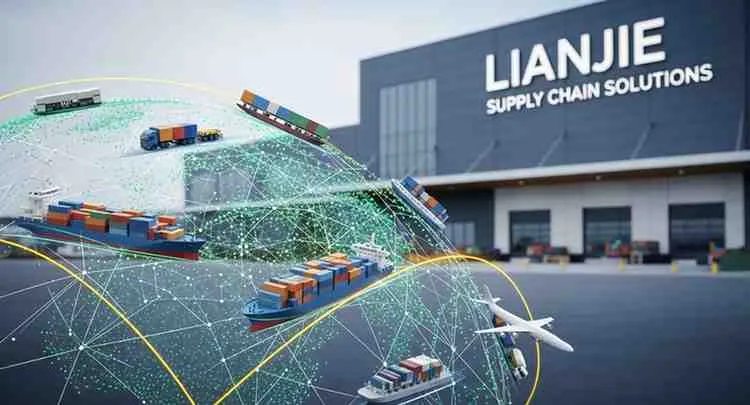
Understanding how end-to-end supply chain solutions work in practice helps set realistic expectations and prepare for each stage. Here’s the typical Lianjie sourcing process:
Step 1: Requirements Definition
Your Input:
- Product specifications or samples
- Target quality level
- Order quantity requirements
- Budget parameters
- Timeline expectations
- Certifications needed
- Packaging preferences
Lianjie Actions:
- Clarifies technical specifications
- Identifies critical quality criteria
- Assesses feasibility and MOQ requirements
- Provides preliminary timeline estimate
- Recommends appropriate factories
Step 2: Supplier Identification & Verification
Lianjie Actions:
- Searches vetted supplier network for matches
- Requests quotes from 3-5 qualified factories
- Conducts factory audits for new suppliers
- Evaluates production capacity and timelines
- Checks current order backlogs
Duration: 3-7 business days for standard products
Step 3: Quotation & Negotiation
Lianjie Actions:
- Compiles detailed quotations including:
- Unit pricing by quantity breaks
- Tooling or setup costs
- Packaging costs
- Shipping estimates (FOB/CIF/DDP)
- Payment terms
- Lead time commitments
- Negotiates favorable terms leveraging volume
- Clarifies all cost components
- Compares options with pros/cons analysis
Your Decision:
- Review comparative quotes
- Select preferred supplier(s)
- Approve specifications and terms
Step 4: Sample Production & Approval
Factory Actions:
- Produces samples based on specifications
- Ships samples to you or Lianjie office
Lianjie Actions:
- Conducts initial sample inspection
- Documents any specification deviations
- Arranges sample shipment to you
Your Actions:
- Test sample functionality and quality
- Provide feedback on any modifications needed
- Approve sample for mass production
Duration: 1-3 weeks depending on product complexity
Step 5: Purchase Order & Production Start
Lianjie Actions:
- Issues formal purchase order to factory
- Confirms production schedule
- Arranges deposit payment
- Schedules pre-production inspection if applicable
Factory Actions:
- Orders raw materials
- Sets up production line
- Begins manufacturing
Duration for Procurement: Materials procurement typically 1-2 weeks
Step 6: Production Monitoring & Quality Control
Lianjie Actions:
- Maintains communication with factory
- Conducts during production inspection at critical milestones
- Documents progress with photo updates
- Addresses any quality concerns immediately
- Verifies production stays on schedule
You Receive:
- Regular status updates
- Production progress reports
- Advance warning of any delays
- Inspection reports with photos
Step 7: Pre-Shipment Inspection
Lianjie Actions:
- Schedules inspection when 80%+ complete
- Conducts comprehensive quality control inspection
- Tests random samples using AQL standards
- Measures dimensions and specifications
- Checks packaging and labeling
- Documents findings in detailed report
Possible Outcomes:
- Pass: Approve shipment
- Conditional Pass: Minor issues, shipment approved with notes
- Fail: Major defects require rework before shipping
Duration: 1 day onsite + 1 day report generation
Step 8: Shipping & Logistics
Lianjie Actions:
- Books freight with carrier partner
- Prepares all customs documentation
- Arranges container loading check
- Tracks shipment progress
- Coordinates with customs broker
- Provides tracking information
Shipping Duration:
- Ocean freight: 15-40 days depending on destination
- Air freight: 5-10 days
- Express: 3-7 days
Step 9: Customs Clearance & Delivery
Lianjie/Broker Actions:
- Submits customs entry documentation
- Pays duties and taxes
- Responds to customs inquiries
- Arranges inland transportation
- Confirms delivery
Step 10: Balance Payment & After-Sales
Final Steps:
- Balance payment released upon delivery confirmation
- Lianjie collects feedback on order quality
- Addresses any post-delivery issues
- Maintains order records for reorders
- Factory relationship management for future orders
This systematic end-to-end supply chain solutions process ensures consistent outcomes, reduces surprises, and creates clear accountability at each stage. Typical total lead time from order to delivery ranges from 45-90 days depending on product complexity and shipping method.
Case Studies / Real-Life Examples
Real-world examples demonstrate how Lianjie supply chain solves actual business challenges. Here are three anonymized case studies:
Case Study 1: Electronics Startup Reduces Defect Rate by 87%
Background: A Nordic electronics startup developing Bluetooth speakers initially sourced directly from a factory found on Alibaba. Their first two container shipments had defect rates of 23% and 18% respectively—catastrophic for a new brand trying to build customer trust.
Challenge:
- High defect rates destroying customer reviews
- Factory blamed shipping damage (unlikely given consistency)
- No quality control systems in place
- Limited leverage as small buyer
- Considering abandoning China sourcing entirely
Lianjie Solution:
- Conducted factory audit revealing outdated testing equipment
- Identified superior factory with proper QC systems
- Implemented pre-production material inspection
- Established during-production monitoring
- Conducted rigorous pre-shipment inspection using AQL 2.5 standards
Results:
- Defect rate dropped from 18% to 2.3% (87% reduction)
- Customer return rate fell from 15% to under 2%
- Product review average improved from 3.2 to 4.6 stars
- Manufacturing cost decreased 12% through better negotiation
- Relationship with factory improved through clear communication
Key Takeaway: Proper supplier verification services and quality control inspection protocols prevent quality disasters that can destroy emerging brands.
Case Study 2: Furniture Brand Reduces Lead Time by 40%
Background: A US furniture retailer importing container loads of home furnishings struggled with unpredictable lead times ranging from 60 to 120 days. This variability made inventory planning impossible and resulted in frequent stockouts during peak seasons.
Challenge:
- Inconsistent production schedules from factory
- No visibility into manufacturing progress
- Shipping delays due to late documentation
- Missed sales opportunities during key periods
- Excess inventory when shipments finally arrived
Lianjie Solution:
- Established production timeline with penalties for delays
- Implemented weekly production status updates
- Scheduled mid-production inspections to verify pace
- Prepared shipping documentation in parallel with production
- Pre-booked ocean freight during production phase
Results:
- Average lead time reduced from 85 days to 51 days (40% improvement)
- Lead time variability narrowed to ±5 days (95% on-time)
- Eliminated stockouts during Q4 holiday season
- Reduced safety stock requirements by 30%
- Improved cash flow through predictable timing
Measurable Impact:
- Revenue increase: 28% year-over-year (attributed to better inventory availability)
- Inventory carrying costs: Reduced $47,000 annually
- Customer satisfaction: Improved delivery time ratings from 3.8 to 4.7
Key Takeaway: Proactive production monitoring and freight forwarding coordination dramatically improve supply chain predictability.
Case Study 3: Beauty Brand Launches Private Label Line in 90 Days
Background: An Australian beauty retailer wanted to launch a private label skincare line but lacked manufacturing expertise. They needed fast time-to-market to capitalize on trending ingredients but didn’t want to invest $50,000+ in custom formulation development.
Challenge:
- No manufacturing relationships or expertise
- Limited budget for product development
- Tight timeline to hit seasonal launch window
- Need for regulatory compliance (TGA requirements)
- Concern about intellectual property protection
Lianjie Solution:
- Identified ODM cosmetics factories with proven formulations
- Arranged samples of 15 different product formulations
- Coordinated custom packaging design and printing
- Handled Australian TGA compliance testing
- Negotiated favorable MOQ of just 1,000 units per SKU
- Protected formulations through proper contracts
Results:
- Successfully launched 6-SKU skincare line in 92 days (concept to warehouse)
- Total development investment: $8,500 (vs. $50,000+ for custom formulation)
- Minimum order quantity kept initial investment under $15,000
- All products passed TGA compliance testing first time
- Retail launch hit planned timing for summer season
Business Outcomes:
- First 90 days sales: $127,000
- Reorder placed within 60 days
- Product line expanded to 12 SKUs within 6 months
- Gross margin: 68% (significantly higher than reselling other brands)
Key Takeaway: OEM ODM sourcing expertise enables rapid product launches at fraction of custom development costs while maintaining quality and compliance.
For more detailed success stories and measurable outcomes, visit the Lianjie case studies page.
Pros & Cons / When to Use a Sourcing Partner

Every business model has tradeoffs. Here’s an honest assessment of when partnering with Lianjie supply chain makes sense versus alternative approaches:
Advantages of Using a Sourcing Partner
Risk Reduction
- Vetted suppliers eliminate fraud and scam risks
- Quality inspections catch defects before shipping
- Proper contracts protect intellectual property
- Local presence enables quick problem resolution
- Established processes reduce rookie mistakes
Cost Efficiency (Despite Service Fees)
- Better pricing through negotiation leverage
- Fewer defective shipments reduce total cost
- Reduced travel expenses to China
- Avoided costly mistakes (wrong products, bad suppliers)
- Service fees often offset by better factory pricing
Time Savings
- No learning curve for complex processes
- Parallel processing of multiple tasks
- Faster response times due to timezone coverage
- Established relationships accelerate communication
- Focus your time on core business activities
Expertise Access
- Manufacturing process knowledge
- Regulatory compliance understanding
- Cultural and language bridge
- Logistics optimization
- Problem-solving experience from hundreds of projects
Scalability
- Easy to expand product lines
- Multiple factory relationships simultaneously
- Capacity to handle growing volume
- Established processes enable consistent results
- Reduced personnel requirements
Disadvantages and Limitations
Service Fees
- Sourcing agent fees typically 3-10% of order value
- Inspection costs $200-500 per visit
- Total costs may exceed DIY approach for experienced importers
- Fee structure requires understanding upfront
Reduced Direct Control
- Communication flows through intermediary
- Can’t visit factory personally on whim
- Relationship with factory is indirect
- May feel disconnected from process
Dependency Risk
- Reliance on partner for critical operations
- Switching costs if relationship sours
- Need to trust partner’s judgment and integrity
- Limited ability to verify all claims independently
Learning Opportunity Cost
- Don’t develop personal sourcing expertise
- Less understanding of manufacturing processes
- Harder to bring sourcing in-house later
- Dependent on partner for market intelligence
When Sourcing Partners Make Sense
Strong Fit Scenarios:
- First-time importers with no China experience
- Low-volume buyers lacking negotiation leverage
- Businesses sourcing complex, technical products
- Companies requiring multiple suppliers
- Fast-growing businesses needing scalable infrastructure
- Brands prioritizing risk mitigation
- Businesses without in-house Chinese language capability
Questionable Fit Scenarios:
- Very high-volume importers who can justify in-house team
- Single-product businesses with established factory relationship
- Experienced importers with China presence
- Extremely price-sensitive commodities with thin margins
- Businesses requiring daily factory interaction
Alternative Sourcing Models for Comparison
Direct Factory Sourcing:
- Pros: No intermediary fees, direct relationship, maximum control
- Cons: High risk, quality issues, communication challenges, requires expertise
- Best for: Experienced importers with high volumes
Trading Companies:
- Pros: Easier communication, payment protection, consolidated sourcing
- Cons: Higher prices, less manufacturing visibility, middleman markup
- Best for: Small orders of simple products
In-House China Office:
- Pros: Complete control, direct relationships, deep market knowledge
- Cons: Expensive ($100K-250K+ annually), management overhead, slow to establish
- Best for: Large companies with $5M+ annual China sourcing
Sourcing Agent (like Lianjie):
- Pros: Professional support, risk mitigation, scalable, cost-effective
- Cons: Service fees, indirect relationships
- Best for: Small to mid-size businesses, first-time importers, growth-stage companies
The optimal choice depends on your volume, experience, product complexity, and risk tolerance. Many businesses start with sourcing partners like Lianjie supply chain and transition to hybrid models as volumes scale and expertise develops.
Frequently Asked Questions
What is one-stop sourcing?
One-stop sourcing means consolidating all procurement activities—supplier identification, negotiation, quality control, logistics, and customs clearance—under a single service provider. Instead of managing separate relationships with factories, inspection companies, freight forwarders, and customs brokers, you work with one partner who coordinates everything. This reduces complexity, improves communication, creates clear accountability, and saves time managing multiple vendors. Lianjie provides this comprehensive approach, handling your complete global sourcing needs from initial inquiry through final delivery.
How does supplier verification work?
Supplier verification services involve comprehensive due diligence before recommending any manufacturer. Lianjie conducts multi-step verification:
- Documentary verification: Business licenses, export credentials, tax registrations
- Physical factory audits: On-site visits to assess facilities, equipment, and workforce
- Financial checks: Credit history and payment reliability research
- Compliance review: Certifications, quality systems, labor practices
- Reference checks: Feedback from existing customers
- Production capacity assessment: Actual capability vs. claimed capacity
This process typically takes 3-5 business days for new suppliers. The resulting audit report provides objective data to inform sourcing decisions, dramatically reducing the risk of working with fraudulent, incapable, or unreliable manufacturers.
What are typical MOQs (Minimum Order Quantities)?
MOQ (minimum order quantity) varies significantly by product category and factory:
General Ranges:
- Simple products (bags, basic textiles): 500-1,000 units
- Electronics and complex products: 1,000-3,000 units
- Customized/OEM products: 3,000-5,000 units
- High-tooling products (injection molding): 5,000-10,000 units
- Private label consumables: 1,000-2,000 units
Factors Affecting MOQ:
- Tooling costs (higher tooling = higher MOQ to amortize costs)
- Customization level (more custom = higher MOQ)
- Raw material purchasing minimums
- Production efficiency at scale
- Your relationship and order frequency
Negotiation Strategies: Lianjie often negotiates lower MOQs for first orders by:
- Committing to repeat orders if quality satisfies
- Ordering multiple SKUs from same factory
- Accepting factory’s standard colors/specifications
- Paying premium unit price for initial small batch
- Timing orders when factory has capacity gaps
For truly low-volume needs (under 500 units), expect higher per-unit costs or consider ODM products where factory already has tooling.
How to choose between FOB, CIF, and DDP shipping terms?
Selecting optimal shipping terms depends on your experience, preferences, and cost priorities:
FOB (Free On Board) – Best for:
- Experienced importers with established freight forwarders
- Buyers wanting complete shipping control
- Large shippers negotiating volume discounts with carriers
- Those with efficient customs brokers
- Advantages: Best pricing control, carrier choice, direct shipping relationships
- Disadvantages: Requires logistics expertise, more coordination required
CIF (Cost, Insurance, Freight) – Best for:
- Moderate experience importers
- Orders where factory has better shipping rates
- Buyers wanting seller to handle ocean shipping
- Advantages: Simplified coordination, seller arranges shipping, insurance included
- Disadvantages: Less carrier control, potentially higher cost, still handle customs
DDP (Delivered Duty Paid) – Best for:
- First-time importers
- Small volumes not justifying logistics setup
- Businesses wanting predictable landed costs
- Time-constrained situations
- Advantages: Complete door-to-door service, predictable total cost, minimal logistics hassle
- Disadvantages: Highest cost, least transparency, seller needs destination expertise
Cost Comparison Example (1,000 kg shipment China to Los Angeles):
- FOB: $800 ocean freight + $350 customs + $200 inland = $1,350 total
- CIF: $1,200 (includes shipping & insurance) + $350 customs + $200 inland = $1,750
- DDP: $2,100 all-inclusive = $2,100 total
Lianjie helps analyze your specific situation and recommend the most cost-effective terms. Many clients start with DDP for simplicity, then transition to FOB as volumes grow and they develop logistics expertise.
How long does the typical sourcing process take?
End-to-end supply chain solutions timeline from inquiry to delivery:
Standard Timeline (Non-Complex Products):
- Requirements clarification: 2-3 days
- Supplier identification & quotation: 5-7 days
- Sample production & shipping: 10-15 days
- Sample evaluation & approval: 3-7 days
- Production (depending on quantity): 20-35 days
- Quality inspection: 2-3 days
- Shipping (ocean freight): 20-35 days
- Customs & delivery: 3-7 days
Total: 65-112 days (approximately 2-4 months)
Expedited Timeline (Using Air Freight & Rushed Production):
- Can compress to 35-50 days
- Significantly higher costs (air freight 5-8x ocean cost)
- Requires factory availability and premium pricing
Factors Affecting Timeline:
- Product complexity and customization level
- Sample iteration cycles
- Factory current workload
- Raw material availability
- Shipping method selection
- Destination customs efficiency
- Order size (lead time often shorter for larger orders)
Lianjie provides realistic timelines upfront and maintains communication throughout to manage expectations and address delays proactively.
What payment methods are used, and how is money protected?
Payment Terms and Protection:
Standard Payment Structure:
- 30% deposit: Paid upon order confirmation to secure production
- 70% balance: Paid upon pre-shipment inspection approval or before shipping
Alternative Structures:
- 50/50: For new relationships or higher-risk situations
- 100% advance: Sometimes required for very small orders under $1,000
- Letter of Credit: For large orders ($50K+) requiring bank guarantees
Payment Methods:
- Bank wire transfer (T/T) – most common
- PayPal or credit cards (for small amounts under $5K)
- Letter of Credit (L/C) – for large transactions
- Escrow services (Alibaba Trade Assurance, etc.)
Protection Mechanisms Lianjie Implements:
- Detailed purchase orders with specifications, timelines, penalties
- Deposits paid through Lianjie (not directly to factory) for additional layer
- Quality inspection approval required before balance payment
- Contracts with clear recourse for defects or delays
- Factory reputation and relationship leverage
Risk Mitigation Tips:
- Never pay 100% upfront to unknown factories
- Always tie balance payment to quality approval
- Use inspection reports as objective payment trigger
- Maintain documentation of all communications and agreements
- Consider trade insurance for very large orders
Final Thoughts
Navigating global sourcing from China doesn’t have to be overwhelming or risky. The Lianjie supply chain approach—combining supplier verification services, rigorous quality control inspection, and comprehensive logistics support—transforms complex international procurement into a managed, predictable process.
Key Takeaways
For First-Time Importers: Starting with a sourcing partner like Lianjie dramatically reduces the learning curve, eliminates common rookie mistakes, and provides professional support throughout your first procurement cycles. The service fees are typically offset by better pricing, avoided costly errors, and successful first shipments that build your business rather than creating customer service nightmares.
For Growing Businesses: As order volumes increase, maintaining quality while scaling requires systematic processes and reliable factory relationships. Lianjie’s infrastructure enables you to expand product lines, test new categories, and grow confidently without proportionally expanding your internal operations team.
For Established Importers: Even experienced China sourcing teams benefit from expanding their supplier network, adding specialized manufacturing capabilities, and having backup options when primary factories face capacity constraints or quality issues.
Making the Decision
Evaluate whether a sourcing partner fits your situation by considering:
- Your experience level: Limited China sourcing experience strongly favors professional support
- Order complexity: Technical or custom products benefit most from sourcing expertise
- Risk tolerance: Conservative businesses prioritize risk mitigation over marginal cost savings
- Time availability: Sourcing requires significant time investment if doing yourself
- Volume scale: Until reaching $1M+ annual China purchases, outsourcing usually more cost-effective than building internal capability.