
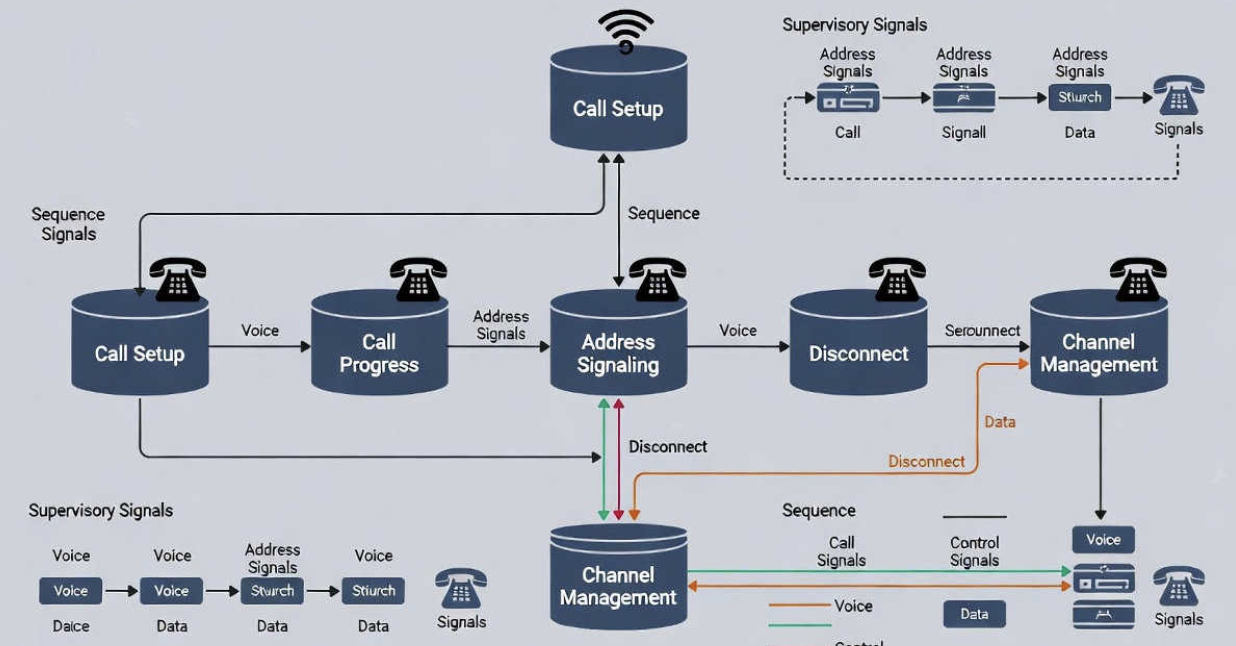
Understand channel associated signaling basics, protocols, troubleshooting, and its role in legacy and hybrid telecom systems today.
Key Takeaways
- Learn why channel associated signaling continues in specific telecom applications while networks shift to advanced options.
- Get practical steps for configuring E1/T1 lines and fixing common issues.
- Discover strategies for moving to modern signaling.
- Clear up myths with real-world deployment examples.
- Use checklists to handle setup and diagnostics effectively.
Even as we enter 2026 with 5G standalone networks expanding 181 operators in 73 countries investing in them, per recent GSA data many critical systems rely on proven signaling methods from earlier eras. Channel associated signaling (CAS) embeds control signals directly in the same channel as voice or data. This contrasts with common channel signaling (CCS), which separates them for better efficiency and features. From years configuring telecom gear, I’ve seen CAS provide solid performance in legacy setups or where simplicity wins out. This guide offers clear, hands-on insights into its workings, advantages, and practical management.
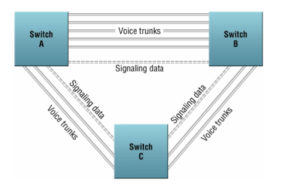
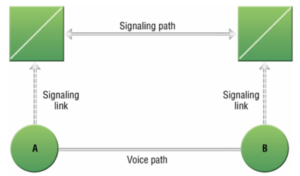
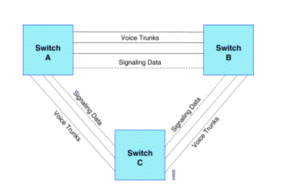
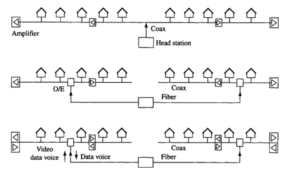
These visuals highlight the core contrast: CAS uses in-band signaling (shared with payload), while CCS employs out-of-band on dedicated paths.
What Is Channel Associated Signaling?
Channel associated signaling manages call control by placing signals right within the traffic channel. Engineers commonly apply it in T1 or E1 digital lines.
Core Definition and How It Works
CAS operates in-band, sharing bandwidth with content. In T1 systems, robbed-bit signaling periodically borrows the least significant bit, reducing capacity from 64 kbit/s to 56 kbit/s per channel. This suits resource-limited or straightforward environments, though it raises interference risks. In my fieldwork, this tight integration has kept circuits reliable where added separation would complicate things unnecessarily.
Key Protocols Like R1/R2 and E&M
CAS encompasses protocols such as R1 and R2 (tone-based for supervision) and E&M (DC levels for trunks). R2 adapts well to regional needs. I’ve resolved many PBX issues stemming from tone mismatches—getting frequencies and timings exact is crucial for stable connections.
Bandwidth Impacts and Technical Specs
E1 often dedicates time slot 16 to signaling, while T1 relies on robbed bits. This setup trades some payload space for control but fits lower-density trunks perfectly.
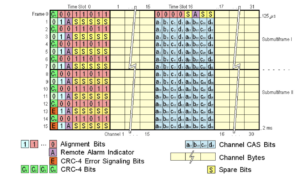
These E1 frame diagrams show time slot 16 handling CAS in multiframe structures.
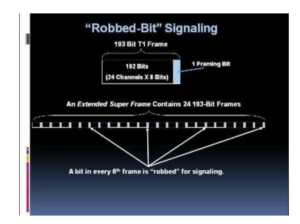
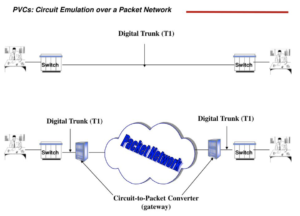
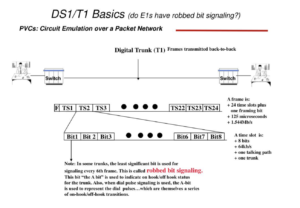
Here are T1 examples illustrating robbed-bit mechanics across frames.
CAS vs CCS: Key Differences Explained
Direct comparisons help decide when CAS fits best.
Advantages and Limitations Side by Side
CAS integrates signals closely for simplicity in isolated systems but shares traffic vulnerabilities. CCS (like SS7) separates them, improving security and handling larger scales. SS7 markets hover around USD 550-600 million in recent reports, underscoring its established position.
| Feature | Channel Associated Signaling (CAS) | Common Channel Signaling (CCS) |
| Bandwidth Use | Integrated, reduces payload (e.g., 64 to 56 kbit/s in T1) | Dedicated path, preserves full payload |
| Security | In-band, higher interference potential | Out-of-band, stronger protections |
| Scalability | Limited to per-trunk | Efficient for thousands of channels |
| Setup Speed | Direct but channel-bound | Faster with shared signaling link |
| Current Role | Valuable in legacies and hybrids | Dominant in packet-switched and 5G networks |
When to Choose CAS Over CCS in 2026
Choose CAS for existing hardware in stable, low-complexity environments—like remote sites I’ve supported. CCS leads in most new deployments, with 85 operators launching 5G standalone services across 47 countries as of late 2025.
Real-World Applications of Channel Associated Signaling
CAS remains active in various sectors.
Case Studies in Defense and Legacy Telephony
E&M variants secure trunks in defense where tolerance to certain disruptions matters. I’ve consulted on simulations where CAS maintained links when alternatives faltered. In enterprise settings, hospitals and similar facilities keep older PBXs running on T1/E1 CAS without full overhauls.
Hybrid Uses in Modern Networks
As networks evolve, gateways convert CAS to VoIP or IP-based signaling during transitions. This extends equipment life at network edges, something I’ve implemented to bridge old and new without immediate rip-and-replace.
Common Challenges and Pain Points
No signaling method is flawless CAS has specific hurdles.
Configuration Issues with ABCD Bits
In E1 CAS, ABCD bits signal line states (idle, seized, etc.). Wrong settings cause dropped calls or stuck lines. Tools like protocol analyzers help spot mismatches quickly.
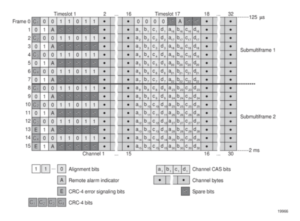
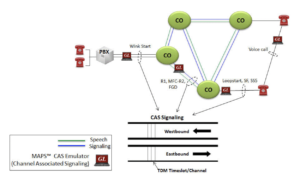
These show typical ABCD bit tables and related signaling flows.
Interference and Error Troubleshooting
In-band nature makes CAS sensitive to noise, especially in industrial areas where error rates can spike. Practical steps like channel isolation, filtering, and regular loop tests have cut problems significantly in systems I’ve tuned.
Myth-Busting Channel Associated Signaling
Let’s separate fact from fiction.
Is CAS Completely Obsolete in 2026?
Far from it. While CCS and IP dominate new builds, CAS persists in viable legacies. Replacing working systems solely for modernity can create unnecessary cost and e-waste—sustainability often favors targeted upgrades.
Security Myths vs. Real Vulnerabilities
Some assume age means insecurity, but in-band exposure is the real issue. Modern overlays and firewalls mitigate risks effectively, as seen in audits I’ve performed.
Data and Statistics on CAS Usage
Direct metrics on CAS are limited due to its legacy status, but related trends provide context. SS7 (a CCS example) markets stay around USD 550-600 million recently. Meanwhile, 5G standalone sees strong growth: 181 operators investing globally by late 2025, with 85 live launches.
Global Adoption Trends
Legacy TDM elements incorporating CAS linger in regional, industrial, and transitional networks. Phase-outs of older tech accelerate, but practical reuse keeps CAS relevant where upgrades lag.
Performance Metrics and Benchmarks
E1 supports up to 30 voice channels with CAS overhead. Error rates depend heavily on environment—clean lines perform well, while noisy ones need careful management.
Step by Step Implementation Guide
Let’s move to hands-on work.
Configuring CAS on E1/T1 Hardware
On routers (e.g., Cisco), define ds0-groups, specify timeslots, and set signaling type. Assign ABCD patterns correctly, then run loopback tests to confirm. I’ve used variations of these commands across deployments.
Actionable Checklist for Setup
- Verify interface and card support CAS.
- Select protocol (R2 for many international links).
- Configure timeslots and bit patterns.
- Test end-to-end signaling.
- Monitor initial calls for errors.
- Document and backup running config.
Migrating from CAS to Modern Signaling
Planning a shift? Here’s a grounded approach.
Unique Framework for Seamless Transition
- Assess — Inventory all CAS trunks and dependencies.
- Plan — Identify hybrid gateways for minimal disruption.
- Execute — Phase by site or circuit group.
- Optimize — Tune new setup and decommission old.
This has minimized downtime in transitions I’ve guided.
Case Study: Real-World Upgrade Success
Providers moving to CCS or IP often gain capacity and features with few outages, especially when phased carefully.
Future Proofing Strategies for 2026
Looking ahead while respecting what’s working.
Integrating CAS with AI and 5G
AI monitoring tools predict issues in hybrid environments. Network edges may retain CAS elements longer during 5G rollouts.
Security Enhancements and Best Practices
Layer VPNs or firewalls over existing lines. Schedule regular vulnerability scans and updates.
Frequently Asked Questions (FAQs)
What are the main differences between channel associated signaling and common channel signaling?
CAS embeds signals in the traffic channel, CCS uses a separate dedicated path.
How do I troubleshoot ABCD bits in E1 CAS?
Use analyzers to check expected states against actual fix config mismatches.
Is channel associated signaling still used in 2026?
Yes, in legacy systems, hybrids, and niches.
What protocols does CAS support?
R1/R2, E&M, and regional variants.
How does CAS impact bandwidth?
It reduces payload through bit robbing (T1) or dedicated slots (E1).
Can CAS work with VoIP systems?
Yes, via media gateways for conversion.
Channel associated signaling delivers reliable service in its established roles as 2026 unfolds. Review your infrastructure with the checklist and visuals here. For deeper dives: Common Channel Signaling Essentials, 5G Migration Paths, Telecom Protocol Details, Legacy Network Security, E1/T1 Configuration Guides, Emerging Network Trends. What’s your current signaling challenge?