

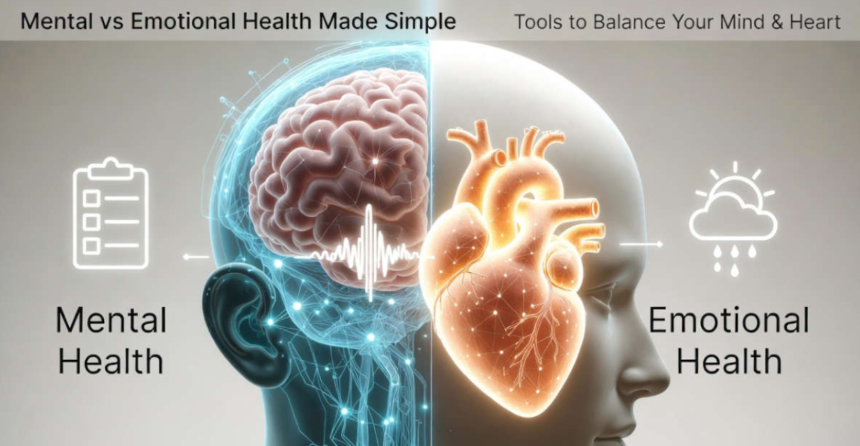
Why might your thoughts be clear but your feelings chaotic? Imagine Jamie, a 28-year-old graphic designer in a busy agency. She brainstorms ideas sharply, hitting every deadline with precision. But one critical email from a client? Her chest tightens, tears flow, and doubt crashes in like a wave. It’s not a full breakdown—it’s her emotional health signaling distress while her mental health keeps chugging along. This hits home for so many. I’m explaining mental vs emotional health from a beginner’s perspective, because most guides throw jargon at you and forget the practical stuff. Let’s break it down simply, like we’re chatting over coffee.
Understanding mental vs emotional health can make your days smoother. It’s not complicated. We’ll use easy analogies, checklists, and real examples. You’ll walk away with tools to try right away.
Understanding Mental Health Basics
Mental health is the foundation of how your mind works. It affects thinking, deciding, and adapting to life. When it’s strong, you feel capable.
Your Mind as a Dashboard: A Straightforward Analogy
Think of mental health like a car’s dashboard. It shows your speed (how fast you think), fuel level (energy), and warning lights (stress). It covers cognition processing information and how you behave in social situations.
Recent studies suggest over 1 billion people worldwide deal with mental health challenges, as per 2025 WHO data. It’s not just big issues; it’s everyday clarity too.
It’s crucial. Without it, small tasks feel huge.
Mental health isn’t about perfection. It’s about functioning well. If your dashboard flickers, you notice.
Busting Common Myths
Myth one: Mental health means no bad days ever. Wrong—it’s bouncing back from them.
A common mistake? Thinking it’s totally separate from emotions or your body. They’re all connected. Another myth: Only disorders count. Nope, daily fog matters too.
Honestly, these myths keep people from seeking help early.
Don’t fall for them. Recognize the links.
Quick Self-Check Checklist
Want to assess yours? Here’s a simple one:
- Can you focus on tasks without your mind wandering too much?
- Do decisions come without endless second-guessing?
- Are you adapting to changes without major panic?
- Is your energy steady, and sleep refreshing?
If you score low, it’s okay. It’s a starting point. Check again in a week repetition helps build awareness.
This checklist is straightforward. Use it often. It’s redundant but reinforces the habit.
Real-Life Case: When Mental Health Falters
Take Sarah, a 35-year-old teacher and mom. She was always organized, planning lessons effortlessly. But after a tough year with family illness, her mental health dipped. She forgot details, doubted her teaching, felt disconnected from routines. It wasn’t overwhelming sadness—just cognitive haze. She started with small habits like daily walks and to-do lists. In months, clarity returned, and she felt in control again.
This shows mental health directly impacts your daily function. In practice, dips like Sarah’s often stem from stress buildup. The trick I use is spotting early signs.
Mental vs emotional health begins here. Strengthen this base, and the rest follows easier.
Grasping Emotional Health Essentials
Emotional health is about your inner feeling world. It’s how you handle joy, anger, sadness without getting stuck. Good emotional health means expressing feelings healthily.
Emotions Like Changing Weather: Simple Comparison
Picture emotions as weather patterns. Sunny days are joy; storms are anger. Emotional health is your ability to forecast, prepare, and navigate them grabbing an umbrella (coping strategy) when needed.
As of 2026, APA surveys indicate 59% of Americans feel anxious about finances, hitting emotional health hard. It’s about awareness: Why this storm now? How to clear it?
Vital. Ignore the forecast, get soaked.
Emotions change fast. That’s normal. But managing them is key.
The Pitfall of Ignoring Feelings
The biggest mistake? Suppressing emotions. You think, “I’ll push through.” But they build up, leading to outbursts or numbness.
Alternatives include naming the feeling or talking it out. Downside: It feels vulnerable at first. But most people find it frees up energy.
Here’s the thing. Feelings are signals, not enemies.
Don’t bottle them. Acknowledge to release.
Everyday Work Example
Consider a team meeting. Your idea gets dismissed. With strong emotional health, you feel the sting, process it, and respond calmly later. Poor emotional health? You might snap or withdraw, damaging relationships.
At home, it helps with family arguments empathizing instead of escalating. In friendships, it builds trust through honest shares.
Emotional health ties into mental. When balanced, thinking clears up.
Mental vs Emotional Health: Key Differences and Links
Now, the heart of it. Mental vs emotional health aren’t opposites—they partner up. But confusing them causes mix-ups.
Side-by-Side Comparison Table
| Aspect | Mental Health | Emotional Health |
| Main Focus | Thinking, decisions, adaptation | Feelings, expression, recovery |
| Daily Signs | Clear focus, logical choices | Balanced reactions, healthy outlets |
| Common Issues | Worry loops, confusion | Mood swings, suppression |
| Improvement | Routines, therapy | Mindfulness, sharing |
| Overlap | Fog from stress amps feelings | Unmanaged emotions cloud thoughts |
This table highlights contrasts. See how they intersect?
Comparisons like this simplify. Use it as a reference.
Why Confusion Leads to Trouble
Mixing them? You might try logic to fix emotional pain—doesn’t work. Or dismiss mental fog as “just a bad mood.”
It creates spirals. Objectively, both have roles; ignoring one weakens the other.
Short: Clarify to heal.
Confusion drains energy. Address each distinctly.
How They Complement Each Other
The links are powerful. Strong mental health helps regulate emotions logically. Good emotional health clears mental space for better thinking.
In practice, this means activities like exercise boost both. Recent industry data indicates integrated approaches reduce stress by up to 40% in young adults.
They team up. Nurture one, the other strengthens.
Here’s a five-sentence dive: When emotions run high, mental clarity dips you overthink. But calm feelings let thoughts flow. Vice versa, sharp thinking tames wild emotions. It’s a cycle. Break it positively.
Myth: One Matters More?
Myth: Mental health is “more important” than emotional. No they’re equals.
From forums, people frustration stems from this hierarchy idea. Truth: Prioritize based on your symptoms, but balance both.
No superiority. Harmony wins.
Practical Ways to Strengthen Both
Knowledge is great, but action changes things. For mental vs emotional health, here’s how to build strength. Start small; consistency counts.
Step by Step Mental Boost Guide
- Establish routines: Wake at the same time, plan your day with a simple list. This wires stability in your brain.
- Challenge your thoughts by asking: “Is this a fact or just fear?” It helps reframe negative thinking.
- Connect with others: Talk to a friend or professional if fog persists.
- Fuel your body: Eat balanced meals, aim for 30 minutes of movement daily. It supports cognitive energy.
The trick most find helpful is step 2, it shifts perspective quickly.
Routines take time to stick. Be patient. It’s worth it.
Emotional Regulation Toolkit
- Breathing exercise: Try the 4-7-8 method—inhale for 4 seconds, hold for 7, and exhale for 8. It quickly eases feelings of overwhelm.
- Journaling: Write “I feel X because Y.” Uncovers patterns.
- Safe sharing: Confide in a trusted person. Releases buildup.
- Nature breaks: Step outside for 10 minutes. Resets mood.
Downsides? It requires practice, and vulnerability can feel odd initially. But rewards include lighter days.
Combine with mental steps for synergy. Redundant? Yes, but integration deepens understanding.
Integrated Case Study: From Imbalance to Harmony
Back to Jamie. Her client’s feedback triggered emotional chaos—self-doubt, irritability at home. Mentally, she planned workarounds fine, but the fog crept in from unchecked feelings. She used the toolkit: Daily breathing to calm storms, journaling triggers. For mental boost, she added routines like morning lists. Over three months, emotions stabilized, thinking sharpened. Now, she handles critiques with grace, and her designs shine brighter. Relationships improved too—no more snapping at loved ones.
This case illustrates how mental vs emotional health intertwine. In practice, addressing both usually means faster recovery. Most folks see wins in weeks.
Jamie’s story isn’t unique. Stressors like work pile on both. Start where it hurts most.
Frequently Asked Questions (FAQs)
Is Emotional Health a Part of Mental Health?
Many experts view it as a subset—mental health is broader, including thinking and social well-being. But they’re distinct: Mental processes info; emotional handles reactions. Treating them separately often yields better results, though integration is key.
How Can I Spot Emotional Health Problems?
Look for frequent mood swings, numbness to joys, or overreactions to small things. Physical signs like constant tension or headaches can clue you in. If it disrupts work or relationships, that’s a red flag.
Best Tips to Improve Mental vs Emotional Health?
For mental: Build routines and challenge negative thoughts. For emotional: Practice breathing and journaling. Start with one per week; combine for synergy. Balance with rest—overdoing can backfire.
Does Poor Emotional Health Impact Mental Well-Being?
Yes, absolutely. Bottled feelings can cloud thinking, leading to anxiety or decision paralysis. The reverse happens too mental fog amplifies emotions. Addressing both prevents the cycle.
What Are Signs of Strong vs Weak Emotional Health?
Strong: Balanced responses, quick recovery from upsets, easy expression. Weak: Extremes like constant anger or apathy, avoidance of feelings. Self-awareness is the big differentiator here.
How Do They Affect Relationships and Work?
Poor mental health might cause withdrawal or indecision, straining teams. Bad emotional health leads to conflicts or miscommunications. Strong in both? Deeper empathy, better productivity, and stronger bonds overall.
You’ve got the tools to unpack mental vs emotional health now. Feels empowering, right?
Pick one tip like the breathing exercise and try it this week. Small changes add up.
Take care, friend.