
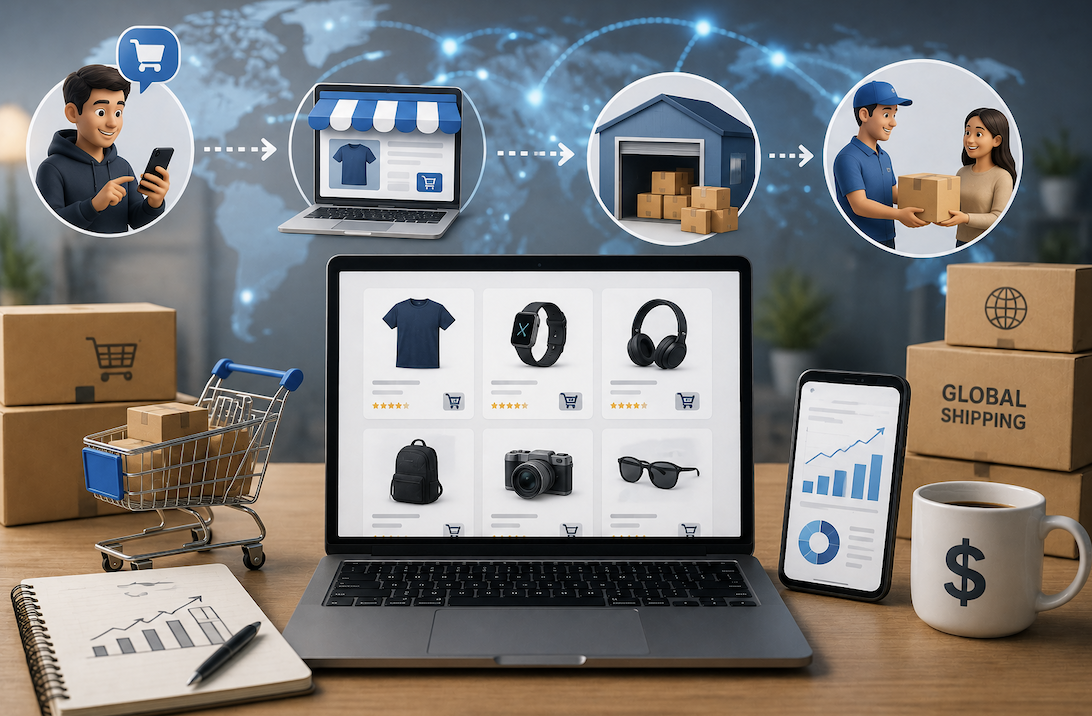
Dropshipping has been promoted for years as an easy way to start an online business without holding any inventory, yet the reality of running a successful dropshipping business looks quite different from the simplified version often presented online. This article explains what dropshipping actually involves, how it genuinely works, and whether it remains a realistic business model today.
Part of what makes this topic worth revisiting is how much the landscape has shifted since dropshipping first became popular. What worked as a strategy several years ago often no longer produces the same results, and understanding why helps set far more realistic expectations for anyone considering this path today.
What Dropshipping Actually Means
Dropshipping is a retail fulfillment method where a store owner sells products without physically stocking any inventory themselves. Instead, when a customer places an order, the store owner purchases the item from a third party supplier, who then ships it directly to the customer. The store owner never actually handles or stores the physical product at any point in this process.
This model appeals to many aspiring entrepreneurs because it significantly lowers the upfront investment typically required to start a retail business, since there is no need to purchase inventory in advance or manage warehouse space.
How a Typical Dropshipping Business Actually Operates
A dropshipping business typically begins with a store owner setting up an online storefront, often through an established ecommerce platform, and listing products sourced from one or more suppliers. When a customer places an order and pays, the store owner then places a corresponding order with the supplier, paying the wholesale price and keeping the difference as profit.
- The store owner lists products without ever physically holding inventory
- Customer orders trigger a corresponding order placed with the supplier
- The supplier ships the product directly to the customer, often unbranded
- The store owner keeps the difference between the retail and wholesale price as profit
This process requires careful coordination between the store’s ordering system and the supplier’s fulfillment process, since delays or errors on the supplier’s end directly affect the customer experience, even though the store owner has limited direct control over shipping and fulfillment.
Why Dropshipping Has Become More Challenging Over Time
The dropshipping landscape has genuinely become more competitive and challenging compared to its earlier years, largely because the business model’s low barrier to entry means many people have entered the space, driving up advertising costs and customer acquisition challenges significantly.
- Advertising costs on major platforms have risen substantially, squeezing profit margins
- Increased competition has made standing out in saturated product categories more difficult
- Longer shipping times from overseas suppliers can frustrate customers accustomed to fast delivery
- Building genuine customer trust has become harder as awareness of dropshipping has grown
What Actually Separates Successful Dropshipping Businesses Today
Despite these challenges, dropshipping has not disappeared, and businesses that succeed today generally differentiate themselves in ways that go beyond simply listing generic products at a markup.
- Building a genuine brand identity rather than running a generic, interchangeable storefront
- Choosing niche products with less saturated competition rather than broadly popular trending items
- Partnering with reliable suppliers who offer reasonably fast shipping times
- Investing in genuine customer service rather than treating support as an afterthought
- Focusing on building an audience through content rather than relying solely on paid advertising
Realistic Expectations for Anyone Considering Dropshipping
- Success typically requires genuine ongoing effort, not a passive, hands off income stream
- Profit margins tend to be thinner than many online courses and guides suggest
- Building trust and a genuine brand takes meaningfully more time than simply launching a store
- Most successful dropshippers eventually transition toward holding some inventory or private labeling
How Product Selection Genuinely Affects Long Term Success
Choosing which products to sell remains one of the most consequential early decisions in building a dropshipping business, and it deserves considerably more thought than simply picking whatever appears to be trending at the moment. Trending products often attract a flood of competing sellers almost immediately, driving up advertising costs and squeezing margins for everyone involved, including the earliest sellers who initially saw genuine success with that product.
More sustainable approaches often involve identifying products that solve a specific, genuine problem for a defined audience, even if that audience is smaller than a broad trending category. This narrower focus can support stronger branding, more targeted advertising, and considerably less direct competition compared to broadly popular, oversaturated product categories that attract sellers purely chasing short term trends.
- Trending products often become oversaturated with competition extremely quickly
- Niche products solving specific problems can support stronger, more defensible branding
- Smaller, well defined audiences often respond better to targeted, relevant advertising
- Long term product selection strategy matters considerably more than chasing short term trends
Final Thoughts
Dropshipping remains a viable way to start an online business with lower upfront costs, but the version that genuinely works today requires far more strategic effort, branding, and patience than the simplified, passive income narrative often suggests. Understanding these realistic expectations from the start makes it considerably easier to build something that actually lasts.
Anyone seriously considering this path is generally better served treating it as a genuine, ongoing business venture rather than a quick side project, since the entrepreneurs who succeed tend to be the ones willing to test, adjust, and invest real effort into building something customers genuinely trust, rather than those simply chasing whatever product happens to be trending this particular week.
Frequently Asked Questions
1. Is dropshipping still a legitimate business model in 2026?
Yes, it remains legitimate, though it has become considerably more competitive, meaning realistic success generally requires genuine branding, careful product selection, and consistent effort rather than a simple, effortless setup.
2. How much money do I actually need to start a dropshipping business?
Starting costs are lower than traditional retail since no inventory is purchased upfront, though realistic budgets should still account for advertising, platform fees, and testing different products before finding what genuinely works.
3. Why do so many dropshipping stores fail?
Common reasons include insufficient differentiation from competitors, underestimating advertising costs, poor supplier reliability, and treating the business as passive rather than requiring genuine ongoing effort and adaptation.
4. Do successful dropshipping stores eventually hold their own inventory?
Many do transition toward holding inventory or private labeling their own products once they establish a proven, successful product line, since this often improves profit margins and shipping times considerably.