Smart Office Design: How Collaborative Workspaces Power Business Growth
The way people work has changed dramatically. Traditional cubicles and static layouts no longer support how teams think, communicate, or innovate. Today, high performing businesses rely on workspaces designed around people, not outdated office rules.
Modern offices prioritize flexibility, comfort, and connection. When employees can move freely, collaborate easily, and focus without friction, performance improves naturally. As a result, workplaces become more than physical locations; they turn into drivers of productivity and growth.
For growing companies, a well-planned office fitout is no longer optional. It transforms a simple layout into a strategic asset that supports daily operations and long-term goals.
Activity-Based Workspaces: One Office, Many Ways to Work
No single desk can support every task in a workday. That’s why activity-based working has become essential.
This model allows employees to choose spaces based on what they need to do:
- Open areas for brainstorming and collaboration
- Quiet zones for deep focus and analysis
- Informal lounges for quick discussions
By moving between spaces, employees stay energized and engaged. This flexibility reduces mental fatigue and prevents burnout. Over time, teams remain more creative, focused, and productive, directly supporting business performance.
Open Layouts With Smart Sound Control
Open offices encourage teamwork, but unmanaged noise can hurt concentration. That’s why acoustic planning is critical in collaborative workspaces.
Effective designs balance openness with sound control using:
- High back seating and privacy booths
- Acoustic panels and soft furnishings
- Defined quiet and collaborative zones
These elements reduce distractions without isolating teams. As a result, employees can collaborate freely while others stay focused. Smart acoustic design keeps productivity high across departments.
Using Furniture to Shape Collaboration
Furniture plays a powerful role in how people interact at work. Instead of walls, modern offices use furniture to define spaces and guide behavior.
Thoughtful furniture choices include:
- Modular tables for flexible layouts
- Mobile whiteboards for quick idea sharing
- Standing height tables for fast discussions
- Ergonomic seating for longer meetings
Varied seating encourages movement, improves posture, and reduces fatigue. When people feel physically comfortable, collaboration becomes more natural and effective.
Technology That Makes Teamwork Effortless
Even the best-designed space fails without the right tools. Collaborative areas must support seamless communication and easy teamwork.
Essential features include:
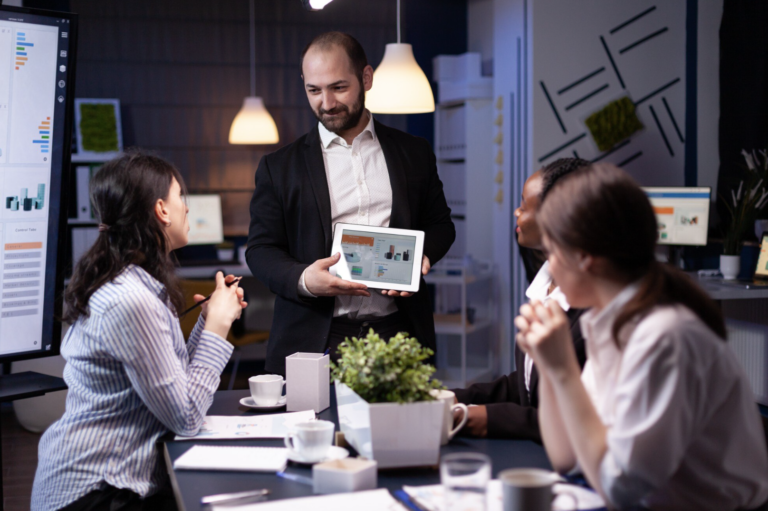
- Large shared screens for visibility
- Wireless connectivity for quick setup
- Accessible power and charging points
When technology works smoothly, meetings become more productive. Employees participate confidently without technical delays. In turn, teams make faster decisions and deliver better results.
Natural Light and Biophilic Design Boost Performance
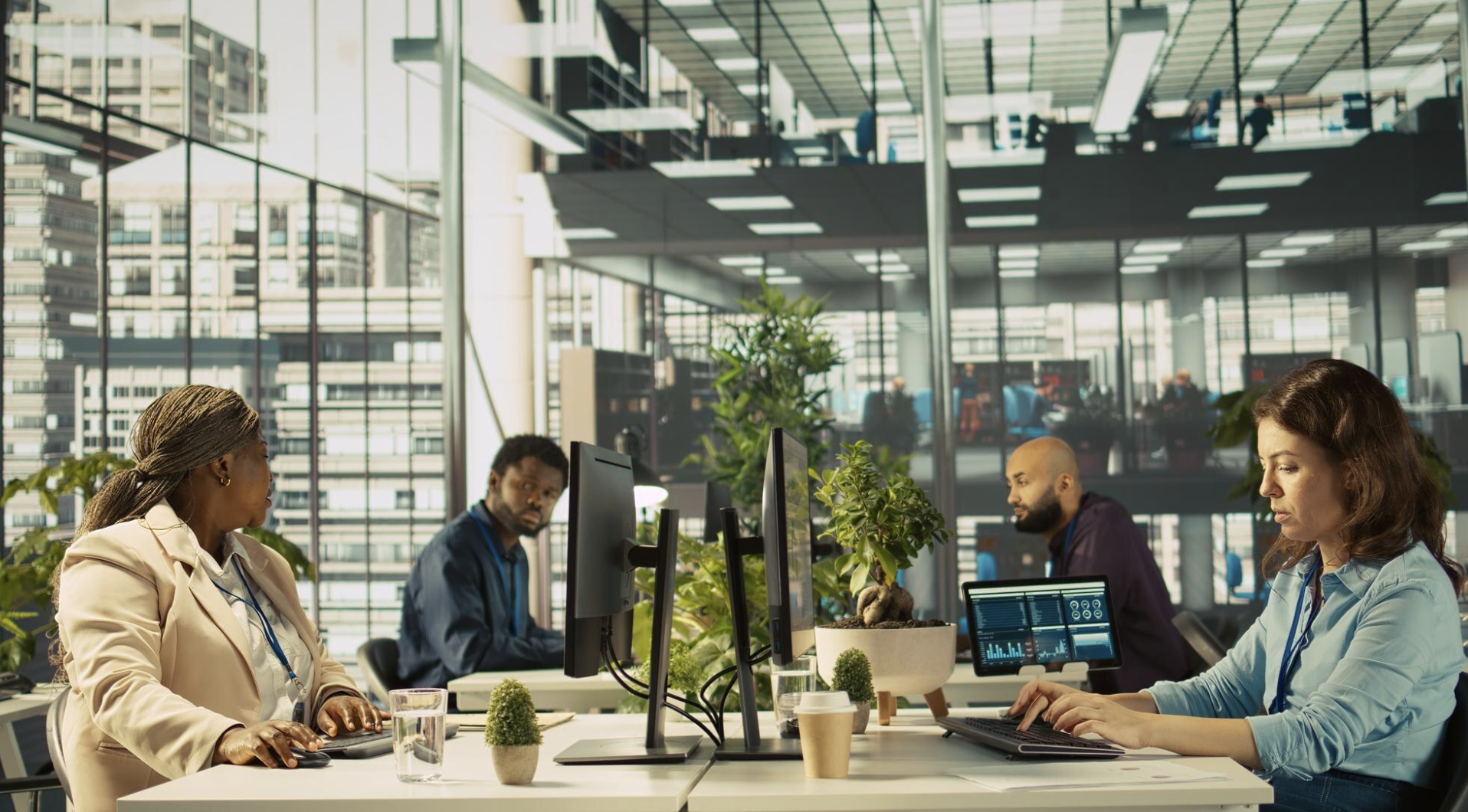
Lighting has a major impact on focus, mood, and energy. Poor artificial lighting often leads to fatigue, while natural light supports healthier work patterns.
Maximizing daylight helps:
- Improve alertness and concentration
- Support natural sleep cycles
- Increase morale and motivation
Where natural light is limited, biophilic design makes a difference. Indoor plants, natural textures, and organic materials reduce stress and create visual comfort. Together, these elements support employee well-being and sustained productivity.
Embedding Brand Identity Into the Office
A workspace should reflect what a company stands for. When employees feel connected to their environment, engagement grows.
Design elements can communicate brand values through:
- Glass walls that suggest transparency
- Warm materials that feel welcoming
- Bold colors that express innovation and energy
When people are proud of their workplace, loyalty increases. Engaged teams contribute more consistently, supporting long-term performance and culture.
Designing Layouts That Support Daily Movement
The best office layouts follow how people naturally move and work. Observing daily routines often reveals bottlenecks and inefficiencies.
Smart layout planning focuses on:
- Clear pathways to reduce interruptions
- Strategic placement of shared spaces
- Separation of quiet zones from busy areas
Easy access to tools and technology encourages regular collaboration. As a result, workflows become smoother and communication improves across teams.
Why Strategic Workspace Design Fuels Business Success
Office design directly influences how teams think, collaborate, and perform. A supportive environment encourages experimentation and innovation.
Over time, the benefits become measurable:
- Higher productivity
- Stronger engagement
- Reduced staff turnover
- Faster project delivery
By reimagining the workplace, businesses create conditions for sustainable growth. Thoughtful design aligns people, processes, and profits, turning the office into a powerful engine for long term success.