
WhatsApp Introduces Parent Linked Accounts for Pre Teens
WhatsApp has announced a new feature designed to improve online safety for younger users. The messaging platform is launching parent linked accounts for children under 13, allowing families to stay connected while giving parents more control over how their children use the app.
The feature was introduced by Meta after receiving feedback from parents who wanted a safer way to communicate with their children through WhatsApp. Although the app is officially rated 13+ on both the Apple App Store and Google Play Store, many younger users already rely on it to stay in touch with family members.
How Parent Managed WhatsApp Accounts Work
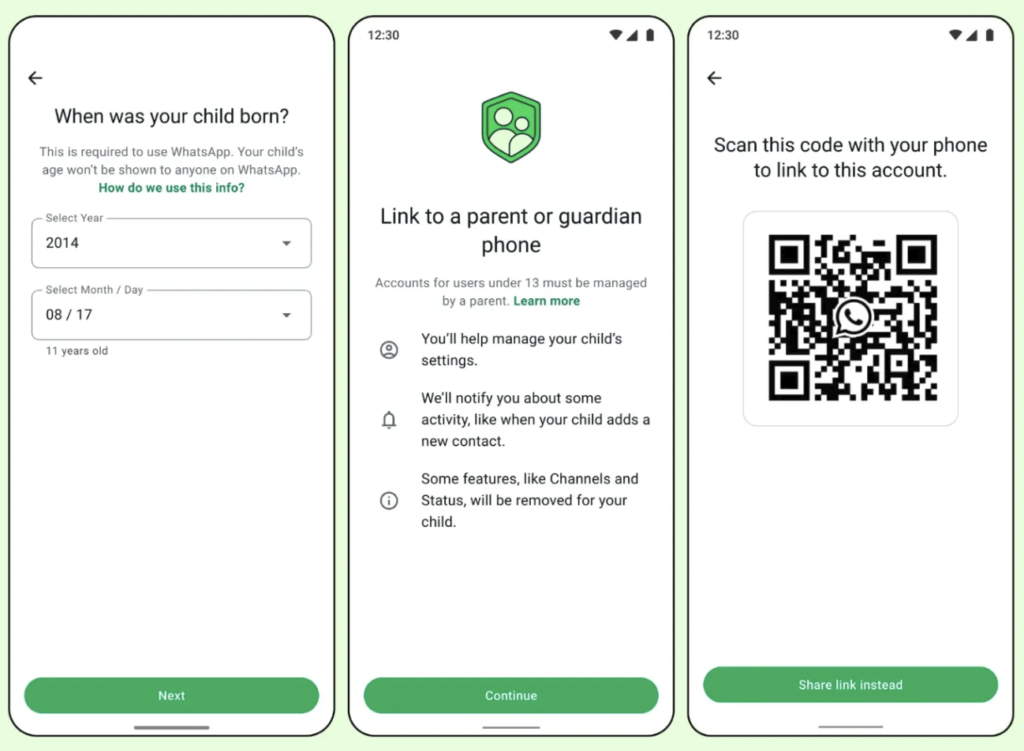
The new accounts require direct involvement from a parent or guardian during setup. Both the parent’s phone and the child’s device must be present to activate the account.
To link the accounts, parents scan a QR code that verifies the connection between the two devices. Once the account is created, parents gain access to several supervision tools designed to monitor activity and improve safety.
These accounts are intentionally limited. Pre teen users can only send messages and make calls, while several advanced features remain unavailable.
Importantly, Meta confirmed that advertising will not be shown to these younger users.
Built-In Activity Alerts for Parents
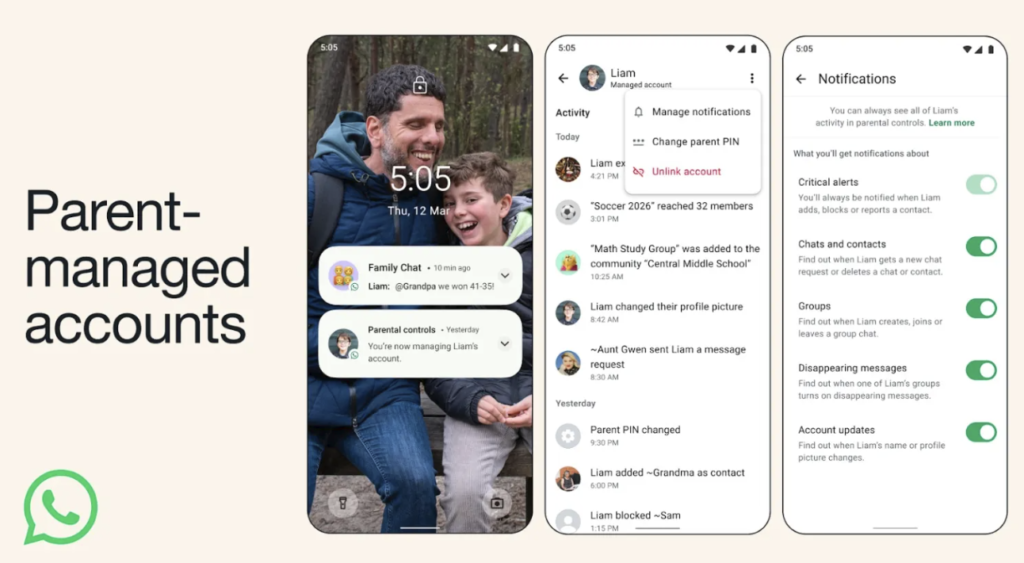
Parents receive automatic notifications about certain actions taken on the child’s account. By default, alerts are triggered when a pre teen:
- Adds a new contact
- Blocks a contact
- Reports another user
In addition to these standard alerts, parents can activate optional notifications for other activities, such as:
- Changing a profile name or picture
- Receiving a chat request from someone new
- Joining, creating, or leaving a group
- A group enabling disappearing messages
- Deleting a chat or removing a contact
All parental controls are protected by a six digit PIN, which parents can manage directly from their own device.
Features That Are Restricted for Younger Users
To create a safer messaging environment, several WhatsApp features will not be available on pre teen accounts.
These include:
- Meta AI
- WhatsApp Channels
- Status updates
Pre-teen users will also be unable to enable disappearing messages in one-to-one conversations.
Despite these limitations, Meta confirmed that all messages and calls remain protected with end to end encryption, ensuring conversations stay private.
Additional Safety Measures for Unknown Contacts
WhatsApp is also introducing safeguards when younger users receive messages from people they don’t know.
When a message request arrives from an unknown contact, the app will display a context card showing helpful details such as:
- Whether the sender shares a group with the user
- The country where the sender’s phone number originates
Pre teens can also silence calls from unknown numbers, and images sent by unfamiliar contacts are automatically blurred for safety.
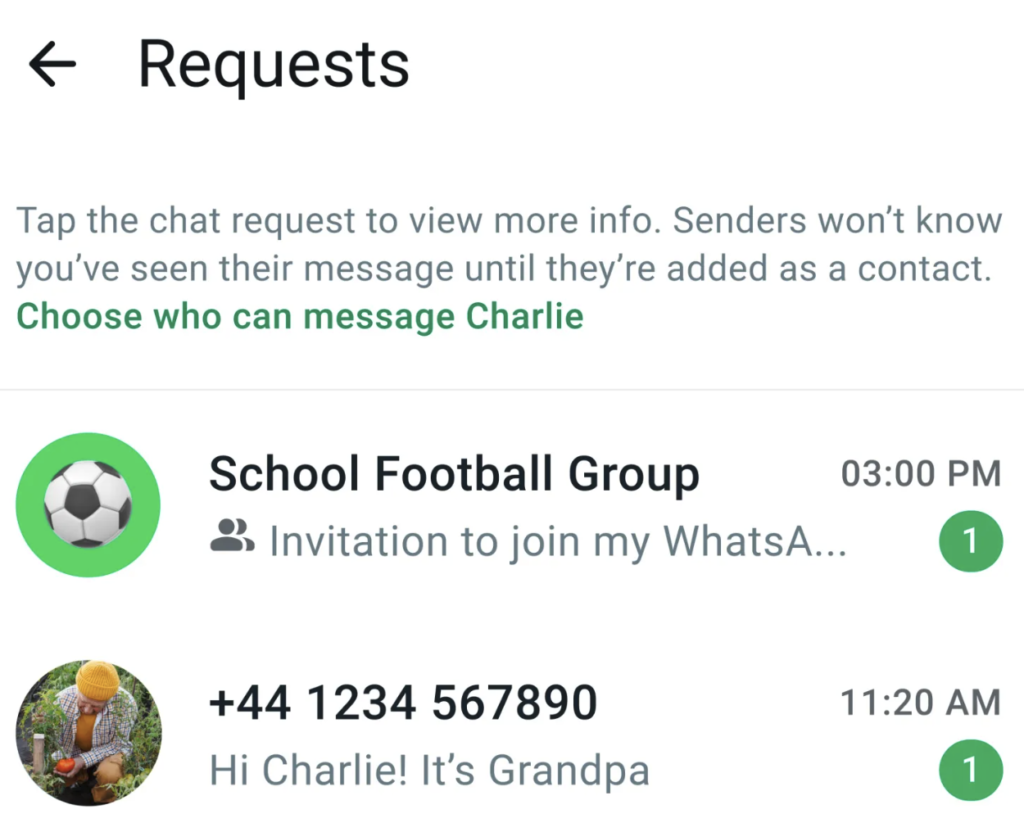
Chat requests from unknown users are placed in a separate folder that can only be accessed with the parent’s PIN. Similarly, group invite links require parental approval before the child can join.
Before accepting a group invitation, parents can review important details like:
- The number of members in the group
- The group administrator
What Happens When the Child Turns 13?
As pre teen users grow older, WhatsApp will notify them that their account can be converted into a standard account with full access to the platform.
However, Meta plans to introduce an option allowing parents to delay this transition for up to 12 months, giving families more control over when expanded access becomes available.
Global Rollout and Growing Safety Concerns
The new parent managed accounts are initially rolling out in select regions, with a wider global release expected in the coming months.
Meta has already introduced similar safety features on platforms like Instagram and Facebook to protect younger users online.
The move also comes as governments in countries such as Denmark, Germany, Spain, and the United Kingdom consider stricter regulations on social media access for minors.
With more than three billion users worldwide, WhatsApp’s new parental controls aim to balance communication convenience with stronger digital safety for younger audiences.