
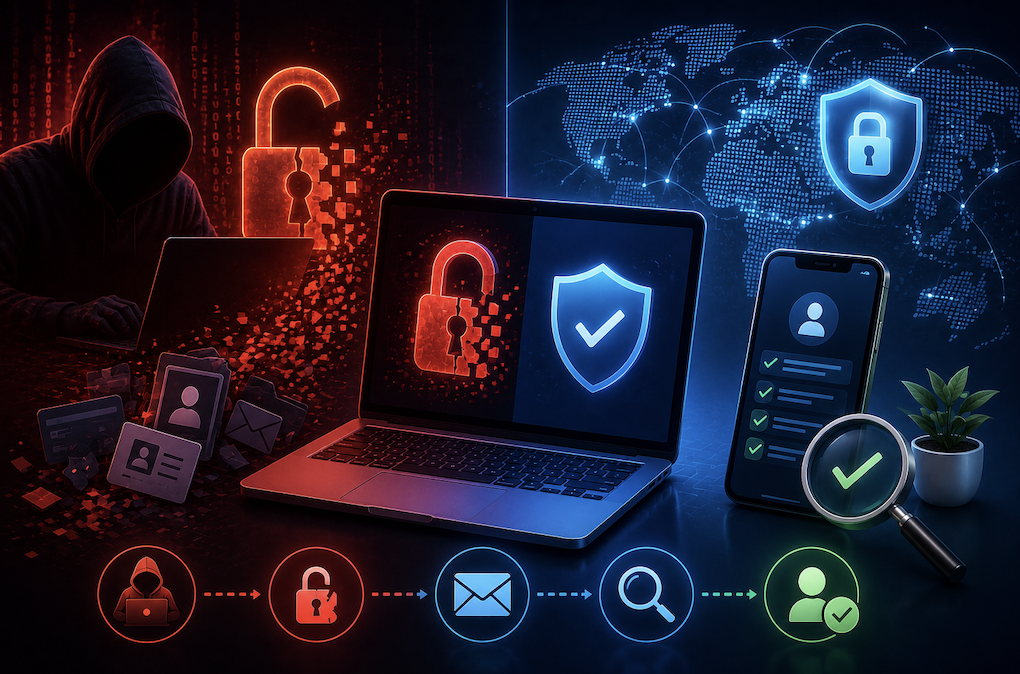
News headlines about major companies losing millions of customer records to hackers have become almost routine, yet many people still are not entirely sure what a data breach actually involves or whether their own personal information has ever been exposed. Understanding what happens during a data breach, and knowing how to check if you were personally affected, are both genuinely useful skills in today’s connected world.
What a Data Breach Actually Is
A data breach occurs when unauthorized individuals gain access to sensitive information stored by a company or organization, whether through hacking, an exposed database, or another security failure. This exposed information often includes email addresses, passwords, names, phone numbers, and in more severe cases, financial details or government identification numbers.
Once this information gets exposed, it frequently ends up circulating on forums or marketplaces frequented by cybercriminals, sometimes sold, sometimes shared freely, and often compiled together with data from other breaches to build increasingly detailed profiles of affected individuals.
How Data Breaches Actually Happen
Data breaches occur through a variety of methods, and understanding these common causes helps explain why they remain such a persistent problem even for large, well resourced companies.
- Hackers exploiting a technical vulnerability in a company’s website or software
- Phishing attacks that trick employees into revealing login credentials
- Misconfigured databases accidentally left accessible without proper security
- Insider threats, where someone with legitimate access misuses their permissions
- Third party vendors with weaker security who have access to a company’s data
Because modern companies often work with numerous third party services and vendors, a breach does not always originate from the company itself, but rather from a partner organization with access to shared data.
Why a Data Breach Matters Even if You Feel You Have “Nothing to Hide”
A common misconception is that data breaches only matter to people with something sensitive to protect. In reality, even seemingly minor exposed information, like an email address paired with a password, can be dangerous, since many people reuse the same password across multiple accounts, giving attackers a potential foothold into other, more sensitive accounts entirely unrelated to the original breach.
- Reused passwords across multiple sites significantly amplify the damage from a single breach
- Exposed email addresses can be used for targeted phishing attempts
- Combined data from multiple breaches can enable identity theft over time
- Even seemingly minor information can be pieced together with other leaked data
How to Actually Check if You Were Affected
Several free, reputable tools exist specifically to help you check whether your email address or other personal information has appeared in a known data breach. These services maintain databases of breach information and allow you to search by email address, alerting you if a match is found in any known incident.
- Search your email address using a reputable, well established breach checking website
- Check whether your phone number has appeared in any known breach databases
- Review any built in breach alerts offered by your password manager or browser
- Set up ongoing monitoring alerts so you get notified automatically about future breaches
What to Do if You Discover You Were Affected
- Change the password for the affected account immediately, along with any other accounts using the same password
- Enable two-factor authentication on the affected account and any related accounts
- Monitor your financial statements closely if the breach involved payment information
- Be extra cautious of phishing attempts referencing the breach, since scammers often exploit these incidents
How Companies Are Generally Required to Respond to a Breach
Once a company discovers it has experienced a data breach, many regions now have legal requirements dictating how quickly affected individuals must be notified and what information that notification needs to include. These regulations have grown considerably stricter over the past decade, reflecting a broader recognition of how seriously exposed personal data can affect people’s lives.
A typical company response usually involves investigating the scope of the breach, securing the vulnerability that allowed it to happen, and notifying both affected individuals and relevant regulatory authorities within a
legally mandated timeframe. Despite these requirements, notification delays still happen regularly, sometimes because the full scope of a breach takes considerable time to investigate thoroughly, which is exactly why proactively checking for your own exposure remains valuable rather than waiting passively for a notification that might arrive weeks or months later.
- Legal requirements in many regions mandate breach notification within a specific timeframe
- Companies must typically investigate and secure the vulnerability before full public disclosure
- Notification delays are common, making proactive personal checking a genuinely useful habit
- Regulatory fines for inadequate breach response have grown significantly in recent years
Final Thoughts
Data breaches have become an unfortunate but persistent reality of modern digital life, making it genuinely worthwhile to periodically check whether your own information has been exposed. Combining regular breach checks with strong, unique passwords and two-factor authentication gives you a realistic, practical way to limit the damage any single breach can actually cause.
No single habit eliminates the risk entirely, since breaches will likely keep happening as long as companies collect large amounts of personal data. What you can control is how quickly you respond once you learn about an exposure, and building that awareness into a regular routine, rather than only reacting after reading a news headline, makes a genuine, measurable difference over time.
Frequently Asked Questions
1. How often should I check if my information has been part of a data breach?
Checking periodically, or setting up ongoing automated alerts through a reputable breach monitoring service, is a reasonable approach, since new breaches are discovered and disclosed regularly.
2. Can I actually remove my information once it has been exposed in a breach?
Unfortunately, once data is exposed, it cannot truly be removed from wherever it has already spread, which is exactly why changing passwords and enabling additional security measures matters so much afterward.
3. Is it my fault if a company I trusted experiences a data breach?
No, a data breach results from a security failure on the company’s end, not something an individual user typically causes, though how you respond afterward significantly affects how much damage results.
4. Do small companies experience data breaches too, or is it just large corporations?
Data breaches affect organizations of every size, though breaches at large, well known companies tend to receive far more media attention due to the sheer number of people affected.