
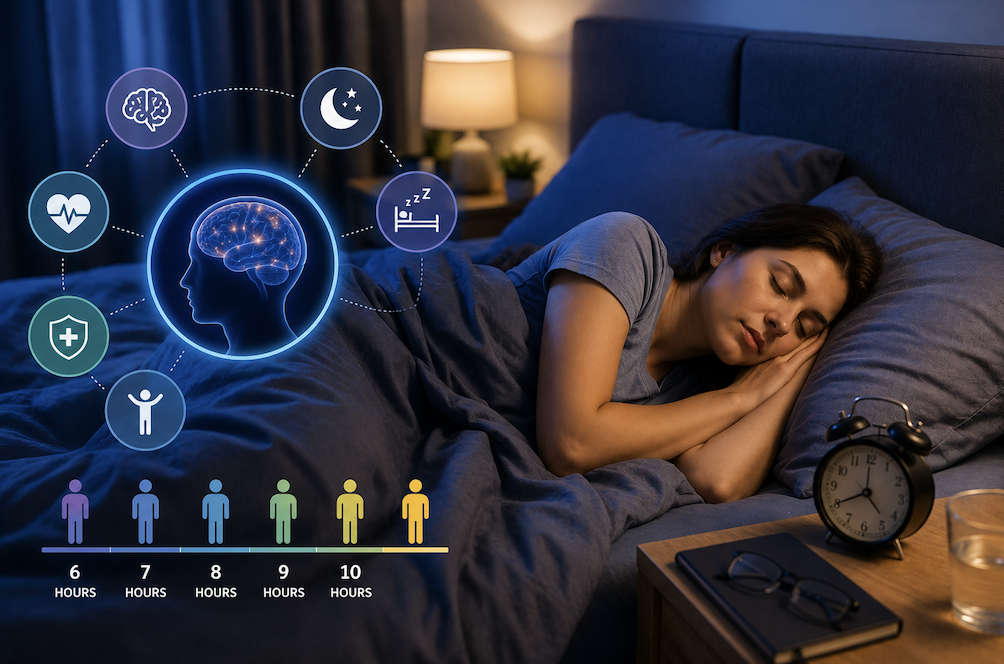
Conflicting advice about sleep seems to be everywhere, with some people insisting they thrive on just five hours a night while others swear by a strict eight hour minimum. Cutting through this noise with what research actually shows can help you make more informed decisions about your own sleep habits. This article breaks down what current sleep science actually says about how much rest adults genuinely need.
What Sleep Research Actually Recommends
Major health organizations, drawing on extensive research into sleep’s effects on physical and mental health, generally recommend that most adults get between seven and nine hours of sleep per night. This range reflects the amount of sleep associated with optimal functioning and long term health outcomes across large population studies, rather than a single rigid number that applies identically to every individual.
It is worth noting that this recommendation applies to the general adult population, and individual sleep needs can vary somewhat based on factors like age, activity level, and overall health status.
Why Sleep Needs Vary Somewhat Between Individuals
While the seven to nine hour range serves as a solid general guideline, genuine individual variation does exist, meaning some people may function well with slightly less sleep while others may need somewhat more to feel fully rested and perform at their best.
- Genetic factors appear to influence individual sleep needs to some degree
- Physical activity levels can affect how much recovery sleep your body requires
- Age related changes in sleep patterns occur gradually throughout adulthood
- Overall health conditions can meaningfully influence both sleep needs and sleep quality
Despite this individual variation, research consistently shows that consistently sleeping significantly below this general range is associated with negative health outcomes for the vast majority of adults, regardless of how alert someone might feel in the short term.
What Happens to Your Body With Insufficient Sleep
Chronic sleep deprivation affects considerably more than just feeling tired the next day, with research linking insufficient sleep to a wide range of both short term and long term health consequences.
- Impaired cognitive function, including reduced concentration, memory, and decision making ability
- Weakened immune system function, making illness somewhat more likely
- Increased risk of several chronic health conditions when sleep deprivation becomes long term
- Mood disturbances, including increased irritability and higher risk of anxiety symptoms
- Impaired physical performance and slower reaction times, relevant to safety in daily activities
Common Myths About Sleep Worth Addressing
Several persistent myths about sleep continue circulating despite not being well supported by current research, and clearing these up can help set more realistic expectations.
- The idea that you can fully “catch up” on significant sleep debt over a single weekend is largely a myth
- Claims that certain exceptional individuals genuinely thrive long term on very little sleep are rare exceptions, not the norm
- The belief that sleep quality does not matter as long as you get enough total hours overlooks genuine research on sleep cycles
- The assumption that older adults need dramatically less sleep than younger adults is not strongly supported by evidence
Practical Tips for Improving Sleep Quality, Not Just Quantity
Maintain a consistent sleep and wake schedule, even on weekends, to support your body’s natural rhythm
- Limit screen exposure in the hour or so before bed, since blue light can interfere with your ability to fall asleep
- Keep your bedroom cool, dark, and quiet to support deeper, more restorative sleep
- Avoid caffeine in the several hours leading up to bedtime, since its effects can linger longer than expected
- Pay attention to how you actually feel during the day, not just how many hours you technically slept
How Sleep Needs Change Gradually Across Adulthood
While the seven to nine hour recommendation applies broadly across most of adulthood, sleep patterns and needs do shift gradually as people age, reflecting genuine underlying changes in how the body regulates
sleep. Younger adults often experience deeper, more consolidated sleep, while older adults may naturally experience lighter sleep with more frequent brief awakenings throughout the night, even when their total sleep need remains relatively similar.
These gradual shifts do not mean older adults inherently require dramatically less sleep, despite a common misconception suggesting otherwise. Rather, the structure and quality of that sleep tends to change somewhat, which is part of why older adults sometimes report feeling less rested despite spending a similar total number of hours in bed compared to their younger years.
- Sleep architecture gradually shifts with age, even when total sleep needs remain fairly stable
- Older adults often experience lighter sleep with more frequent brief nighttime awakenings
- This explains why some older adults feel less rested despite similar total sleep duration
- Understanding these natural changes helps set more realistic expectations about sleep quality over time
Final Thoughts
Current sleep research consistently points to seven to nine hours as the general range most adults genuinely need for optimal health and functioning, even though some individual variation naturally exists. Paying attention to both how much you sleep and how well you actually sleep offers a more complete, realistic picture than focusing on hours alone.
Rather than fixating on a single perfect number, it can help to notice patterns over time, how you feel, think, and function across a typical week, and use that as your real, personal guide alongside these general scientific recommendations, adjusting your habits accordingly rather than chasing an arbitrary target that may not perfectly match your own body’s actual needs.
- Read more about Techsipra!
Frequently Asked Questions
1. Is it actually possible to train your body to need less sleep?
Genuine research does not support the idea that most people can meaningfully and sustainably reduce their biological need for sleep without experiencing real negative consequences, despite what some productivity focused advice might suggest.
2. Does napping during the day count toward my overall sleep needs?
Short naps can provide some benefit and partially offset mild sleep deprivation, though they generally cannot fully replace consistent, adequate nighttime sleep for most people.
3. Why do I sometimes feel tired even after sleeping a full eight hours?
Sleep quality matters just as much as total sleep duration, meaning fragmented or poor quality sleep can leave you feeling tired even after spending enough total hours in bed.
4. Should I be concerned if I consistently need more than nine hours of sleep?
Occasionally needing more sleep is generally normal, particularly during illness or high stress periods, though a consistent, ongoing need for significantly more sleep might be worth discussing with a healthcare provider.