
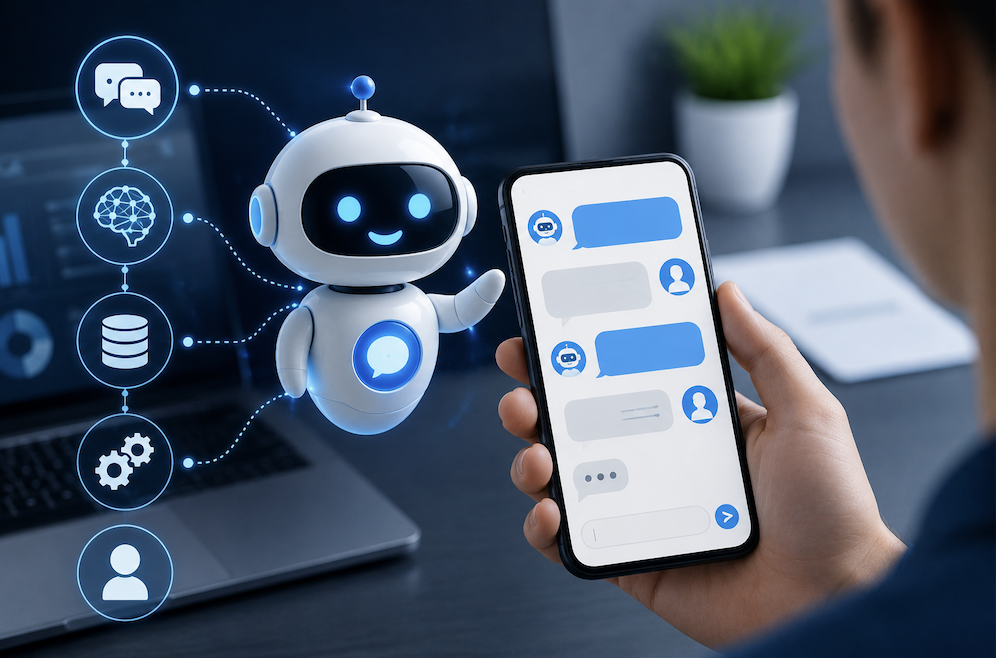
Typing a question into a customer service window and receiving an instant, relevant response, without ever waiting for a human representative, has become such a normal part of online shopping and customer service that most people barely register that a chatbot is involved at all. Understanding how these systems actually work reveals a genuinely interesting range of technology, from surprisingly simple to remarkably sophisticated, all operating under the same general label.
What a Chatbot Actually Is
A chatbot is a software application specifically designed to simulate conversation with human users, typically through text, though increasingly through voice as well. Chatbots exist across a genuinely wide spectrum of sophistication, ranging from simple systems that match specific keywords to predetermined responses, all the way to advanced systems capable of understanding context and generating genuinely novel, conversational replies.
This wide spectrum matters for understanding why some chatbot interactions feel genuinely helpful and natural, while others feel frustratingly rigid and limited, since the underlying technology powering a specific chatbot varies enormously depending on what the business or developer actually implemented for their particular use case and budget.
How Simpler, Rule-Based Chatbots Actually Work
The most basic type of chatbot operates using predetermined rules, essentially a structured decision tree that matches specific keywords or phrases within a user’s message to predetermined, scripted responses.
- The system scans incoming messages for specific keywords or phrases it has been programmed to recognize
- Matched keywords trigger a corresponding predetermined response from a library of scripted answers
- These systems generally cannot handle questions phrased differently than their programmed recognition patterns
- Rule-based chatbots work well for narrow, predictable use cases with a limited range of expected questions
This rule-based approach explains why some chatbots feel genuinely frustrating to interact with, since they can only recognize the specific phrasings and keywords they were explicitly programmed to handle, meaning a genuinely reasonable question phrased even slightly differently than expected can leave the system unable to provide a relevant, helpful response.
How More Advanced AI-Powered Chatbots Actually Work
More sophisticated chatbots rely on natural language processing and machine learning, allowing them to understand the genuine meaning and intent behind a message rather than simply matching specific predetermined keywords or phrases.
- These systems analyze the actual meaning and context of a message, not just specific keyword matches
- Machine learning models trained on large amounts of conversational data help the system understand varied phrasing
- Advanced systems can maintain context across multiple messages within an ongoing conversation
- Some systems can generate genuinely novel responses rather than selecting from predetermined, fixed scripts
This intent-based understanding represents a genuinely significant technical advance over simple keyword matching, allowing these more sophisticated chatbots to handle the same underlying question phrased in many genuinely different ways, correctly recognizing that “I want a refund” and “can I get my money back” both express the same fundamental underlying intent.
Why Businesses Have Widely Adopted Chatbot Technology
Understanding the genuine practical motivations behind widespread chatbot adoption helps explain why this technology has become such a common feature across websites and customer service systems.
- Chatbots can handle a genuinely large volume of routine inquiries simultaneously, unlike individual human agents
- They provide instant availability around the clock, without requiring continuous human staffing
- Handling routine, repetitive questions through automation frees human staff for more complex issues
- Well-implemented chatbots can genuinely reduce customer wait times for common, straightforward questions
Common Everyday Applications of Chatbot Technology
- Customer service systems handling common questions about orders, returns, and account issues
- Website assistants helping visitors navigate a site or find specific information
- Appointment scheduling systems that handle booking through conversational interaction
- Internal business tools helping employees quickly find information or complete routine tasks
- Personal digital assistants that handle various everyday tasks through conversational commands
The Genuine Limitations Even Advanced Chatbots Still Face
Despite genuine technical sophistication, chatbots still encounter real limitations worth understanding, particularly for anyone relying on them for genuinely important or complex interactions.
- Highly complex, nuanced, or emotionally sensitive situations often still benefit from genuine human judgment
- Chatbots can occasionally misunderstand context or provide confidently incorrect information
- Some users genuinely prefer human interaction, particularly for frustrating or complicated issues
- Well-designed chatbot systems generally include a clear path to escalate to human support when genuinely needed
This escalation pathway deserves particular attention, since the most genuinely effective chatbot implementations recognize their own limitations, providing a straightforward way for users to reach human support when a conversation exceeds what the automated system can appropriately handle, rather than trapping frustrated users within an unhelpful automated loop.
How to Recognize When You Are Interacting With a Chatbot
- Notice if responses feel somewhat generic or fail to genuinely address the specific nuance of your question
- Look for disclosure, since many businesses now clearly label their chatbot interactions as automated
- Test with a genuinely unusual or specific question, since simpler chatbots often struggle noticeably with this
- Consider the context, since customer service and website help windows commonly use chatbot technology
Practical Tips for Getting Better Results From Chatbot Interactions
- Phrase your question as clearly and specifically as possible, avoiding unnecessary complexity
- If a chatbot clearly is not understanding your issue, look for an option to escalate to human support
- Be patient with simpler, rule-based systems, since they often respond best to straightforward keyword phrasing
- Take advantage of chatbot convenience for genuinely simple, routine questions where speed matters most
How Chatbots Handle Handoffs to Human Agents
A genuinely important design consideration for any well-built chatbot involves how smoothly it transitions a conversation to a human agent when the automated system reaches the limits of what it can appropriately handle. Poorly designed handoffs often force users to repeat information they already provided to the chatbot, creating genuine frustration precisely when a user is already dealing with a problem the automated system could not resolve.
Well-designed systems instead pass along the full conversation context to the receiving human agent, allowing that person to pick up seamlessly without requiring the user to start over from scratch. This handoff quality genuinely varies considerably between different implementations, and it often serves as a reasonably reliable indicator of how much genuine thought and investment a business has put into their overall customer service technology, beyond just the initial automated interaction itself.
- Well-designed handoffs pass full conversation context along to the receiving human agent
- Poorly designed handoffs often force users to frustratingly repeat information already provided
- This handoff quality often reflects broader investment in genuinely thoughtful customer service design
- Noticing handoff quality can help you gauge how seriously a business treats its overall customer experience
Final Thoughts
Chatbots represent a genuinely wide spectrum of technology, from simple keyword-matching systems to sophisticated AI capable of understanding genuine conversational intent, all working to provide instant, automated responses to common questions and requests. Understanding this underlying variety helps explain why chatbot experiences can feel so different depending on which specific technology a particular business has actually implemented, and helps set realistic expectations for what these systems can and cannot genuinely handle well.
- Read more about Techsipra
Frequently Asked Questions
1. Are all chatbots powered by artificial intelligence?
No, chatbots exist across a genuine spectrum, from simple rule-based systems using predetermined keyword matching to sophisticated AI-powered systems using natural language processing, with the specific technology varying considerably based on the implementation.
2. Can chatbots actually understand emotions or tone?
Some more advanced systems attempt to detect emotional tone or sentiment within messages, though this remains a genuinely difficult technical challenge, and even sophisticated systems can miss important emotional nuance that a human would readily pick up on.
3. Why do some chatbots feel more natural to talk to than others?
This typically reflects the underlying technology’s sophistication, with more advanced natural language processing systems generally producing considerably more natural, contextually appropriate conversations compared to simpler, rule-based systems.
4. Is it always obvious when I am talking to a chatbot instead of a human?
Not always, particularly with more sophisticated systems, though many businesses now proactively disclose when you are interacting with an automated system, partly due to growing expectations around transparency in customer interactions.
5. Will chatbots eventually replace human customer service entirely?
Most businesses currently use chatbots to handle routine, straightforward inquiries specifically to free up human staff for more complex issues, suggesting a genuinely complementary relationship rather than complete replacement, at least for the foreseeable future.