A single click to share an article takes less than a second, yet that quick action can spread inaccurate information to dozens or even hundreds of people within moments. Learning to pause and evaluate content before sharing has become a genuinely valuable habit in today’s fast moving information environment. This article walks through practical, concrete ways to spot fake news before it spreads any further through your own sharing.
The good news is that spotting misleading content does not require any special training or technical expertise. A handful of consistent, simple habits can catch the vast majority of fabricated or misleading stories before you ever hit the share button.
Why Fake News Spreads So Easily in the First Place
Fake news often spreads faster than accurate reporting precisely because it is frequently designed to trigger a strong emotional reaction, whether that is outrage, fear, or excitement. These emotional responses drive people to share quickly, often without pausing to verify accuracy first, while more measured, factual reporting can seem comparatively less urgent or shareable.
Social media algorithms further amplify this dynamic, since content generating strong engagement, regardless of accuracy, tends to get shown to more people, creating a feedback loop that can spread misinformation considerably faster than corrections or fact checks ever manage to catch up.
Checking the Actual Source Before You Trust the Content
One of the most effective first steps involves looking closely at where a piece of content actually originated, rather than simply trusting it because a friend or contact shared it.
- Check whether the publishing website has a genuine, verifiable track record of accurate reporting
- Look for an “About” page providing real information about who runs the publication
- Be cautious of website names that closely mimic legitimate, well known news outlets
- Search for the same story on other established, reputable news sources to verify it independently
Red Flags That Often Indicate Unreliable Content
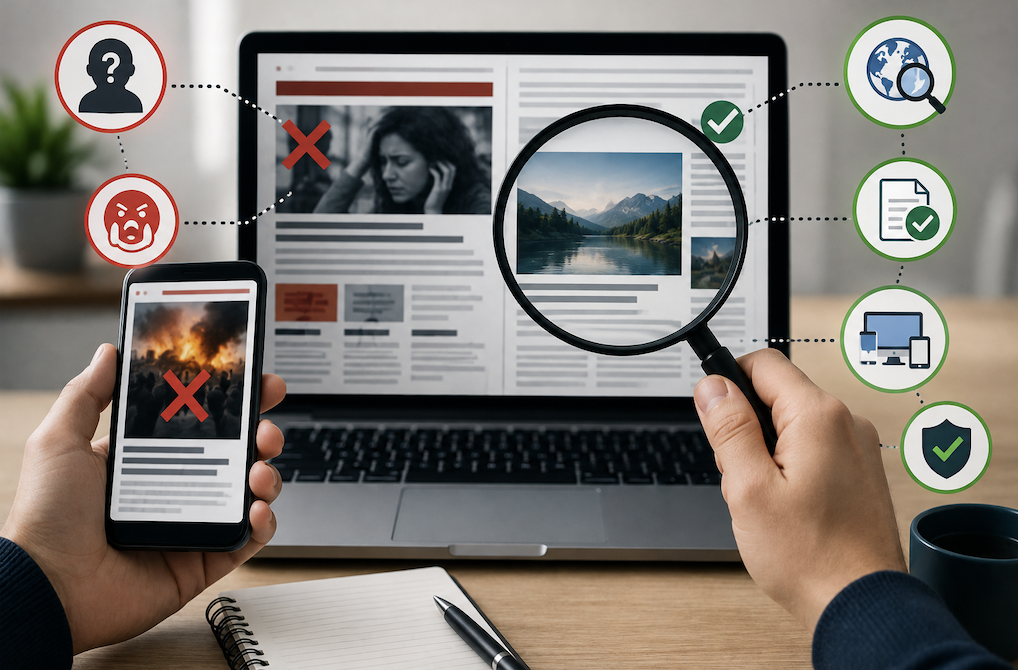
Certain patterns and characteristics show up repeatedly in fabricated or misleading content, and learning to recognize them helps you evaluate new content more quickly and confidently.
- Headlines making dramatic claims that seem designed primarily to provoke strong emotion
- Articles lacking any named author or verifiable, credible sources for their claims
- Content with excessive capitalization, exclamation points, or urgent, alarmist language
- Claims that seem to confirm exactly what you already believe without any real supporting evidence
- Images or quotes that seem oddly specific or too perfectly convenient for the story being told
How to Verify a Claim Before Sharing It Further
Before sharing any piece of content, taking just a few extra minutes to verify its accuracy can prevent you from unintentionally contributing to the spread of misinformation.
- Search for the same claim or story using a search engine to see if credible outlets are also reporting it
- Check whether the image accompanying a story has been used elsewhere, in a different, unrelated
context - Look up the original source of any statistic or quote rather than trusting a secondhand summary
- Consider using a reputable fact checking website for particularly viral or contested claims
Why Your Own Pause Genuinely Matters
Every individual decision to pause and verify before sharing contributes meaningfully to slowing the overall spread of misinformation, even if it feels like a small, individual action. Since much of the spread of fake news relies on rapid, unverified sharing by individuals, this simple habit collectively makes a genuine difference across the broader information ecosystem.
Practical Habits Worth Building Going Forward
- Make a personal rule to verify particularly surprising or emotionally charged content before sharing
- Follow a diverse range of credible sources rather than relying on a single narrow perspective
- Gently share corrections with friends or family if you notice them sharing something inaccurate
- Stay humble and willing to update your own understanding when presented with credible new evidence
How Reverse Image Searching Can Help Verify Photos
A surprisingly effective and simple verification technique involves reverse image searching any photo attached to a suspicious or surprising story, checking whether that same image has appeared previously in a completely different, unrelated context. This is a remarkably common tactic behind misleading content, where a genuine
photograph from an entirely different event or time period gets recirculated with a new, fabricated caption designed to mislead.
Most major search engines offer a built in reverse image search feature, allowing you to upload or paste an image link and see where else it has appeared online. If a photo supposedly documenting a very recent event actually turns up in search results from several years earlier, or from an entirely different location, that is a strong signal the accompanying story deserves considerably more skepticism before you consider sharing it further.
- Reverse image searching reveals whether a photo has been recycled from a different context
- This technique specifically catches a very common and effective misinformation tactic
- Most major search engines offer this feature built directly into their standard search tools
- Combining this check with source verification provides a genuinely strong first line of defense
Final Thoughts
Spotting fake news before sharing it comes down to building a consistent habit of pausing, checking sources, and verifying surprising or emotionally charged claims before passing them along to others. This small individual habit, practiced consistently, genuinely contributes to a healthier, more accurate information environment for everyone.
None of these verification steps take more than a few minutes, yet collectively they represent one of the most practical, accessible defenses available against the spread of misinformation. The goal is not perfection, but rather a genuine, consistent habit of thoughtful pause before you hit that share button.
Frequently Asked Questions
1. How can I quickly check if a news story is genuinely legitimate?
Searching for the same story on other established, reputable news outlets, and checking the original publisher’s track record, are both quick, effective first steps before trusting or sharing any content.
2. Is it always obvious when content is fake or misleading?
Not always. Sophisticated fake news can be genuinely convincing, which is exactly why developing consistent verification habits matters more than relying solely on gut instinct alone.
3. What should I do if I accidentally shared something inaccurate?
Simply delete or correct the post as soon as you realize the mistake, and consider sharing the accurate information as a follow up, since most people appreciate an honest correction.
4. Are fact checking websites themselves always reliable?
Reputable, well established fact checking organizations generally maintain strong editorial standards, though it remains reasonable to cross reference particularly significant or contested claims across multiple sources.