

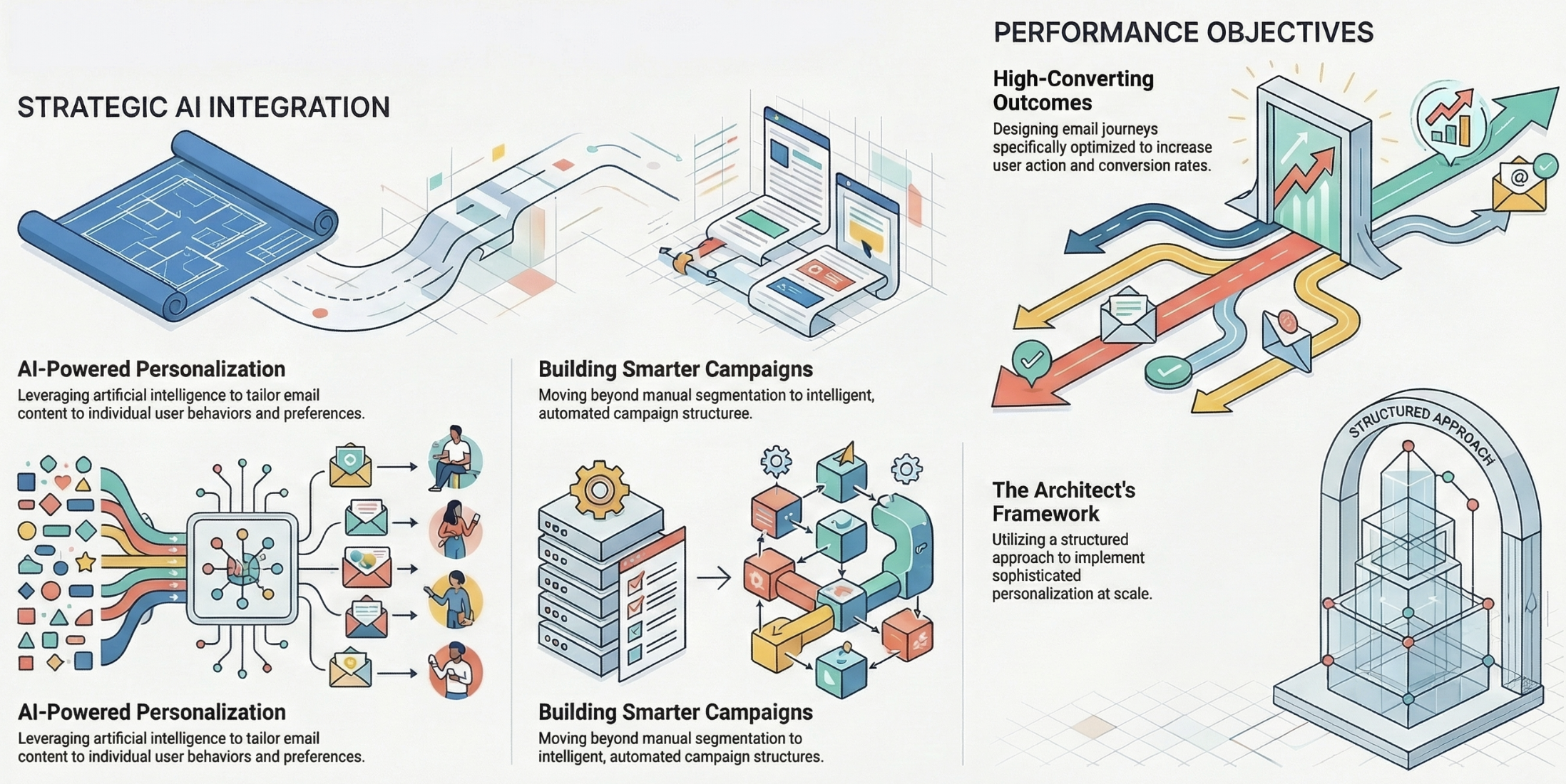
Email marketing has evolved far beyond basic segmentation and generic messaging. Today, AI powered email personalization allows us to deliver highly relevant, behavior driven content that resonates with each recipient on an individual level. By leveraging artificial intelligence, we can transform static campaigns into dynamic, data driven experiences that significantly improve engagement, conversions, and customer loyalty.
Below, we break down exactly how to use AI for email personalization with precision and scale.
What AI Email Personalization Really Means
AI email personalization goes beyond inserting a first name into a subject line. It involves using machine learning algorithms, predictive analytics, and behavioral data to craft emails that adapt to each user’s preferences, actions, and intent.
With AI, we can:
- Analyze user behavior patterns
- Predict future actions
- Automatically generate tailored content
- Optimize timing, subject lines, and offers
This results in emails that feel one to one, even when sent to thousands of recipients.
Key Benefits of AI in Email Personalization
1. Hyper Relevant Content Delivery
AI enables us to send precisely targeted messages based on user behavior, browsing history, and past interactions. This increases the likelihood of engagement and conversions.
2. Real Time Adaptation
Instead of static campaigns, AI allows emails to update dynamically based on real-time data such as location, device, or recent activity.
3. Predictive Targeting
AI identifies patterns and predicts what a user is most likely to do next, helping us deliver high impact offers at the right moment.
4. Improved Open and Click Rates
With optimized subject lines and personalized content, AI significantly boosts open rates, CTR, and ROI.
How to Use AI for Email Personalization Effectively
1. Collect and Structure High-Quality Data
AI depends on data. We must gather and organize:
- Demographic data (age, location, preferences)
- Behavioral data (website visits, clicks, purchases)
- Engagement data (opens, time spent, interactions)
The more structured and accurate the data, the better AI performs in generating meaningful personalization.
2. Segment Audiences Using AI Clustering
Traditional segmentation relies on predefined rules. AI improves this by automatically grouping users based on hidden patterns and similarities.
Examples of AI-driven segments:
- High-value repeat buyers
- Inactive subscribers are likely to churn
- Users interested in specific product categories
This allows us to target audiences with laser precision.
3. Personalize Subject Lines with AI
Subject lines determine whether an email gets opened. AI tools analyze past performance and user behavior to generate high performing subject lines tailored to each recipient.
Effective AI personalization includes:
- Tone matching (formal vs casual)
- Urgency optimization
- Keyword relevance based on user interest
This leads to significantly higher open rates.
4. Optimize Send Time for Each User
AI identifies when each subscriber is most likely to engage. Instead of sending emails at a fixed time, we use send time optimization to deliver messages exactly when users are active.
Benefits include:
- Increased visibility in the inbox
- Higher open probability
- Reduced email fatigue
5. Create Dynamic Email Content
AI allows us to generate dynamic content blocks that change based on user data.
Examples:
- Product recommendations based on browsing history
- Location based offers
- Personalized CTAs aligned with user intent
Each recipient sees a unique version of the same email, improving relevance and engagement.
6. Use AI for Product Recommendations
One of the most powerful applications of AI is predictive product recommendation.
AI analyzes:
- Past purchases
- Browsing behavior
- Similar user profiles
Then suggests products that users are most likely to buy. This strategy drives:
- Higher conversion rates
- Increased average order value
- Better customer satisfaction
7. Automate Email Workflows with AI
AI enhances automation by making workflows smarter and more responsive.
Examples of AI powered workflows:
- Welcome sequences tailored to user intent
- Abandoned cart emails with dynamic incentives
- Re engagement campaigns triggered by inactivity
Automation ensures that every email is timely, relevant, and personalized.
8. Improve Copywriting with AI Assistance
AI can generate email copy that adapts to:
- User preferences
- Engagement history
- Emotional triggers
This helps us create:
- Personalized greetings
- Customized offers
- Context aware messaging
The result is more compelling and persuasive communication.
9. Continuously Optimize with AI A/B Testing
AI takes A/B testing further by automatically testing multiple variations and learning in real time.
We can test:
- Subject lines
- Email layouts
- CTA placements
- Content variations
AI then identifies the best performing version and scales it instantly.
10. Predict Customer Behavior and Intent
AI models predict:
- Likelihood to purchase
- Risk of churn
- Engagement probability
Using these insights, we can:
- Send targeted retention campaigns
- Offer timely discounts
- Re-engage users before they disengage
This proactive approach significantly improves long-term results.
Best Practices for AI Email Personalization
To maximize results, we follow these principles:
- Focus on relevance over volume
- Keep personalization natural and meaningful
- Avoid overloading emails with too much data
- Continuously refine data quality
- Monitor performance metrics closely
Consistency and data accuracy are critical for sustained success.
Common Mistakes to Avoid
Even with AI, mistakes can limit performance:
- Using poor quality or incomplete data
- Over personalizing in a way that feels intrusive
- Ignoring testing and optimization
- Sending too many emails without value
Avoiding these ensures that personalization remains effective and user friendly.
Future of AI in Email Personalization
AI continues to evolve rapidly, introducing:
- Real-time content generation
- Emotion based personalization
- Voice and interactive email experiences
As these technologies mature, email marketing will become even more intelligent, predictive, and user centric.
Conclusion
AI has transformed email marketing into a precision driven, highly personalized channel. By leveraging data, automation, and predictive insights, we can create email experiences that feel tailored to each individual.
When implemented correctly, AI driven personalization leads to:
- Higher engagement
- Better customer relationships
- Increased revenue
The key is to combine data intelligence with strategic execution, ensuring every message delivers value and relevance.