
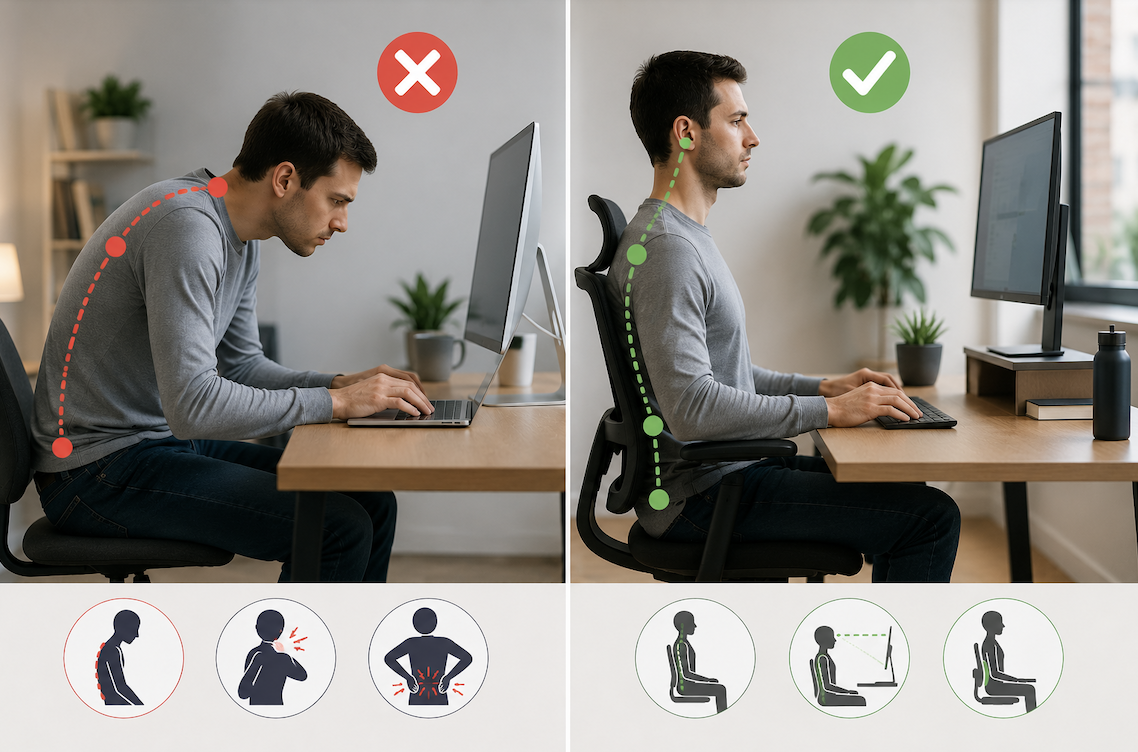
Spending eight or more hours a day hunched over a desk, whether at an office or working from home, takes a genuine, cumulative toll on your body that often goes unnoticed until it manifests as persistent discomfort or pain. Understanding why desk-based posture problems develop, and what genuinely effective adjustments can help, offers practical guidance for anyone spending significant time at a desk throughout their workday.
Why Desk Work Genuinely Challenges Good Posture
Understanding why sitting at a desk creates such consistent posture challenges, even for people who genuinely intend to maintain good posture, helps explain why this remains such a common, persistent issue despite widespread awareness.
- Prolonged sitting naturally encourages certain muscles to weaken while others become chronically tight
- Screen-focused work often encourages a forward head position that strains the neck over time
- Maintaining ideal posture requires genuine, active muscular effort that becomes fatiguing to sustain constantly
- Poor ergonomic setups can make maintaining good posture considerably more difficult, regardless of intention
This muscular fatigue factor deserves particular emphasis, since maintaining genuinely ideal posture requires active engagement from postural muscles throughout the day, and as these muscles tire, particularly without adequate breaks or ergonomic support, posture naturally deteriorates even among people who consciously intend to sit properly.
Setting Up Your Workspace to Genuinely Support Good Posture
Your physical desk setup significantly affects how easily you can maintain good posture throughout the day, making thoughtful ergonomic adjustment one of the most genuinely impactful steps available.
- Position your monitor so the top of the screen sits at or slightly below your natural eye level
- Ensure your chair provides adequate lower back support, adjusting or adding support if genuinely needed
- Keep your feet flat on the floor, or use a footrest if your chair height does not naturally allow this
- Position your keyboard and mouse to allow your elbows to rest at approximately a ninety-degree angle
- Keep frequently used items within easy reach to avoid repeatedly twisting or reaching awkwardly
Understanding What Genuinely Good Sitting Posture Actually Looks Like
Beyond desk setup, understanding what genuinely good sitting posture actually involves provides a concrete reference point for the position you are actually working to maintain throughout the day.
- Your back should be genuinely supported, maintaining the natural curve of your spine rather than slouching
- Your shoulders should remain relaxed rather than hunched or pulled forward toward your ears
- Your head should be positioned over your shoulders rather than jutting forward toward your screen
- Your hips should be positioned slightly higher than or level with your knees while seated
Why Movement Matters as Much as Static Posture
A genuinely important, sometimes overlooked insight involves recognizing that even perfect static posture maintained for hours without movement still creates genuine strain, making regular movement breaks just as important as the actual sitting position itself.
- Set reminders to stand up and move every thirty to sixty minutes throughout your workday
- Incorporate brief stretching specifically targeting commonly tight areas like the neck, shoulders, and hips
- Consider alternating between sitting and standing if you have access to an adjustable desk setup
- Take short walks during breaks rather than remaining seated throughout your entire lunch period.
This movement principle genuinely matters because research increasingly suggests that prolonged static sitting, even in a genuinely good posture, carries its own health considerations independent of posture quality alone, making regular movement breaks a genuinely important complement to proper ergonomic setup rather than an optional addition.
Specific Stretches and Exercises That Genuinely Help
Certain targeted stretches and strengthening exercises can genuinely help counteract the specific muscular imbalances that develop from prolonged desk work, addressing both the immediate tension and underlying contributing factors.
- Chest and shoulder stretches to counteract the forward-hunched position common during desk work
- Neck stretches specifically addressing tension from prolonged forward head positioning
- Core and back strengthening exercises to support better sustained posture throughout the day
- Hip flexor stretches, since prolonged sitting genuinely tends to tighten these specific muscles
Common Posture Mistakes Worth Specifically Avoiding
- Sitting on the edge of your chair without genuine lower back support
- Crossing your legs for extended periods, which can create genuine postural imbalance over time
- Cradling your phone between your ear and shoulder during calls rather than using a headset or speaker
- Positioning your screen too low, encouraging a genuinely problematic forward head, downward gaze position
When Persistent Discomfort Warrants Professional Attention
- Pain that persists despite genuine ergonomic adjustments and consistent movement breaks
- Numbness or tingling sensations, which may indicate a more significant underlying issue
- Pain that genuinely interferes with your ability to complete normal daily activities
- Any symptoms that worsen progressively over time despite your genuine efforts to address them
Why Individual Body Differences Affect Ideal Posture
Recommendations
While general posture guidelines provide a genuinely useful starting reference point, it is worth recognizing that individual body proportions, existing physical conditions, and personal comfort genuinely affect what actually constitutes ideal positioning for any specific person, meaning generic advice sometimes requires thoughtful, personal adjustment.
Someone with naturally longer legs relative to their torso, for example, may need different chair and desk height adjustments than standard ergonomic guidelines assume, while someone with an existing back condition may need to prioritize different specific adjustments than general population recommendations suggest. Treating standard ergonomic guidelines as a genuinely useful starting point rather than a rigid, universal prescription, and paying attention to your own body’s specific response to different adjustments, tends to produce better genuine long-term results than mechanically following generic advice without any personal calibration.
- Individual body proportions and existing conditions genuinely affect what constitutes ideal positioning for you specifically
- Standard ergonomic guidelines provide a useful starting point rather than a rigid, universal prescription
- Paying attention to your own body’s response helps you calibrate generic advice to your specific situation
- This personalized approach tends to produce better long-term comfort than mechanically following generic recommendations
Final Thoughts
Improving your posture during desk work requires a genuine combination of thoughtful ergonomic setup, conscious attention to proper sitting position, and regular movement throughout the day, since even ideal static posture maintained without movement still creates cumulative strain over time. Taking these practical steps seriously, rather than waiting until discomfort becomes genuinely significant, offers a considerably more effective, preventive approach to protecting your long-term physical comfort during the many hours most desk workers spend in this position throughout their careers.
- Read more about Techsipra
Frequently Asked Questions
1. How often should I actually get up and move during a typical workday?
Many ergonomic experts suggest standing or moving every thirty to sixty minutes briefly, though even shorter, more frequent movement breaks throughout the day can provide genuine benefit compared to remaining continuously seated for extended periods.
2. Is a standing desk genuinely better than a traditional seated desk for posture?
Standing desks can help by allowing position variation throughout the day, though standing with poor posture creates its own genuine problems, making proper positioning important regardless of whether you are sitting or standing at any given moment.
3. Can poor posture from desk work genuinely cause long-term health problems?
Yes, chronic poor posture can genuinely contribute to persistent musculoskeletal pain and discomfort over time, making proactive attention to ergonomics and posture a worthwhile, genuinely preventive investment rather than something to address only after problems develop.
4. How long does it typically take to notice improvement after making posture adjustments?
This varies by individual, though many people report some genuine improvement in comfort within a few weeks of consistent ergonomic adjustment and regular movement breaks, while addressing more significant existing muscular imbalances may take longer.
5. Should I see a physiotherapist for desk-related posture problems?
If you experience persistent discomfort despite genuine ergonomic adjustments and consistent movement, consulting a physiotherapist can provide personalized, professional guidance specifically tailored to your particular posture challenges and any underlying contributing factors.