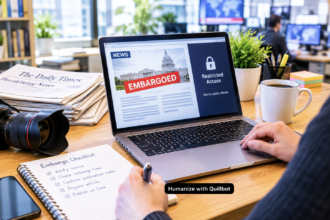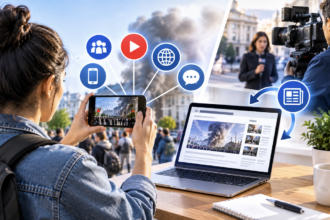

A journalist covering a controversial local story received an anonymous threat warning her to drop the investigation, an experience that has become disturbingly common for reporters in certain parts of the world while remaining almost unthinkable in others. These stark differences in what journalists can safely report have led researchers to develop detailed methods for measuring press freedom across different countries. This guide explains how these measurements work and what they reveal.
What Press Freedom Means in Practice
Press freedom refers to the ability of journalists and news organisations to gather, report, and publish information without government censorship, intimidation, or violent retaliation. This freedom exists on a spectrum rather than as a simple yes-or-no condition, with most countries falling somewhere between complete openness and complete state control over what information reaches the public.
- The ability to report on government activity without fear of retaliation
- Legal protections against arbitrary detention or violence targeting journalists
- Access to public information and government proceedings
- Freedom from ownership concentration that limits editorial independence
How International Organisations Measure Press Freedom
- Surveys of working journalists about the pressures and risks they face
- Legal analysis of a country’s specific media laws and their real-world enforcement
- Documentation of violence, imprisonment, and harassment targeting journalists
- Assessment of media ownership concentration and its effect on editorial independence
Why Press Freedom Rankings Sometimes Surprise People
Countries with formal constitutional protections for press freedom don’t always rank as highly as expected, since rankings account for real-world enforcement and informal pressure, not just what’s written into law. A country might have strong legal protections on paper while journalists still face considerable practical intimidation through indirect economic pressure, coordinated harassment campaigns, or selective, retaliatory prosecution under unrelated laws.
The Economic Pressures That Threaten Press Independence
Beyond direct government censorship, press freedom faces significant threats from economic pressures, including declining advertising revenue that has forced many news organisations to cut investigative reporting in favour of cheaper, faster content. Media ownership concentration, where a small number of companies or individuals control a large share of available news outlets, can also indirectly limit the range of perspectives reaching the public even without any formal censorship being imposed.
How Digital Technology Has Changed the Press Freedom Landscape
The internet has expanded who can publish information, allowing independent journalists and citizen reporters to reach audiences without needing access to traditional print or broadcast infrastructure. This same technology has also introduced new risks, including sophisticated digital surveillance tools some governments use specifically to monitor and intimidate journalists, along with coordinated online harassment campaigns designed to silence critical reporting.
What Happens in Countries With the Lowest Press Freedom Scores
In countries ranking lowest on press freedom measures, journalists commonly face imprisonment, violence, or exile for reporting that challenges those in power, while independent media outlets are frequently shut down or absorbed into state-controlled operations entirely. International press freedom organisations often provide support to journalists and outlets operating under these conditions, including legal assistance, safety training, and platforms for continuing to publish despite significant restrictions.
How Ordinary Readers Can Support Press Freedom
- Subscribing to and financially supporting independent journalism organisations
- Being cautious about spreading unverified information that undermines trust in credible reporting
- Following press freedom organisations that track threats to journalists worldwide
- Supporting policies that protect journalists’ legal ability to report without retaliation
The Difference Between State Censorship and Market-Driven Silence
Press freedom discussions often focus on direct government censorship, such as shutting down outlets or jailing journalists, but a subtler form of pressure operates through market forces. Advertisers withdrawing support from outlets covering unpopular stories, or a handful of owners controlling most local media in a region, can narrow the range of stories reaching the public without any law being broken. Distinguishing between these two mechanisms matters because the remedies differ: legal protections address state censorship, while ownership diversity and public funding models address market-driven narrowing.
How Press Freedom Indices Are Compiled
Organisations that publish annual press freedom rankings typically combine several inputs: surveys of working journalists in each country, documented incidents of violence or legal harassment against media workers, and assessments of legal frameworks governing speech and publication. Because much of this relies on qualitative judgment and incident reporting rather than a single hard metric, rankings can shift year to year based on a handful of high-profile cases as much as broad structural change. Reading the methodology section of any ranking, not just the headline number, gives a clearer sense of what is being measured.
The Particular Vulnerability of Local and Regional Journalism
Global attention tends to focus on press freedom violations affecting large national outlets, but local and regional journalists often face pressure with far less visibility or support. A small-town reporter covering a local government scandal may face intimidation from officials who have direct personal knowledge of who wrote the story, without the institutional backing or public profile that protects journalists at larger organisations. The decline of local news funding across many regions has compounded this vulnerability, leaving fewer independent outlets to hold local power to account.
The Historical Origins of Press Freedom as a Formal Concept
Formal recognition of press freedom as a protected right traces back centuries, gaining particular momentum during the Enlightenment period when philosophers argued that a free press served as a necessary check on government power. Many modern constitutions explicitly protect press freedom partly as a direct response to historical periods of state censorship that these founding documents’ authors had personally experienced. This history clarifies why press freedom is treated as a foundational democratic principle rather than simply one policy preference among many in most democratic legal traditions.
How Press Freedom Connects to Broader Freedom of Information
Press freedom rarely exists in isolation from broader freedom of information laws that determine what government records and proceedings journalists can access in the first place. A country might technically protect journalists from prosecution for what they publish while still restricting their ability to obtain the underlying information needed to report on government activity. Effective press freedom therefore depends on both protections working together, since freedom to publish without freedom to gather information still limits what the public ultimately learns.
The Relationship Between Press Freedom and Corruption Levels
Countries with stronger press freedom protections consistently show correlation with lower measured corruption levels, since an active, unrestricted press provides one of the more effective mechanisms for exposing corrupt practices before they become entrenched. This relationship works in both directions: a free press deters corruption partly through the credible threat of exposure, while entrenched corrupt interests often have strong incentives to restrict press freedom specifically to avoid that same exposure. This connection helps explain why press freedom rankings and corruption indices frequently show similar patterns across different countries and regions.
How International Pressure Can Influence Domestic Press Freedom
Countries dependent on international trade, foreign investment, or membership in international organisations sometimes face external pressure regarding press freedom violations, since trading partners and international bodies increasingly factor human rights considerations into broader diplomatic and economic relationships. This external pressure does not always produce immediate change, but documented cases exist where international attention on a specific press freedom violation contributed to a journalist’s release or a policy reversal. Press freedom organisations that track and publicise violations play a specific role in generating this kind of international attention that might not otherwise reach a global audience.
Press Freedom Challenges Specific to Conflict Zones
Journalists covering active conflicts face risks that go well beyond the legal and economic pressures affecting press freedom in more stable environments, including direct physical danger, deliberate targeting by combatants seeking to control the narrative, and severely limited infrastructure for filing and verifying stories under dangerous conditions. International organisations have developed specific protocols and protections aimed at conflict journalism, though enforcement remains inconsistent and depends heavily on the cooperation of parties actively engaged in the conflict itself. The particular vulnerability of conflict journalists explains why press freedom organisations often dedicate disproportionate attention and resources to these specific environments.
The Role of Whistleblower Protections in Supporting Press Freedom
Much significant investigative journalism depends on sources willing to share information at considerable personal risk, making legal protections for whistleblowers an important complement to press freedom protections for journalists themselves. Countries with strong whistleblower protection laws tend to produce more robust investigative journalism, since potential sources face less legal jeopardy for coming forward with information about wrongdoing. Weakening whistleblower protections, even while formally maintaining press freedom protections for journalists, can reduce the flow of information that investigative reporting depends on to hold power to account.
How Press Freedom Advocacy Organisations Operate
Several international organisations dedicate their work specifically to monitoring, documenting, and advocating for press freedom, including tracking individual cases of journalists facing legal action or violence, publishing annual assessments of press freedom conditions by country, and providing direct support such as legal assistance or emergency relocation for journalists facing serious threats. These organisations typically fund their work through a combination of grants, member donations, and partnerships with media organisations that have a direct stake in press freedom conditions worldwide. How this advocacy infrastructure operates helps explain how press freedom violations in even remote or under-covered regions eventually receive international attention.
The Relationship Between Press Freedom and Public Trust in Media
Ironically, some of the countries with the strongest formal press freedom protections also show declining public trust in media institutions, driven by factors distinct from state censorship, including perceived bias, the proliferation of low-quality content competing for attention, and a fragmented media landscape that makes establishing a shared set of trusted facts more difficult than in earlier eras with fewer, more consolidated media outlets. This suggests that formal press freedom protections, while necessary, do not by themselves guarantee a healthy information environment, and media literacy alongside institutional press freedom protections both play a role in maintaining public trust.
The Connection Between Education Levels and Press Freedom Outcomes
Populations with higher levels of media literacy and general education tend to sustain stronger informal support for press freedom, since an audience capable of critically evaluating information sources and recognising the value of independent verification creates stronger public demand for a free press to serve that function. This connection suggests that press freedom protections work most effectively when paired with broader educational investment in media literacy, rather than existing as a purely legal or institutional protection disconnected from the public’s actual capacity to make use of the independent information a free press provides.
How Digital-Only News Outlets Have Changed Press Freedom Dynamics
The rise of digital-only news outlets, operating without the printing infrastructure and associated costs that once created a meaningful barrier to entry for new media organisations, has lowered the practical barrier for launching new, independent journalism ventures in many countries. This shift has expanded the diversity of voices covering any given story, though it has also introduced new challenges around sustainable funding models and the credibility verification that established print outlets built up over decades, which newer digital-only outlets must establish through other means entirely.
Why Comparative International Rankings Deserve Careful Interpretation
Press freedom rankings that place countries in a numbered order from best to worst can create an impression of precise, objective measurement that the underlying methodology, relying heavily on expert surveys and incident documentation, does not always fully support at a granular level. Two countries separated by only a few ranking positions may reflect similar underlying conditions rather than a meaningful difference, and treating small ranking movements year to year as significant trends sometimes overstates what limited, inherently somewhat subjective data can support with confidence.
How Press Freedom Rankings Can Inform Individual News Consumption Choices
A source country’s general press freedom conditions provides useful context when evaluating international news, since reporting produced under significant state pressure or restricted access may reflect those constraints even when the individual journalist involved works with professional integrity. This context does not mean dismissing reporting from lower-ranked countries outright, but it does support seeking multiple independent sources, including international outlets with correspondents on the ground, when covering major stories originating from press environments facing documented restrictions.
How Reader Support Models Are Reshaping Journalism Funding
Declining advertising revenue has pushed many news organisations toward direct reader support models, including subscriptions and voluntary membership, which changes the financial incentives shaping editorial decisions by reducing dependence on advertiser goodwill or engagement-driven traffic metrics alone. This shift carries its own trade-offs, since subscription models can inadvertently limit access to important reporting for readers unable or unwilling to pay, even as they reduce certain pressures that advertising-dependent models historically created.
Why Ordinary Citizens Play a Meaningful Role in Sustaining Press Freedom
Press freedom protections, however well designed on paper, ultimately depend on ongoing public demand for their enforcement, since institutions responsible for upholding these protections respond, at least in part, to visible public concern. Subscribing to and financially supporting independent journalism, sharing credible reporting rather than unverified claims, and remaining engaged with press freedom developments in one’s own country all contribute in small but ways to the broader ecosystem that determines whether these protections remain robust or gradually erode.
Final Thoughts
Press freedom exists on a spectrum shaped by legal protections, economic pressures, and real-world enforcement rather than formal laws alone, making careful measurement essential for where and how journalism faces threats. Supporting independent journalism and staying informed about these pressures helps sustain the kind of reporting that holds power accountable.
Frequently Asked Questions
Which organisations publish press freedom rankings?
Several international organisations, including groups specifically focused on journalist safety and media freedom, publish annual rankings based on surveys, legal analysis, and documented incidents affecting journalists worldwide.
Has press freedom generally improved or declined in recent years?
Global trends have shown concerning declines in many regions in recent years, driven by a combination of increased government pressure, economic strain on news organisations, and growing online harassment of journalists.
Can a country have high press freedom on paper but low freedom in practice?
Yes, formal legal protections don’t guarantee press freedom if enforcement is weak or if journalists face informal intimidation and pressure that laws don’t adequately address.
How does media ownership concentration affect press freedom?
Concentrated ownership can narrow the range of perspectives reaching the public and create conflicts of interest that discourage critical reporting on powerful owners’ business or political interests.
Do press freedom measures account for online harassment of journalists?
Increasingly yes, as measurement organisations have recognised that coordinated online harassment can silence journalists just as effectively as more traditional forms of intimidation and censorship.
What can everyday readers realistically do to support press freedom?
Supporting independent journalism financially, verifying information before sharing it, and staying informed about threats to journalists are practical ways ordinary readers can contribute to a healthier information environment.