
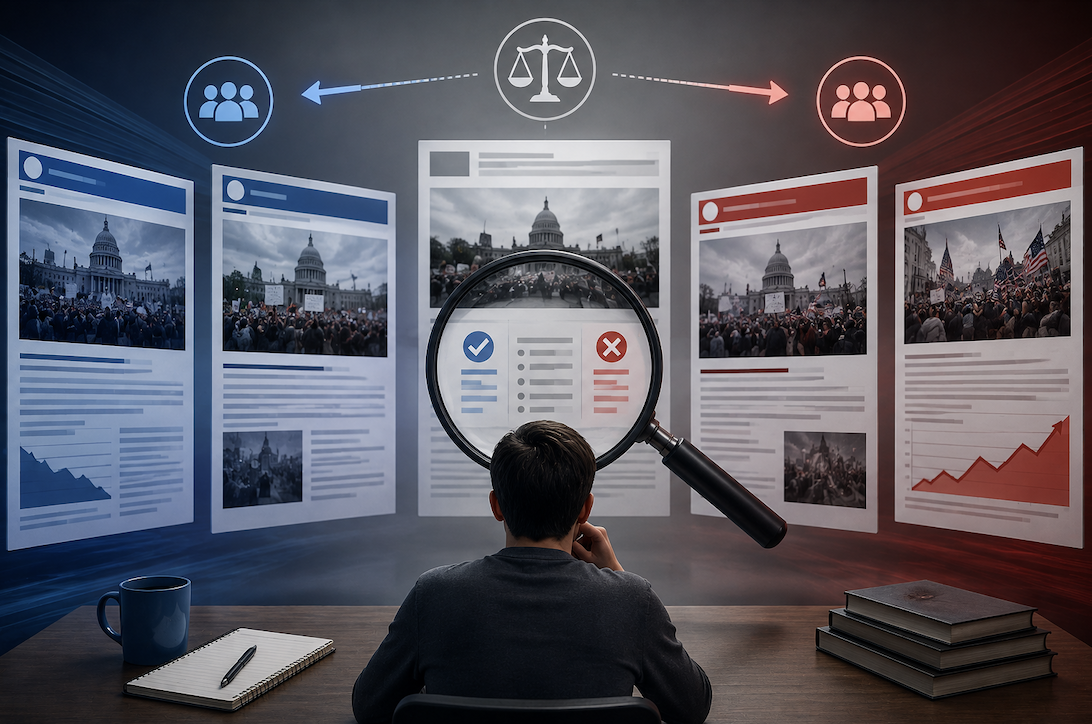
Nearly every conversation about news and journalism eventually touches on concerns about media bias, yet the concept itself often gets discussed without much clarity about what this actually means or how to genuinely evaluate it in the specific news sources you encounter daily. Understanding media bias more precisely, and developing practical skills for actually identifying it, provides genuinely useful tools for navigating today’s complex information landscape.
What Media Bias Actually Means
Media bias refers to the ways news coverage can reflect a particular perspective, whether through story selection, framing, language choices, or other editorial decisions, rather than presenting information in a genuinely neutral, purely objective manner. Understanding that some degree of bias exists across virtually all news sources, to varying degrees, provides a more realistic foundation than assuming any single source achieves genuinely perfect neutrality.
This universality point deserves particular emphasis, since even sources genuinely striving for objectivity make countless editorial decisions about which specific stories to cover, how prominently to feature them, and which sources to quote, which inevitably reflect some degree of perspective, meaning the genuinely useful skill involves recognizing and accounting for this reality rather than searching for a mythical, perfectly unbiased source.
The Different Genuine Forms Media Bias Actually Takes
Understanding that media bias manifests through several genuinely distinct mechanisms, beyond simply obvious political favoritism, helps develop a more sophisticated, accurate framework for actually identifying it in practice.
- Selection bias involves choosing which stories to cover and which to genuinely ignore or minimize
- Framing bias involves how a story gets presented, including which context and background gets included
- Language bias involves specific word choices that carry genuine emotional or evaluative connotations
- Source bias involves which experts or perspectives get quoted and featured within coverage
This selection bias category deserves particular attention, since simply choosing to extensively cover one story while giving minimal attention to another genuinely comparable story represents a form of bias that occurs before any actual writing or framing decisions even happen, making this an important, though sometimes overlooked, dimension of overall media bias.
Why Confirmation Bias Genuinely Affects How We Perceive Media Bias
Understanding that our own individual psychological tendencies genuinely influence which sources we perceive as biased helps add important nuance to this broader topic, since media bias assessment is not purely objective even from the audience’s perspective.
- People often perceive sources agreeing with their existing views as more objective and less biased
- Sources challenging existing views often get perceived as more biased, even when using similar journalistic standards
- This psychological tendency genuinely affects how fairly individuals evaluate different news sources
- Recognizing this personal tendency helps develop more genuinely balanced, self-aware media evaluation skills
Practical Strategies for Identifying Bias in Specific Coverage
Understanding concrete, actionable techniques for actually evaluating specific news coverage for potential bias helps translate this broader conceptual understanding into genuinely practical, everyday media literacy skills.
- Notice the specific language used, particularly emotionally charged or evaluative word choices
- Consider what context or perspectives might be genuinely missing from a specific piece of coverage
- Compare how different sources cover the exact same story to notice genuine differences in framing
- Examine which specific experts or sources get quoted, and whether diverse perspectives are genuinely represented
Why Comparing Multiple Sources Provides Genuinely Valuable Perspective
Understanding why deliberately consuming news from sources representing different genuine perspectives provides meaningfully better overall understanding than relying on a single source helps clarify this practical media literacy strategy’s genuine value.
- Different sources often emphasize different aspects or contexts regarding the same underlying event
- Comparing multiple sources helps reveal what specific framing choices each individual source actually made
- This comparison approach helps you form a more genuinely complete, balanced understanding of complex issues
- This strategy requires more time investment but genuinely provides a more accurate overall understanding
This comparison strategy deserves particular emphasis, since relying on a single news source, regardless of that source’s general reputation, means genuinely accepting that source’s specific editorial choices and perspective as your primary window into a given event, while consuming multiple sources with different genuine perspectives helps you develop a more complete, nuanced picture that accounts for what any single source might have emphasized or omitted.
Understanding the Difference Between Bias and Simply Being Wrong
Understanding that identifying bias in coverage differs genuinely from identifying factual inaccuracy helps clarify these related but distinct media literacy concepts that sometimes get conflated in casual conversation.
- Bias involves perspective and framing choices, while factual accuracy involves whether specific claims are genuinely true
- A source can present accurate facts while still exhibiting genuine bias through selection and framing choices
- A source can also occasionally make genuine factual errors without this necessarily reflecting deliberate bias
- Understanding this distinction helps you evaluate these two genuinely separate dimensions of media quality appropriately
Practical Tips for Developing Stronger Media Bias Awareness
- Regularly expose yourself to sources representing genuinely different perspectives on contested issues
- Practice noticing your own emotional reactions to coverage, which can reveal your personal biases as well
- Look specifically for what context or perspectives might be genuinely absent from a particular piece
- Approach media consumption with genuine curiosity rather than seeking only confirmation of existing views
Why Headline Writing Often Introduces Its Own Distinct Bias Considerations
Understanding that headlines themselves sometimes exhibit bias independent of, and sometimes even in tension with, the more balanced actual article content beneath them helps clarify an additional, often overlooked layer worth examining when actually evaluating potential media bias.
Since headlines are specifically crafted to capture attention and encourage clicks, they sometimes emphasize a particular angle or use more provocative language than the underlying article’s actual, more nuanced content genuinely supports, meaning a headline alone can create a somewhat skewed impression even when the full article maintains genuinely reasonable balance.
This is exactly why media literacy experts consistently recommend reading beyond headlines before forming conclusions, since the specific editorial choices involved in headline writing sometimes diverge meaningfully from the more careful, balanced approach the underlying article’s actual body content might genuinely demonstrate.
- Headlines are crafted to capture attention, sometimes emphasizing angles beyond what the full article genuinely supports
- A headline can create a skewed impression even when the underlying article maintains genuinely reasonable balance
- This divergence between headline and article body represents a distinct consideration worth evaluating separately
- Reading beyond headlines before forming conclusions helps avoid this specific, common source of impression-based bias
Final Thoughts
Media bias manifests through selection, framing, language, and source choices that exist to some degree across virtually all news coverage, making the genuinely useful skill recognizing and accounting for this reality rather than searching for perfectly neutral sources that do not genuinely exist.
Developing practical habits like comparing multiple sources and noticing specific language and framing choices helps build genuinely stronger media literacy skills for navigating today’s complex, often contested information landscape more thoughtfully.
Frequently Asked Questions
1. Is it genuinely possible for a news source to be completely free of bias?
This is genuinely difficult to achieve completely, since countless editorial decisions inherently involve some degree of perspective, though sources can differ considerably in how deliberately they work to minimize bias and maintain genuine journalistic standards and balance.
2. Does having some degree of bias automatically make a news source unreliable?
Not necessarily, since bias and factual accuracy represent genuinely separate dimensions, meaning a source can maintain rigorous factual standards while still exhibiting some degree of perspective through story selection or framing choices.
3. How can I tell if my own perception of a source’s bias is genuinely accurate versus reflecting my personal views?
This genuinely requires honest self-reflection, and comparing your perception against how people with different political or ideological perspectives evaluate the same source can help reveal whether your assessment reflects the source’s genuine characteristics or your own personal confirmation bias.
4. Are some types of media bias considered more genuinely problematic than others?
Many media literacy experts consider selection bias and source bias particularly significant, since these can shape which stories and perspectives audiences even encounter in the first place, though all forms of bias genuinely deserve some degree of critical awareness.
5. Is consuming news from multiple sources genuinely worth the additional time investment?
For anyone wanting a genuinely well-rounded understanding of complex, contested issues, yes, since this additional time investment provides a meaningfully more complete understanding than relying on any single source’s specific editorial perspective and choices alone.