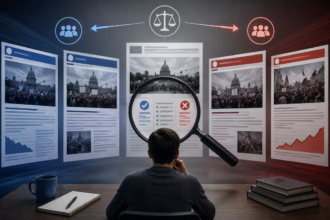

A bystander with a smartphone captures footage of a breaking news event minutes before any professional camera crew arrives. That footage circulates globally within hours, viewed by more people than most local news broadcasts reach in a week. This is citizen journalism in practice, and it has reshaped how news actually reaches the public.
The traditional model of news reporting, professional journalists at established media organizations acting as gatekeepers of what counts as newsworthy, has been transformed by ordinary individuals using accessible technology to report and share news themselves. This article looks at what citizen journalism actually encompasses and how it’s reshaped the broader media landscape.
What Citizen Journalism Actually Means
Citizen journalism is the practice of ordinary individuals, without formal journalism training or media organization affiliation, gathering, reporting, and sharing news using accessible technology like smartphones and social media. It represents a departure from the traditional model where professional journalists served as the primary, often exclusive source of news reporting and distribution.
This democratization reflects a real shift in who actually has the practical capability to document and share newsworthy events, moving from a model concentrated among professionals and institutions toward one where virtually anyone with a smartphone and internet connection can potentially contribute meaningful, timely reporting.
How Technology Made This Possible
Smartphones with quality cameras gave ordinary people capability to document events as they happened. Social media platforms provided accessible distribution without requiring traditional media gatekeepers. Internet connectivity allowed rapid, widespread sharing to potentially enormous audiences.
Together, these developments lowered the practical barrier to participating in news reporting dramatically.
Even when people previously had the capability to document newsworthy events, they historically lacked any real means of distributing that content beyond their immediate personal network. Social media eliminated that distribution barrier entirely, letting citizen-reported content reach audiences comparable to traditional media in the right viral circumstances.
Where Citizen Journalism Has Changed Coverage
Citizens present at breaking news events have documented things in real time before professional media even arrived on scene. Coverage of regions with limited professional media presence or restricted press access has come almost entirely from citizens on the ground. Incidents that might otherwise have gone unreported entirely have been documented and shared. Alternative perspectives complementing traditional professional coverage have added real depth to major stories.
That real-time documentation piece matters enormously. Citizen journalists at the scene often provide the very first documentation of an event, sometimes hours before professional journalists can physically arrive, which makes citizen journalism particularly valuable during precisely that crucial initial window before traditional media resources can actually mobilize.
The Benefits
Citizen journalism can offer perspectives traditional media organizations might not cover. It can document events in places professional journalists lack access to. Citizen reporting sometimes captures authentic, unfiltered perspective that professional editorial processes might otherwise shape or smooth over. And this democratized participation lets communities represent their own experiences more directly than a professional outsider ever could.
The Real Limitations Worth Acknowledging
Citizen journalists typically lack professional training in verification and ethical reporting standards. Content can lack important context that professional analysis would normally provide. Verifying the authenticity and accuracy of citizen-reported content presents ongoing challenges. And citizen journalism can spread misinformation, whether accidentally or deliberately.
Traditional journalism involves established editorial processes specifically designed to verify claims before publication. Citizen journalism, by its more spontaneous, decentralized nature, often lacks this systematic verification, meaning content can reach a wide audience before its actual accuracy has been properly confirmed by anyone at all.
How Traditional Media Has Adapted
Many news organizations now actively solicit and incorporate citizen-submitted content into their coverage. Professional journalists increasingly treat citizen journalism as a starting point for further investigation rather than a competing threat. Some organizations have developed specific verification processes for evaluating citizen-submitted content before use. This represents an evolution, not a replacement, of traditional professional journalism.
Citizen journalism hasn’t eliminated the continued value professional journalism provides through established verification, deeper investigative resources, and editorial expertise. A more complementary relationship has emerged instead, where citizen journalism often provides the initial, immediate documentation that professional journalism can then investigate and add context around.
The Ethical Questions This Raises
Questions about consent and privacy come up whenever citizens document and share content involving other people. There are real safety risks citizen journalists sometimes face while documenting dangerous or sensitive situations. And there’s ongoing debate about what standards and accountability should apply to citizen journalism compared to the professional variety.
How to Actually Evaluate What You’re Seeing
Consider the source’s credibility and any track record for accuracy. Look for corroboration from multiple independent sources before accepting a claim as verified. Consider whether important context might be missing entirely. Apply the same critical evaluation skills you’d apply to any other information source, rather than assuming social media authenticity equals accuracy.
How This Fits Into Historical Movements
Citizen documentation has provided crucial evidence and perspective during significant political and social events throughout recent history, sometimes preserving a historical record that might otherwise never have existed at all. This grassroots documentation has occasionally raised awareness of issues that received limited attention from traditional media initially, a significant, lasting contribution beyond the day-to-day news cycle.
The Platforms Themselves Shape What Gets Seen
An often overlooked piece of this picture: the algorithms running social media platforms determine which citizen-reported content actually reaches a wide audience, and which sits unseen despite being just as significant. Two equally important pieces of citizen journalism can have wildly different reach depending entirely on how a platform’s recommendation system happens to treat them, factors that have nothing to do with the actual news value of the content itself.
This means citizen journalism’s real-world impact depends on more than just brave, careful reporting on the ground. It depends on a layer of largely invisible platform decision-making that most citizen journalists have zero visibility into or control over, which is an important asterisk on any discussion of how “democratized” news reporting has actually become.
Learning to Tell the Difference, Practically Speaking
A few concrete habits help separate reliable citizen reporting from the unreliable kind. Check whether the same event is being documented from multiple independent angles, rather than relying on a single video or post.
Look at the account’s posting history, a long-established local account documenting an event in their own community carries different weight than a brand-new account with no track record. And be specifically wary of content that arrives already packaged with a strong emotional narrative attached, since that packaging is sometimes added deliberately to encourage sharing before anyone stops to verify the underlying facts.
Why Citizen Journalism Struggles Financially in Ways Professional Media Doesn’t
Professional journalism, whatever its other problems, has at least some established business models, subscriptions, advertising, institutional funding. Citizen journalism mostly lacks any of this, which creates a, practical limitation on how sustained and thorough it can actually be. A citizen documenting a single dramatic event can go viral for a day, but sustained investigative work, the kind that takes weeks of digging through records and following leads, requires resources most individual citizen journalists simply don’t have access to.
This is part of why citizen journalism tends to excel specifically at the initial documentation of breaking events, and why it rarely replaces the kind of longer, resourced investigative work professional newsrooms are still uniquely positioned to pursue. The two complement each other partly because their financial realities push them toward different strengths.
Final Thoughts
Citizen journalism has transformed the news landscape by letting ordinary individuals document, report, and distribute news using accessible technology, offering real benefits like diverse perspectives and rapid breaking coverage while presenting challenges around verification. Both sides help you evaluate the increasingly diverse array of news sources shaping public discourse today with considerably more clarity.
Frequently Asked Questions
1. Is citizen journalism as reliable as professional journalism?
It varies considerably by instance. Citizen journalism can provide valuable, accurate documentation, but it generally lacks the systematic verification processes professional journalism employs, making critical evaluation and corroboration from multiple sources important regardless of the source.
2. Can citizen journalists face legal or safety risks?
Yes, Documenting dangerous or sensitive situations carries real safety risk, and citizen journalists may also encounter legal questions around privacy or defamation that professional journalists typically receive training and institutional support to navigate more carefully.
3. How has social media changed citizen journalism’s actual reach?
Dramatically, content that might once have stayed limited to a small local audience can now achieve viral, widespread distribution, sometimes reaching audiences comparable to established professional media organizations.
4. Do professional organizations value citizen contributions?
Many do, often incorporating citizen-submitted content, particularly for breaking news, while maintaining their own verification standards before fully incorporating it into their broader coverage.
5. Can citizen journalism spread misinformation?
Yes, since it typically lacks the systematic verification processes professional journalism employs, meaning inaccurate information can spread rapidly before being corrected, which makes critical evaluation particularly important.
6. Is citizen journalism a new phenomenon?
The current terminology and prevalence are relatively recent, tied to modern technology, but the underlying concept of ordinary people documenting and sharing news has real historical precedent, technology has simply expanded its accessibility and reach dramatically.