
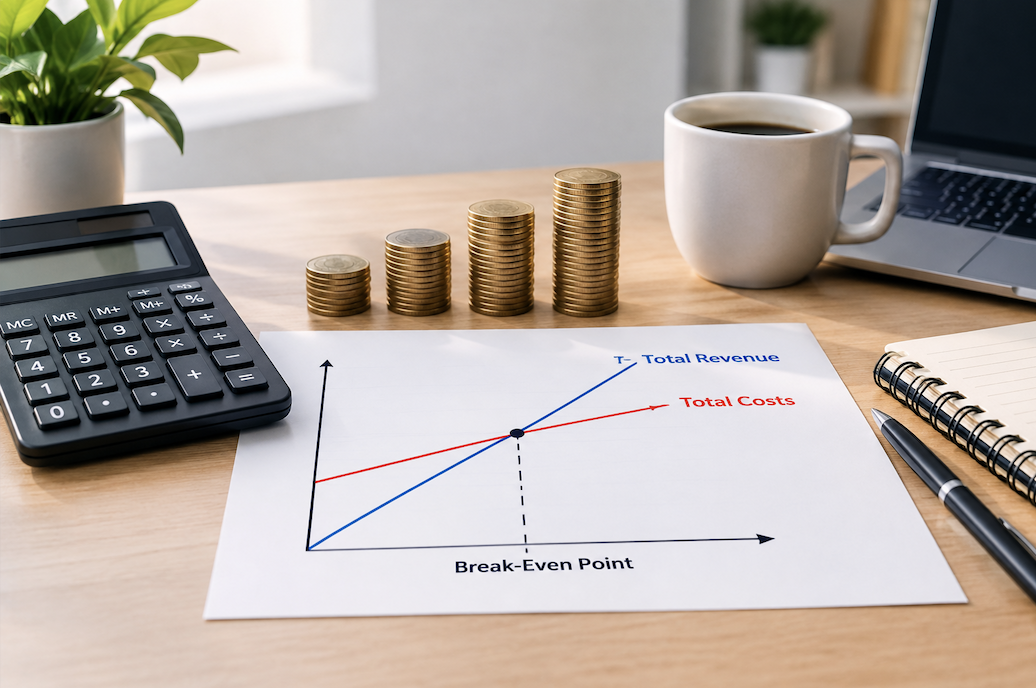
Understanding exactly when a business will start generating genuine profit, rather than simply covering its costs, represents one of the more fundamental financial concepts every business owner genuinely needs to grasp, regardless of their specific industry or business size. The break-even point provides precisely this crucial insight, and understanding how to actually calculate it helps inform countless important business decisions.
What a Break-Even Point Actually Means
A break-even point represents the specific level of sales at which a business’s total revenue exactly equals its total costs, meaning the business is neither generating a profit nor experiencing a loss at that particular sales volume. Below this point, a business genuinely operates at a loss, while sales exceeding this threshold begin generating actual profit for the business.
Understanding this concept provides genuinely essential context for numerous business decisions, since knowing exactly how much you need to sell before actually becoming profitable helps inform pricing strategies, cost management decisions, and realistic expectations for when a new business venture might actually start generating genuine financial returns.
The Core Components Needed to Calculate Break-Even Point
Understanding the specific financial figures genuinely required to actually calculate your break-even point helps clarify what information you need to gather before performing this important calculation.
- Fixed costs represent expenses that remain genuinely constant regardless of your specific sales volume
- Variable costs represent expenses that genuinely change directly in proportion to how much you actually sell
- Your selling price per unit represents what you actually charge customers for each individual product or service
- Understanding these three components together provides the foundation for the actual break-even calculation
This fixed versus variable cost distinction deserves particular emphasis, since accurately categorizing your specific expenses into these two categories represents a genuinely essential first step, given that costs like rent or salaried employee wages typically remain fixed regardless of sales volume, while costs like raw materials or sales commissions genuinely scale directly with how much you actually sell.
The Actual Formula for Calculating Break-Even Point
Understanding the genuine mathematical formula used to calculate break-even point helps clarify exactly how these various cost components combine to produce this genuinely important business metric.
- Break-even point in units equals total fixed costs divided by the difference between selling price and variable cost per unit
- This difference between selling price and variable cost per unit is often called the contribution margin
- The contribution margin represents how much each individual sale genuinely contributes toward covering fixed costs
- Once enough units are sold to cover total fixed costs through this contribution margin, the business reaches its break-even point
A Practical Example Illustrating This Calculation
Understanding this formula through a genuinely concrete, practical example helps make the abstract calculation feel considerably more tangible and applicable to real business situations.
- Imagine a business with monthly fixed costs, a specific selling price, and a specific variable cost per unit
- The contribution margin would equal the selling price minus the variable cost per unit
- Dividing total fixed costs by this contribution margin reveals the exact number of units needed to break even
- Selling fewer units than this calculated number means the business is genuinely still operating at a loss for that period
This practical calculation genuinely matters for real business planning, since knowing this specific unit number allows a business owner to realistically assess whether their current sales trajectory and market conditions make reaching this break-even threshold genuinely achievable within a reasonable timeframe.
Why Understanding Break-Even Point Genuinely Matters for Pricing Decisions
Understanding how break-even analysis directly informs pricing strategy helps clarify why this calculation provides genuinely practical value beyond simply an academic financial exercise.
- Testing different potential selling prices reveals how each specific price point affects your break-even threshold
- Higher prices generally lower the number of units needed to reach break-even, though this may affect actual demand
- Lower prices increase the units needed to break even, requiring genuinely higher sales volume to reach profitability
- This analysis helps business owners make more informed, genuinely data-driven pricing decisions
How Break-Even Analysis Genuinely Helps With Cost Management
Understanding how this calculation also provides valuable insight for evaluating potential cost reduction opportunities helps illustrate its broader practical business planning value beyond pricing decisions alone.
- Reducing fixed costs directly lowers the break-even point, requiring fewer sales to reach profitability
- Reducing variable costs per unit increases the contribution margin, similarly lowering the break-even threshold
- This analysis helps business owners evaluate which specific cost reduction efforts would provide the most genuine impact
- Understanding these relationships helps prioritize cost management efforts toward genuinely meaningful improvements
Practical Applications for Using Break-Even Analysis in Business Planning
- Use break-even analysis when evaluating whether a new product or service is genuinely likely to become profitable
- Apply this calculation when considering a pricing change to understand its actual impact on required sales volume
- Reference your break-even point when setting realistic, genuinely achievable sales targets and goals
- Revisit this calculation periodically as your actual costs and pricing genuinely change over time
Why Break-Even Analysis Genuinely Matters When Seeking Investment or Financing
Understanding why potential investors or lenders often specifically request break-even analysis when evaluating a business helps clarify this calculation’s genuine practical importance beyond internal business planning alone.
Investors and lenders genuinely want to understand exactly how much sales volume a business needs to achieve before becoming self-sustaining, since this information helps them assess both the realistic timeline for the business to become profitable and the genuine risk involved in providing capital before that threshold gets reached. A well-prepared break-even analysis, grounded in genuinely realistic cost and pricing assumptions, demonstrates to potential investors or lenders that a business owner has thought carefully and honestly about
their actual path to profitability, rather than presenting only optimistic revenue projections without this grounding, practical context.
- Investors and lenders genuinely want to understand a business’s realistic path toward self-sustaining profitability
- This analysis helps them assess both timeline expectations and the genuine risk involved in providing capital
- A well-prepared break-even analysis demonstrates careful, honest business planning to potential funding sources
- This makes break-even calculation a genuinely valuable tool beyond internal planning, supporting external financing conversations too
Final Thoughts
Understanding and calculating your business’s break-even point provides genuinely essential insight into exactly how much you need to sell before actually becoming profitable, informing critical decisions around pricing, cost management, and realistic business planning.
Regularly revisiting this calculation as your specific costs and pricing evolve helps ensure your business decisions remain grounded in genuine, current financial reality rather than outdated assumptions about what it actually takes to reach profitability.
- Read more about Techsipra
Frequently Asked Questions
1. Does reaching the break-even point mean a business is genuinely successful?
Not necessarily, since break-even simply means covering costs without profit or loss, meaning genuine business success requires consistently selling beyond this threshold to generate the actual profit that makes a business genuinely sustainable and worthwhile over the long term.
2. Can break-even analysis be genuinely useful for service-based businesses, not just those selling physical products?
Yes, absolutely, since the same fundamental principles apply, with service businesses simply substituting their specific service pricing and costs into the same calculation framework, making this analysis genuinely relevant across virtually any business type.
3. How often should a business genuinely recalculate its break-even point?
This should be recalculated whenever significant changes occur in your costs or pricing, and many businesses find reviewing this figure at least quarterly, or whenever considering major pricing or cost decisions, provides genuinely useful ongoing insight.
4. What happens if a business consistently fails to reach its calculated break-even point?
This genuinely signals a need to reassess the business’s fundamental pricing strategy, cost structure, or overall market viability, since consistently falling short of break-even indicates the current business model may not be genuinely sustainable without meaningful adjustments.
5. Is break-even analysis the same thing as calculating overall business profitability?
No, though related. Break-even analysis specifically identifies the threshold where costs and revenue are genuinely equal, while broader profitability analysis considers the actual, ongoing financial performance of a business across its full range of products, services, and time periods.