Messaging apps increasingly advertise end-to-end encryption as a key privacy feature, yet many people genuinely use these apps daily without fully understanding what this technical term actually means or why it provides meaningfully stronger protection than standard messaging. Understanding how this technology actually works reveals why it has become such a genuinely important standard for protecting private communication.
What End-to-End Encryption Actually Means
End-to-end encryption is a method of securing communication where messages are encrypted on the sender’s device and can only be decrypted on the recipient’s device, meaning no party in between, including the messaging service provider itself, can genuinely read the actual message content. This differs meaningfully from other forms of encryption that might protect data during transmission but still allow the service provider to access the unencrypted content at some point.
Understanding this distinction genuinely matters, since many people assume any messaging app claiming to use “encryption” provides equivalent protection, when in reality, the specific type of encryption used significantly affects who can actually access your message content, with end-to-end encryption representing the strongest, most genuinely private standard currently widely available.
How End-to-End Encryption Actually Works Technically
Understanding the genuine technical process behind how this encryption actually protects your messages helps clarify why this approach provides such meaningfully strong privacy protection.
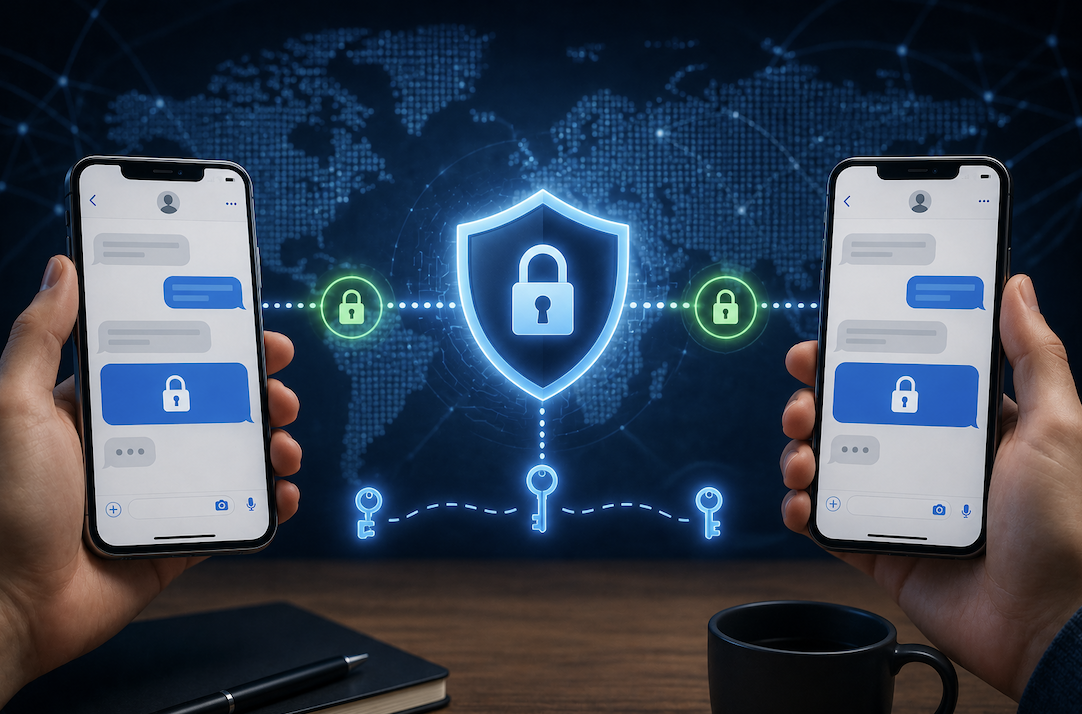
- When you send a message, your device encrypts it using a specific cryptographic key before transmission
- This encrypted message travels across the internet in a genuinely unreadable, scrambled format
- Only the recipient’s device possesses the specific key needed to actually decrypt and read the message
- The messaging service provider’s servers only ever handle the encrypted, unreadable version of your message
This key possession detail deserves particular emphasis, since it represents the genuine core of why end-to-end encryption provides such strong protection, given that even if someone gained unauthorized access to the messaging company’s servers, they would only find encrypted, unreadable data, since the actual decryption keys never exist on those servers in the first place, remaining exclusively on the sender and recipient’s own devices.
Why This Differs From Encryption That Only Protects Data in Transit
Understanding the genuine difference between end-to-end encryption and other, weaker forms of encryption that some services use helps clarify why this specific terminology deserves careful attention when evaluating a messaging app’s actual privacy protection.
- Some services encrypt messages only while traveling between your device and their servers
- This weaker approach means the service provider itself can genuinely access your unencrypted message content
- End-to-end encryption specifically ensures no intermediate party, including the provider, can access this content
- This distinction genuinely matters significantly for anyone prioritizing genuine message privacy and confidentiality
Why Messaging Companies Cannot Access Your Encrypted Messages
Understanding specifically why even the company operating a genuinely end-to-end encrypted messaging service cannot read your messages, even if legally compelled to do so, helps clarify this technology’s genuine practical implications.
- The encryption keys needed to decrypt messages exist only on the sender and recipient’s own devices
- The messaging company never possesses these decryption keys on their own servers
- This means the company genuinely cannot access message content even if they wanted to or were legally required to
- This represents a deliberate technical design choice specifically prioritizing genuine user privacy protection
This technical inability deserves particular emphasis, since it represents a genuinely meaningful distinction from companies that could theoretically access your data but choose not to as a matter of policy. End-to-end encryption means the company genuinely lacks the technical capability to access your message content at all, regardless of their own policies or any external pressure they might face.
Common Situations Where End-to-End Encryption Genuinely Matters
Understanding the practical situations where this level of protection provides genuinely meaningful value helps clarify why this technology has become increasingly important for everyday communication.
- Protecting sensitive personal conversations from potential interception or unauthorized access
- Safeguarding business communications involving genuinely confidential information
- Providing protection for journalists and activists communicating with sources in sensitive situations
- Simply maintaining basic personal privacy for everyday conversations you would prefer remain confidential
Understanding the Genuine Limitations of End-to-End Encryption
While genuinely powerful, understanding that end-to-end encryption does not provide absolute, complete protection in every situation helps set realistic, accurate expectations for this technology.
- Message metadata, like who you communicated with and when, may still be visible to the service provider
- If a recipient’s device itself becomes compromised, messages could potentially be accessed after decryption
- End-to-end encryption protects message content specifically, not necessarily other aspects of your device security
- Understanding these limitations helps clarify that this technology addresses specific, though genuinely important, privacy concerns
This metadata consideration deserves particular emphasis, since even with genuine message content encryption, information about your communication patterns, who you talk to and how frequently, may still be visible to the service provider, meaning end-to-end encryption protects the actual content of your conversations while not necessarily providing complete anonymity regarding the fact that communication occurred at all.
How to Identify Whether a Messaging App Genuinely Uses This Protection
- Check the messaging app’s official documentation or privacy policy for explicit end-to-end encryption claims
- Look for independent security audits or reviews confirming these claims are genuinely accurate
- Be aware that some apps only enable this protection for specific conversation types, not universally by default
- Research whether the specific encryption implementation has faced any genuine security concerns or criticism
Why Group Conversations Present Additional Genuine Technical Complexity
Understanding how end-to-end encryption actually extends to group conversations, rather than just one-on-one messaging, reveals additional genuine technical sophistication beyond the simpler two-party scenario typically used to explain this technology.
Extending this protection to group conversations requires securely managing encryption keys across multiple participants simultaneously, ensuring that each new message remains genuinely accessible only to current group members while maintaining the same fundamental security guarantee that no outside party, including the service provider, can access the content. This added complexity explains why some messaging platforms took longer to implement fully end-to-end encrypted group conversations compared to simpler one-on-one messaging, since properly securing communication among multiple simultaneous participants introduces genuine additional technical challenges beyond the core two-party encryption concept.
- Group conversations require securely managing encryption keys across multiple participants simultaneously
- Each message must remain accessible only to current group members while maintaining the same security guarantee
- This added complexity explains why group encryption sometimes took longer to implement than one-on-one messaging
- Understanding this helps clarify why not every group chat feature offers identical encryption protection
Final Thoughts
End-to-end encryption provides genuinely meaningful protection by ensuring only the sender and recipient can actually read message content, with even the messaging service provider technically unable to access this information. Understanding both how this technology actually works and its genuine limitations helps you make more informed choices about which messaging apps and communication methods actually align with your personal privacy priorities and specific needs.
- You May Want to know What is a VPN and How Does It Actually Protect You Online?
Frequently Asked Questions
1. Do all popular messaging apps genuinely use end-to-end encryption by default?
No, this varies considerably by specific app, with some enabling this protection by default for all conversations, others requiring you to manually enable it for specific chats, and some not offering this level of protection at all, making it worth researching your specific app’s actual practices.
2. Can law enforcement genuinely access end-to-end encrypted messages with a warrant?
Generally no, since the messaging company itself typically lacks the technical capability to decrypt these messages even when legally compelled, though this remains a genuinely debated policy topic in various countries considering whether to require companies to build in access capabilities.
3. Does end-to-end encryption slow down message sending or receiving?
Modern encryption implementations are generally efficient enough that most users do not notice any meaningful delay, since the actual encryption and decryption process happens very quickly on modern devices without significantly affecting the messaging experience.
4. Does that mean my phone itself is also secure, If my messages are end-to-end encrypted?
No, genuinely, since end-to-end encryption specifically protects message content during transmission and storage on the messaging service, but does not protect against other security risks like a compromised device, malware, or someone with physical access to your unlocked phone.
5. Why do some governments express concern about widespread end-to-end encryption use?
Some government agencies have expressed concern that this technology can hinder criminal investigations by preventing access to communication even with proper legal authorization, representing a genuine, ongoing policy debate between privacy protection and law enforcement access considerations.