
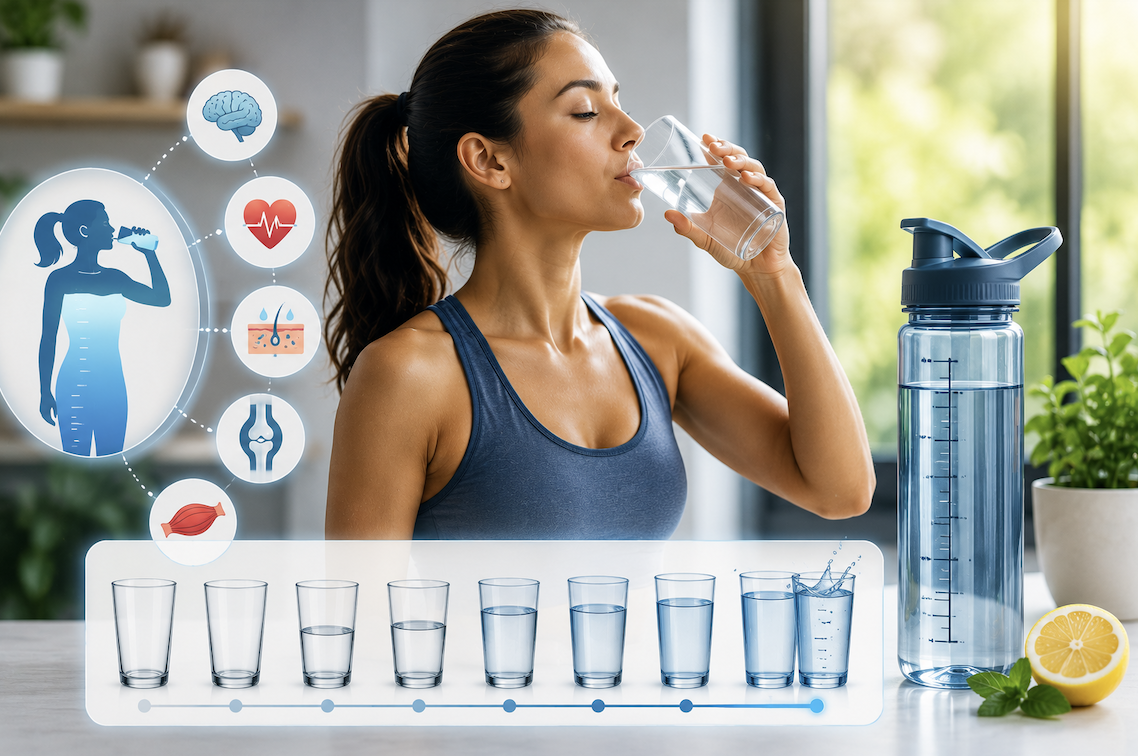
The advice to drink eight glasses of water daily has become so widely repeated that most people accept it as established fact without ever questioning where this specific number actually came from or whether it genuinely applies to their own individual situation. Understanding what current research actually suggests about daily hydration needs reveals a considerably more nuanced picture than this simple, often-repeated rule of thumb.
Where the “Eight Glasses a Day” Guideline Actually Came From
Tracing the origin of this widely repeated recommendation reveals it likely stems from a misinterpretation of older dietary guidance that actually included water content from food, not just separately consumed beverages, and even that original guidance was not based on the kind of rigorous scientific research that current hydration recommendations rely on.
This does not mean drinking eight glasses of water daily is necessarily wrong for any given individual, but it does mean this specific number was never actually a precisely researched, universally applicable target, which helps explain why more current health guidance tends to describe a range influenced by individual factors rather than a single fixed number.
What Current Research Actually Suggests About Hydration Needs
Modern health guidance generally suggests that daily fluid needs vary considerably based on individual factors, including body size, activity level, climate, and overall health, rather than a single universal number that applies equally to everyone regardless of these differences.
- Body size and composition significantly influence individual fluid needs
- Physical activity level increases fluid needs, particularly during and after exercise
- Climate and environmental temperature meaningfully affect how much fluid your body loses through sweat
- Overall health status and certain medical conditions can also influence appropriate individual fluid intake
General reference ranges published by health organizations typically suggest total daily fluid intake, including water from food and other beverages, in a range that for many adults ends up being somewhat higher than the traditional eight glasses figure when accounting for total fluid intake rather than water specifically.
Why Fluid From Food Genuinely Counts Toward Your Total Intake
A commonly overlooked aspect of hydration involves how much fluid actually comes from food rather than beverages specifically, and for people eating a diet reasonably rich in fruits and vegetables, this food-based fluid intake can represent a genuinely meaningful portion of total daily hydration.
- Many fruits and vegetables contain significant water content, contributing meaningfully to total hydration
- Soups, broths, and other liquid-based foods also contribute substantially to overall fluid intake
- This means total hydration needs are not solely dependent on directly consumed water or beverages
- Someone eating a diet rich in water-containing foods may need less directly consumed water than someone eating a drier diet
How to Recognize Genuine Signs of Adequate Hydration
Rather than rigidly tracking a specific numerical target, paying attention to your body’s genuine signals often provides a more practical, individualized approach to maintaining adequate hydration throughout the day.
- Urine color that is pale yellow generally indicates adequate hydration, while darker urine often suggests you need more fluids
- Feeling thirsty is a genuine, reliable signal that your body needs more fluid, contrary to some outdated advice suggesting thirst indicates you are already dehydrated
- Consistent energy levels and the absence of headaches can also serve as general, though less specific, hydration indicators
- Individual variation means these signals are generally more useful than rigidly adhering to a fixed numerical target
Situations That Genuinely Increase Your Fluid Needs
Certain circumstances meaningfully increase fluid needs beyond your typical baseline, and recognizing these situations helps you adjust your intake appropriately rather than relying on a fixed daily target regardless of changing circumstances.
- Exercise and physical activity, particularly in hot conditions, significantly increase fluid loss through sweat
- Hot or humid weather increases fluid needs even without increased physical activity
- Illness involving fever, vomiting, or diarrhea substantially increases fluid needs to prevent dehydration
- Pregnancy and breastfeeding both increase fluid needs to support these specific physiological demands
- High altitude environments can also increase fluid needs compared to sea level conditions
Can You Actually Drink Too Much Water?
While genuinely rare, it is possible to drink excessive amounts of water in a way that dilutes essential electrolytes in your bloodstream, a condition that can become genuinely dangerous in extreme cases, though this typically requires consuming very large quantities of water in a short period, well beyond typical daily hydration habits.
- This condition is rare and generally associated with extreme water consumption in a short timeframe
- Endurance athletes drinking excessive water without adequate electrolyte replacement face somewhat elevated risk
- For most people following typical hydration habits, this is not a realistic everyday concern
- Moderate, consistent hydration throughout the day remains a genuinely reasonable, safe general approach
Practical Tips for Maintaining Good Hydration Habits
- Keep a water bottle accessible throughout the day as a simple, practical reminder to drink regularly
- Pay attention to urine color and thirst signals rather than rigidly tracking an exact numerical target
- Increase intake deliberately during exercise, hot weather, illness, or other circumstances that increase fluid needs
- Remember that beverages beyond plain water, along with water-rich foods, all contribute to total hydration
- Adjust your personal baseline based on your specific body size, activity level, and typical climate
How Different Beverages Compare for Meeting Hydration Needs
Not every beverage contributes equally to hydration, and understanding these genuine differences helps you make more informed choices about what you drink throughout the day beyond simply plain water. Beverages containing alcohol have a genuinely dehydrating effect, since alcohol suppresses a hormone that normally helps your body retain fluid, meaning alcoholic drinks can actually contribute to net fluid loss rather than meaningfully supporting hydration.
Sugary beverages, while technically containing water, come with their own separate health considerations related to added sugar intake that are worth weighing independently from their basic hydration contribution. Plain water, herbal tea, and milk generally represent genuinely efficient hydration choices without these additional considerations, while moderate coffee and regular tea consumption, despite their mild diuretic properties, still contribute net positively to overall hydration for people who consume them regularly.
- Alcoholic beverages have a genuinely dehydrating effect due to their impact on fluid retention hormones
- Sugary beverages contribute to hydration but come with separate, independent health considerations
- Plain water, herbal tea, and milk represent efficient choices without these additional complicating factors
- Coffee and regular tea still contribute net positively to hydration despite their mild diuretic properties
Final Thoughts
The widely repeated eight glasses a day guideline oversimplifies what is genuinely a more individualized picture, with actual hydration needs varying based on body size, activity level, climate, and overall diet. Paying attention to genuine signals like urine color and thirst, while adjusting intake during exercise, illness, or hot weather, offers a considerably more practical and personally accurate approach than rigidly adhering to a single, universal numerical target that was never actually based on precise, individualized research in the first place.
- Read more about Techsipra!
Frequently Asked Questions
1. Does coffee or tea count toward daily hydration, or does caffeine cause dehydration?
Moderate caffeine consumption does have a mild diuretic effect, but current research suggests that coffee and tea still contribute positively to overall hydration for regular consumers, meaning you do not need to fully offset these beverages with additional plain water.
2. Is it true that if you feel thirsty, you are already dehydrated?
This is a commonly repeated but somewhat oversimplified claim. Thirst is actually a genuinely reliable signal that your body needs more fluid, and responding to it promptly is a perfectly reasonable, effective way to maintain adequate hydration for most people.
3. Do I need to drink more water if I am trying to lose weight?
Adequate hydration supports overall health and can help with appetite regulation for some people, though water alone is not a direct weight loss mechanism, and your fluid needs should be based on your body’s genuine needs rather than weight loss goals specifically.
4. How can I tell if I am drinking enough water without tracking every glass?
Paying attention to urine color, which should generally be pale yellow, along with responding promptly to thirst signals, provides a practical, individualized approach that works well for most people without requiring precise tracking.
5. Should older adults drink the same amount of water as younger adults?
Older adults sometimes experience a reduced sense of thirst even when their body genuinely needs fluid, which means paying deliberate attention to regular fluid intake, rather than relying solely on thirst signals, becomes particularly important for this age group.