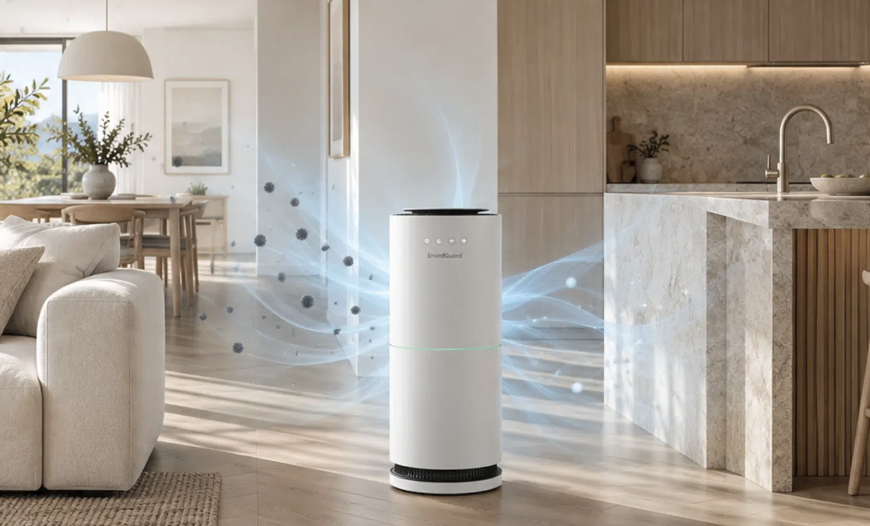
Indoor air can carry pollen tracked in from outside, pet dander that settles into carpet fibers, smoke from a nearby wildfire season, and ordinary dust that circulates through a home’s HVAC system, all of which affect people with allergies or asthma more than most households realize.
Air purifiers promise to filter that particulate matter out of the air, but the right unit depends on room size, the specific pollutants you’re trying to address, and how the filtration technology works, since not every purifier on the market is built the same way despite similar-looking price tags.
This guide walks through filtration types, sizing considerations, and maintenance needs so you can choose a unit that matches your household’s real air quality concerns.
How HEPA Filtration Works
True HEPA filters, a designation with a specific technical standard behind it, are rated to capture at least 99.97 percent of particles at a size of 0.3 microns, which happens to be the most difficult particle size to trap, since both smaller and larger particles are somewhat easier for a filter to capture through different physical mechanisms. This size range covers a wide variety of common allergens and irritants, including pollen, mold spores, pet dander, and a portion of the fine particulate matter found in wildfire smoke and vehicle exhaust.
Not every filter labeled “HEPA-type” or “HEPA-like” meets the true HEPA standard, and marketing language in this space can be misleading, since a filter that captures a lower percentage of particles, or captures particles only at a larger, easier-to-trap size, may still be marketed using similar language to a certified true HEPA filter. Checking for the specific “True HEPA” or “HEPA H13” designation, and looking for third-party certification where available, helps confirm the filter meets the standard rather than approximating it.
- True HEPA: Certified to capture at least 99.97 percent of particles at the hardest-to-trap 0.3 micron size.
- HEPA-type or HEPA-like: Marketing terms that don’t guarantee the same certified capture rate as true HEPA filtration.
- Pre-filters: Capture larger particles like hair and lint before air reaches the primary HEPA filter, extending its lifespan.
- Activated carbon: Often paired with HEPA filtration to address odors and gases that particle filtration alone doesn’t capture.
Sizing a Purifier to Your Room
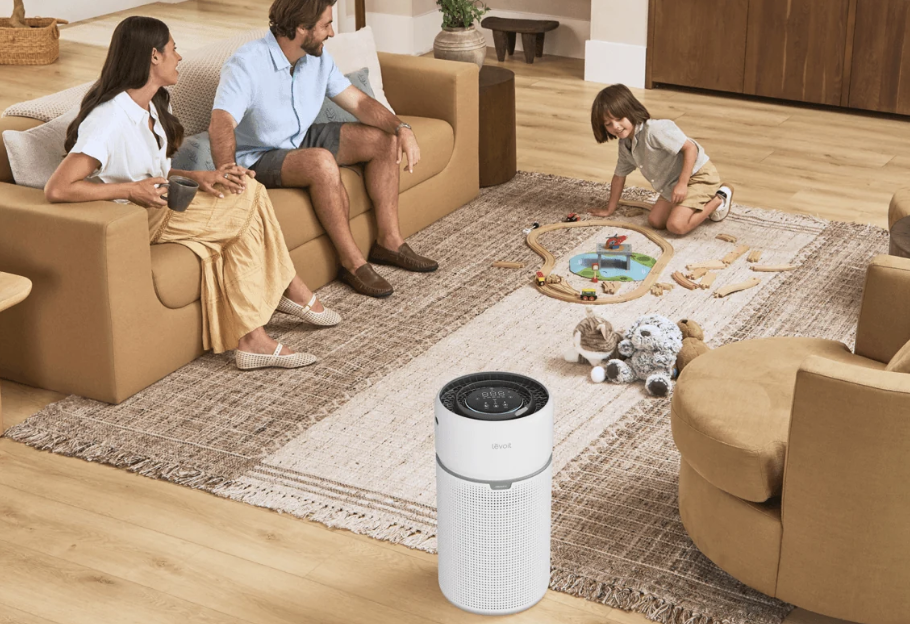
An air purifier’s effectiveness depends heavily on matching its capacity to the size of the room it’s meant to serve, measured by a metric called Clean Air Delivery Rate, or CADR, which indicates how much filtered air the unit delivers per minute for smoke, dust, and pollen specifically. A unit undersized for a room will run at maximum fan speed constantly, using more energy and generating more noise while still under-filtering the space, while an appropriately sized or slightly oversized unit can run at a lower, quieter setting while still cycling the room’s air multiple times per hour.
Manufacturers typically list a recommended room size on the packaging, but that figure is sometimes based on a lower number of air changes per hour than allergy sufferers want. A more cautious approach for someone with real allergy or asthma symptoms is to size the purifier for a room roughly twenty five to thirty percent larger than the room it will serve, ensuring a higher number of air changes per hour rather than the bare minimum the manufacturer’s rating suggests.
- CADR rating: Measures filtered air delivery per minute for smoke, dust, and pollen; higher numbers mean faster air cleaning for a given room size.
- Air changes per hour: A more rigorous approach counts how many times per hour the unit filters the room’s full air volume.
- Room size accuracy: Measuring the real square footage of a room, rather than guessing, avoids under- or oversizing the unit.
- Ceiling height: Rooms with higher-than-standard ceilings hold more air volume than the square footage alone suggests.
Addressing Specific Allergens and Irritants
Different pollutants respond differently to filtration technology, so identifying the specific concern helps narrow down the right purifier features. Pollen and pet dander, both relatively large particles, are effectively captured by a well-sized true HEPA unit alone. Wildfire smoke and vehicle exhaust include much smaller particulate matter that still falls within HEPA’s capture range but benefits from a higher CADR rating and more frequent filter changes during heavy smoke events, since filters saturate faster under those conditions.
Odors and gases, including cooking smells, pet odors, and off-gassing from new furniture or paint, aren’t captured well by particle filtration alone, since these are gas-phase molecules rather than solid particles. An activated carbon filter, which chemically adsorbs many of these gas-phase compounds, is needed alongside HEPA filtration for households dealing primarily with odor complaints rather than allergy symptoms.
- Pollen and dander: Larger particles effectively captured by standard true HEPA filtration without needing extra features.
- Wildfire smoke: Requires a higher CADR rating and more frequent filter changes during heavy smoke conditions.
- Cooking and pet odors: Best addressed with an activated carbon filter layer in addition to HEPA particle filtration.
- Mold spores: Captured by HEPA filtration, though addressing the underlying moisture source matters more than filtration alone.
Filter Maintenance and Ongoing Costs
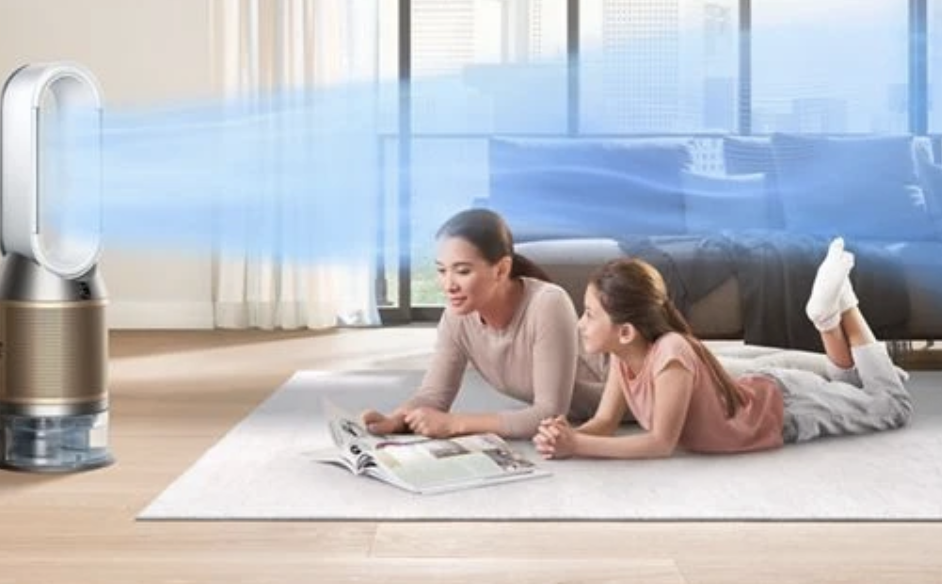
The upfront price of an air purifier is only part of the total cost of ownership, since HEPA filters need periodic replacement, typically every six to twelve months depending on usage and air quality conditions, and replacement filters for some brands cost a real fraction of the unit’s original purchase price. Checking the ongoing filter replacement cost before buying, not just the initial unit price, gives a more honest sense of what a purifier will cost over several years of regular use.
Some manufacturers use proprietary filter shapes that only fit their own units, locking buyers into a single brand’s replacement filters at whatever price that manufacturer sets, while other brands use more standard filter sizes that third-party manufacturers also produce, often at a lower cost. Households running a purifier continuously, especially during allergy season or a period of heavy wildfire smoke, should factor filter costs into the ongoing budget rather than treating the unit as a one-time purchase.
- Replacement frequency: Most HEPA filters need replacing every six to twelve months, sooner under heavy smoke or dust conditions.
- Proprietary filters: Some brands restrict replacement filters to their own products, often at a higher recurring cost.
- Third-party compatible filters: Standard-sized filters sometimes have cheaper third-party alternatives, reducing long-term cost.
- Filter indicator lights: Many units include a light or alert signaling when a filter needs replacement based on usage hours.
Noise Levels and Placement Considerations
Air purifiers run most effectively when operating continuously, which means noise level matters for placement, especially in a bedroom where a loud fan can disrupt sleep. Most units list a decibel range across their fan speeds, and checking the noise level at the speed you’d realistically run overnight, rather than the lowest available setting, gives a more accurate sense of how disruptive the unit will be during real use. Some purifiers include a dedicated sleep or night mode that dims indicator lights and lowers fan speed automatically during set hours.
Placement within a room also affects performance, since a purifier pushed into a corner or blocked by furniture pulls in less air and circulates the cleaned air less effectively than one placed in an open area with good airflow on all sides. Central placement within the room being treated, away from walls and large furniture, generally produces better results than tucking the unit out of the way for aesthetic reasons.
Ozone-Generating Purifiers and Safety Concerns
Some air purifiers, especially older ionizer models and a category sometimes marketed as “ozone generators,” produce ozone as either an intended byproduct or, in a smaller number of cases, as the primary claimed cleaning mechanism. Ozone is a lung irritant, and health agencies including the Environmental Protection Agency have raised concerns about its use indoors, since the concentrations needed to substantially reduce airborne particles or odors tend to approach levels that pose a respiratory health risk, especially for anyone with asthma or other lung sensitivities.
Choosing a purifier that relies purely on mechanical filtration, such as true HEPA and activated carbon, avoids this concern entirely, since no ozone is produced as part of the filtration process. Some modern ionizer-equipped units are designed to produce a low enough ozone level to fall under regulatory limits, but for households with allergy or asthma concerns already driving the purchase, sidestepping ozone-generating technology altogether is the more cautious choice.
Energy Costs of Running a Purifier Continuously
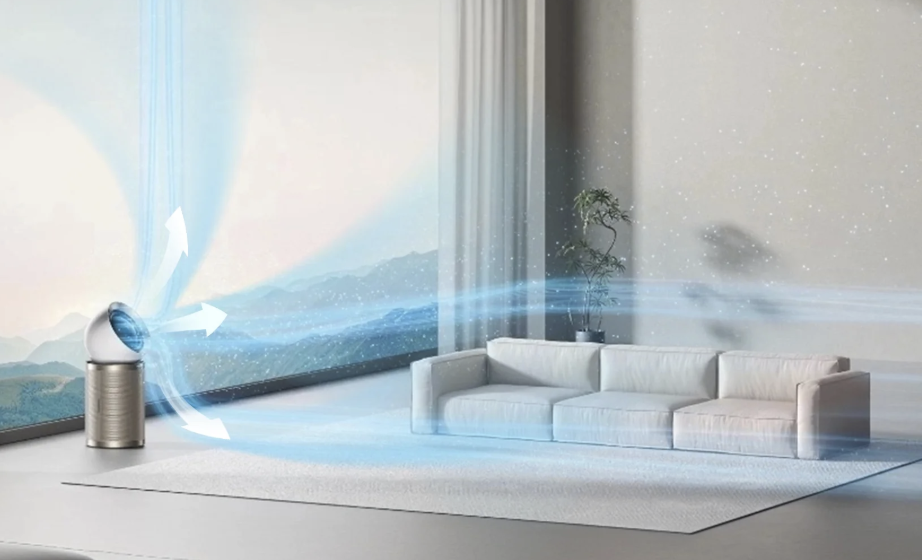
Since air purifiers work best running continuously rather than being switched on only when symptoms flare up, the ongoing electricity cost is worth factoring into the total cost of ownership alongside filter replacement. Most residential air purifiers use a fairly modest amount of power, comparable to a few standard light bulbs running at once, though larger units running at high fan speed around the clock add up over a full year more than a smaller unit cycled at a lower average speed.
Checking a unit’s listed wattage at both its lowest and highest fan speeds gives a sense of the realistic monthly electricity cost, especially for a household planning to run a unit in every bedroom rather than just one shared living space. Auto mode, available on many modern units, adjusts fan speed automatically based on a built-in air quality sensor, often reducing average energy use compared to running the unit at a fixed high speed around the clock regardless of real air quality conditions.
- Auto mode sensors: Built-in air quality sensors adjust fan speed automatically, often reducing energy use compared to a fixed high setting.
- Wattage at different speeds: Checking both low and high fan speed wattage gives a more accurate estimate of monthly electricity cost.
- Multiple units: Running one purifier per bedroom adds up in both filter costs and electricity compared to a single shared-space unit.
- Smart plugs and scheduling: Some households use a smart plug to schedule purifier operation around occupied hours rather than running continuously.
Comparing Popular Brands and Price Tiers
Brands like Levoit, Coway, Winix, Blueair, and Honeywell cover a wide span of the market, from budget-friendly units under a hundred dollars to premium models several times that price. Budget units generally cover smaller rooms adequately and use simpler, often proprietary filters, while mid-range and premium units add features like app connectivity, air quality sensors that display real-time readings, and quieter operation at a given CADR rating, since better engineering can move more air with less noise and less energy.
Coway’s units are frequently recommended by allergy and asthma specialists for their combination of true HEPA filtration and a strong reputation for quiet operation, making them a common pick for bedrooms. Blueair leans toward a more industrial-looking design with strong CADR ratings, often favored for larger open living spaces. Levoit and Winix compete more directly on price, offering true HEPA filtration at a lower cost, though with fewer smart features and sometimes louder operation at higher fan speeds compared to premium competitors.
Reading recent independent reviews rather than relying on a brand’s general reputation matters here, since manufacturers periodically release new models that outperform or underperform their predecessors.
Signs Your Current Purifier Isn’t Doing Its Job
A purifier that’s undersized, poorly placed, or running on an overdue filter can quietly fail to deliver much benefit while still running and using electricity. Persistent dust buildup on furniture despite regular cleaning, allergy symptoms that don’t improve during a season when a purifier is supposedly running, or a noticeable odor that lingers despite an activated carbon filter are all signs worth investigating. Checking the filter for visible discoloration or a musty smell is a quick way to confirm whether a filter is overdue for replacement, since visual and odor cues often show up before an indicator light does on units that lack a usage-based reminder system.
Testing whether the room size matches the unit’s rated capacity, and whether the fan speed being used realistically achieves enough air changes per hour for that specific space, helps rule out a sizing mismatch as the cause of continued symptoms. Sometimes the fix isn’t a new purifier at all but simply running the existing one at a higher fan speed, replacing an overdue filter, or repositioning it away from a corner or blocked airflow path.
Final Thoughts
Choosing an air purifier comes down to matching true HEPA filtration, an appropriate CADR rating for the room size, and, where needed, activated carbon for odors, to the specific air quality concerns in your household.
Filter maintenance costs deserve as much attention as the unit’s upfront price, since a cheaper purifier with expensive proprietary filters can cost more over several years than a pricier unit with affordable, widely available replacement filters. Placement and noise level round out the practical considerations that determine whether a purifier gets used continuously or ends up switched off in a corner.
Taking the time to size and place a unit properly pays off in cleaner indoor air across allergy season, wildfire smoke events, and ordinary daily life.
Frequently Asked Questions
Do air purifiers help with pet allergies?
Yes, a well-sized true HEPA purifier effectively captures pet dander, which is a relatively large particle, though it doesn’t remove dander already settled into carpet, upholstery, or bedding, so regular cleaning alongside the purifier produces the best results.
How long does a HEPA filter typically last?
Most HEPA filters need replacement every six to twelve months under typical household conditions, though heavy smoke, high dust levels, or running the unit continuously at high fan speed can shorten that interval noticeably. Checking the filter visually each month is a simple habit that catches an early need for replacement before an indicator light or a drop in air quality forces the issue.
Do air purifiers remove viruses and bacteria from the air?
True HEPA filtration can capture many virus-carrying respiratory droplets and bacteria-sized particles, though a purifier is one layer of protection among several, including ventilation and cleaning, rather than a standalone solution for airborne illness.
Is a bigger, more expensive purifier always better?
Not necessarily. A unit sized correctly for the specific room, with a CADR rating that matches the intended air changes per hour, often performs better in that space than an oversized unit that’s simply more expensive without matching the room’s real needs.
Can I use one purifier for an entire house?
A single unit typically serves one room or an open floor plan area effectively, but larger homes usually need either a whole-house HVAC filtration upgrade or multiple standalone units placed in the rooms used most, like bedrooms and the living room. Prioritizing the bedroom first makes sense for allergy sufferers, since that’s where the most hours of continuous exposure to indoor air typically happen each day.
Do air purifiers help with wildfire smoke indoors?
Yes, a true HEPA purifier with a solid CADR rating is one of the more effective tools for reducing indoor smoke particulate during a wildfire event, especially when combined with keeping windows closed and running the unit continuously during heavy smoke days.