Electric bikes have moved well past their early reputation as a niche commuting gadget, and the range of models now on the market can make a first purchase feel more complicated than it needs to be.
Motor placement, battery capacity, and the legal class your bike falls into all affect how it rides, where you can legally take it, and how much maintenance it will demand over time.
This guide walks through the practical factors that matter most before you buy, so the bike you choose matches the riding you really plan to do.
Comparing Motor Types and Power Ratings
E-bike motors generally fall into two categories: hub motors built into the front or rear wheel, and mid-drive motors mounted at the pedals near the bottom bracket. Hub motors tend to be simpler, less costly to repair, and well suited to flatter terrain where steady, predictable power is enough. Mid-drive motors use the bike’s existing gears to deliver power, which makes them more capable on hills and more efficient across varied terrain, though they typically cost more and require a drivetrain built to handle the added torque.
Power ratings, usually listed in watts, tell only part of the story on their own. A 250-watt mid-drive motor on a lightweight frame can outperform a 500-watt hub motor on a heavier cargo bike, because torque delivery and gearing matter as much as peak wattage. Rather than comparing wattage alone, look at torque figures measured in newton-meters, since this number reflects how the bike handles hills, cargo loads, and quick starts from a stop.
- Hub motor: A simpler, lower-maintenance option built into a wheel, well suited to flat commuting routes.
- Mid-drive motor: A motor positioned at the pedals that uses the bike’s gears for stronger hill performance.
- Torque rating: A newton-meter figure that reflects real climbing and acceleration power better than wattage alone.
- Cadence sensor: A system that applies power once pedaling is detected, offering a smoother but less responsive feel.
- Torque sensor: A system that measures pedaling force directly, delivering power that scales with your own effort.
The feel of a cadence sensor versus a torque sensor is often the deciding factor for riders who test more than one bike before buying. A cadence-based system tends to deliver power in a step pattern, with a noticeable push once pedaling starts and a cutoff once you stop, which some riders find less natural. A torque-based system reads the force you apply through the pedals and matches motor output to that effort in a smoother curve, producing a ride that feels closer to a stronger version of your own pedaling rather than a separate push layered on top of it. The difference is subtle on paper but becomes clear within the first few minutes of a test ride, especially when starting on an incline.
Calculating Range for Daily Commutes
Manufacturer range estimates are typically measured under near-ideal conditions: a rider of average weight, moderate assist level, flat terrain, and mild temperatures. Real-world range for a daily commute is almost always lower, sometimes by thirty percent or more, once hills, headwinds, cold weather, and a heavier cargo load are factored in. Before relying on a stated range figure, it helps to map your real commute distance and terrain, then apply a conservative discount to the advertised number rather than assuming you will hit it consistently.
Battery capacity, measured in watt-hours, is a more reliable point of comparison across models than range estimates alone, since watt-hours represent stored energy rather than a projected distance that depends heavily on riding conditions. A battery rated around 500 watt-hours will generally support a longer commute than one rated at 300 watt-hours, assuming similar motor efficiency and assist settings, though riding style still plays a large role in how far that charge really takes you.
- Watt-hour rating: A measure of stored energy that allows for a fairer comparison between battery packs.
- Assist level: Higher power modes drain the battery faster in exchange for less pedaling effort.
- Terrain and wind: Hills and headwinds reduce range well below the flat, calm conditions used in manufacturer tests.
- Cold weather effects: Battery capacity drops noticeably in low temperatures, shortening range during winter months.
- Cargo and rider weight: Heavier loads increase the energy required per mile, cutting into the bike’s effective range.
A practical way to test a bike’s real range before committing to a purchase is to ask the shop about a longer demo ride, or to rent a similar model for a day if your area offers e-bike rentals. Riding your real commute route, at the assist level you expect to use daily, gives a far more reliable figure than any number printed on a box. Keeping a simple log of starting and ending battery percentage against distance traveled over the first few weeks of ownership also builds a personal baseline, which is more useful going forward than the manufacturer’s original estimate.
Navigating Local Classifications and Laws
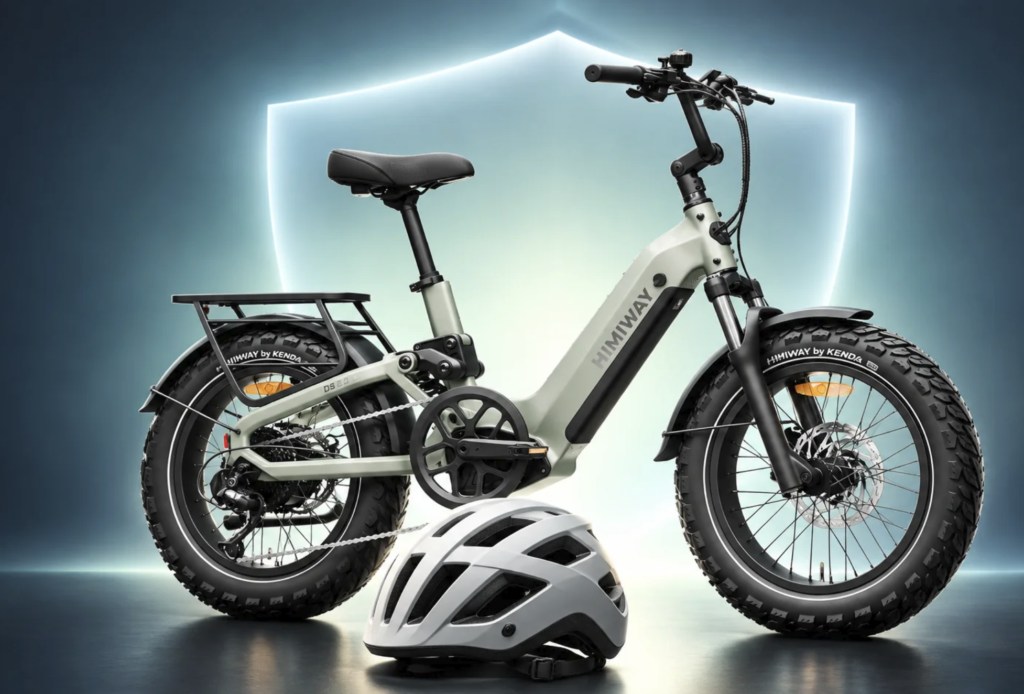
E-bikes in many regions are sorted into classes based on top assisted speed and whether the motor engages with a throttle or only through pedaling. A Class 1 bike offers pedal-assist only, up to a moderate top speed, and is typically permitted on the widest range of bike paths and trails. Class 2 adds a throttle option up to the same speed cap, while Class 3 raises the top assisted speed but often restricts where the bike can legally be ridden, especially on shared multi-use paths.
These classifications are not uniform everywhere, and local rules can add further restrictions around minimum age, helmet requirements, and registration. A bike that is fully legal to ride on a given trail system in one city or region might be barred from a similar path a short distance away under a different local ordinance. Checking your specific city or regional transportation authority’s current e-bike rules before buying, rather than relying on a general sense of the three-class system, avoids an unwelcome surprise after the purchase is already made.
- Class 1: Pedal-assist only, up to a standard capped speed, generally allowed on the broadest range of trails.
- Class 2: Adds throttle control up to the same speed cap as Class 1, with similar trail access in many areas.
- Class 3: A higher assisted speed cap, often paired with restrictions on shared or multi-use paths.
- Local registration rules: Some cities require a permit, plate, or minimum age for higher-speed e-bike classes.
- Helmet requirements: Certain jurisdictions mandate helmets specifically for Class 3 riders, even where standard bikes do not require one.
Insurance and liability questions are a less obvious part of local law that many new buyers overlook. A handful of regions now treat higher-speed e-bikes closer to mopeds for insurance purposes, which can affect coverage if the bike is involved in a collision or is stolen from outside your home. Checking with your homeowner’s or renter’s policy provider about whether an e-bike is covered under existing property protection, and whether a separate rider or policy is advisable for a costly model, is a step worth taking before the bike leaves the shop rather than after an incident occurs.
Choosing a Battery and Charging Setup
Battery placement and removability affect both convenience and long-term cost. A removable battery that can be carried indoors for charging is useful for anyone who cannot park the bike near an outlet, while an integrated frame battery often looks cleaner but requires the whole bike to be near a power source during charging. Replacement battery cost is also worth checking before purchase, since a proprietary pack from a smaller manufacturer can be difficult to source a few years down the line if the company changes suppliers or exits the market.
Charging habits influence battery lifespan more than most riders expect. Lithium batteries generally last longer when kept between twenty and eighty percent charge for daily use, rather than being run down to zero or left at a full charge for extended periods. A basic smart charger that stops at a set percentage, or a habit of unplugging once the battery reaches a reasonable level, can clearly extend the number of charge cycles before capacity starts to decline.
- Removable versus integrated battery: Removable packs offer charging flexibility; integrated designs are often sleeker but less convenient.
- Replacement cost and availability: Confirm that a compatible replacement battery will likely be sold years after your purchase.
- Partial charging habits: Keeping the battery between twenty and eighty percent on typical days extends its usable life.
- Charger wattage: A higher-wattage charger reduces charging time but may generate more heat during use.
- Storage temperature: Extreme heat or cold during storage accelerates battery degradation over time.
Warranty terms on the battery pack deserve a close read before purchase, since this single component often costs several hundred dollars to replace on its own. Some manufacturers offer a full warranty period that covers a real drop in capacity, while others limit coverage to outright failure and exclude gradual performance decline. A buyer comparing two otherwise similar bikes can find real value in choosing the one with a longer or more complete battery warranty, even if the upfront price is slightly higher, since battery replacement costs can approach a notable fraction of the bike’s original purchase price.
Testing Ride Quality Before You Buy
Specifications on paper rarely capture how a bike truly feels once you are riding it on your own streets. A test ride, even a short one around a parking lot or block near the shop, reveals how the motor engages, whether the assist feels smooth or abrupt, and how the bike handles at low speed when starting from a stop. Riders switching from a traditional bicycle are often surprised by the added weight of an e-bike, which changes how it handles during tight turns and sudden stops.
Braking performance deserves close attention during a test ride, since the added weight and speed of an e-bike places more demand on brakes than a standard bicycle requires. Hydraulic disc brakes offer stronger, more consistent stopping power than mechanical disc or rim brakes, and this difference becomes more noticeable at the higher speeds an e-bike can reach. A short downhill test, where available, gives a clearer sense of how the brakes perform under real load rather than relying on a spec sheet description.
- Motor engagement feel: Smooth, predictable power delivery matters more for comfort than peak wattage alone.
- Handling at low speed: Added battery and motor weight changes how the bike balances during slow turns.
- Brake type and feel: Hydraulic disc brakes generally outperform mechanical options at higher e-bike speeds.
- Frame geometry fit: A step-through or standard frame should match your flexibility and how you plan to mount the bike.
- Suspension needs: Front or full suspension adds comfort on rough surfaces but increases weight and maintenance.
Bringing along the kind of cargo or passenger setup you expect to use daily, such as a pannier bag, child seat, or trailer hitch, during the test ride gives a far more honest sense of how the bike will perform once it is part of your routine. A bike that handles well unloaded in a parking lot can feel noticeably different once weighted down with a week’s worth of groceries or a child seat mounted over the rear wheel.
Asking the shop whether a demo unit can be fitted with the accessories you plan to buy is a reasonable request, and most shops that specialize in e-bikes are willing to accommodate it.
Maintaining Your E-Bike Through the Seasons
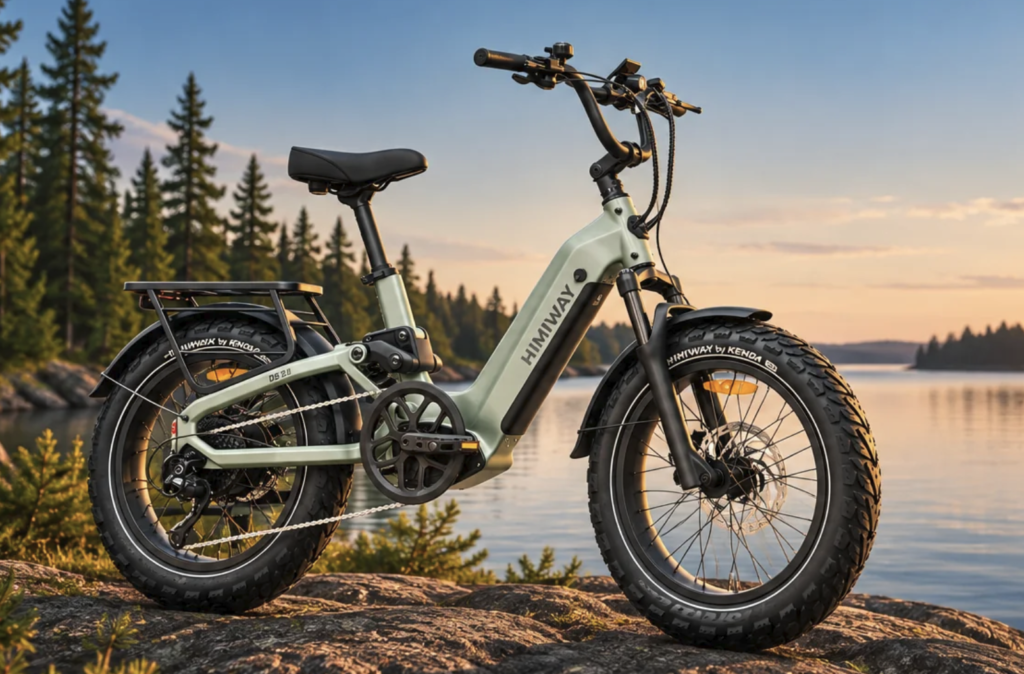
An e-bike carries more components that demand attention than a standard bicycle, and a basic maintenance routine keeps both the mechanical and electrical systems reliable across changing weather. Chain lubrication, tire pressure checks, and brake pad inspection remain just as important as they are on any bicycle, but the added motor and battery introduce new points that also need periodic attention, especially around electrical connections exposed to moisture.
Seasonal storage matters as much as day-to-day care. Leaving a bike outdoors through a cold winter without protecting the battery can shorten its lifespan noticeably, since most lithium batteries are rated for a narrower temperature range than the bike’s frame and components can tolerate. Bringing the battery indoors during extreme cold, and keeping electrical connectors clean and dry after wet rides, extends the useful life of the most costly component on the bike.
- Chain and drivetrain care: Regular lubrication and cleaning reduce wear on the mechanical parts that carry motor torque.
- Tire pressure checks: Proper inflation improves range and reduces strain on the motor during each ride.
- Electrical connector inspection: Checking connectors for corrosion after wet rides prevents intermittent power issues.
- Cold weather battery storage: Removing the battery for indoor storage during freezing conditions protects its capacity.
- Brake pad wear: Heavier e-bikes wear brake pads faster, so more frequent inspection is worth building into your routine.
A yearly service visit at a shop familiar with e-bikes is worth scheduling even for riders who handle basic upkeep themselves, since motor calibration, firmware updates, and deeper electrical checks often require tools and diagnostic software that most home mechanics do not have on hand.
Many e-bike brands release periodic firmware updates that adjust assist behavior, fix minor bugs, or improve battery management, and a shop visit is a reliable way to confirm your bike is running the current version rather than an outdated one that may be missing performance or safety improvements.
Final Thoughts
Choosing an e-bike comes down to matching motor type, battery capacity, and legal classification to the riding you really plan to do, rather than chasing the highest specifications on a shop floor.
A bike built for a flat, short commute has little in common with one meant for hilly trail riding or cargo hauling, and the right fit depends on honest answers about your terrain, distance, and how often you intend to ride.
Taking the time to test ride a few models, check local classification rules for your area, and plan for battery care across the seasons will do more for long-term satisfaction than any single spec sheet number, and it helps ensure the bike you buy keeps earning its place in your daily routine rather than becoming an expensive item left in the garage.
Frequently Asked Questions
Do I need a license to ride an e-bike?
In most regions, Class 1 and Class 2 e-bikes do not require a license, since they are treated similarly to standard bicycles under local law. Class 3 bikes, with their higher assisted speed, sometimes carry additional requirements such as a minimum age or registration, so checking local rules before purchase is worth the time.
How long does an e-bike battery typically last before replacement?
Most lithium batteries used in e-bikes retain a usable capacity for roughly 500 to 1,000 full charge cycles, which often translates to three to five years of regular commuting use before a noticeable drop in range. Charging habits, storage temperature, and how often the battery is fully drained all affect this timeline.
Is a mid-drive or hub motor better for hilly commutes?
Mid-drive motors generally handle hills more efficiently because they use the bike’s existing gears to match power output to the terrain. A hub motor can still manage moderate hills, but riders in consistently hilly areas tend to notice a clearer advantage with a mid-drive setup, especially on longer climbs.
Can I ride an e-bike on regular bike paths?
This depends on your local e-bike classification rules. Class 1 and Class 2 bikes are commonly allowed on standard bike paths, while Class 3 bikes are sometimes restricted from shared multi-use paths due to their higher top assisted speed, so confirming local trail rules in advance avoids a fine or a turned-away ride.
How much heavier is an e-bike compared to a standard bicycle?
Most e-bikes weigh noticeably more than a comparable non-electric bicycle, often by fifteen to twenty-five pounds, due to the added motor and battery. This weight affects handling at low speeds and makes transport, such as lifting the bike onto a car rack, more demanding than with a traditional bike.
Should I buy a throttle model or a pedal-assist-only model?
A throttle model offers power without pedaling, which some riders value for starting on hills or riding without physical strain, while a pedal-assist-only model tends to extend battery range and keeps the bike closer in feel to traditional cycling. The right choice depends on your fitness goals, commute terrain, and local classification rules that may restrict throttle-equipped bikes on certain paths.